1.Physics as the Search for Patterns
Feynman emphasizes that physics is fundamentally about discovering the patterns and laws that govern the natural world. Rather than memorizing isolated facts, he encourages readers to see science as a process of inquiry—asking questions, making observations, and finding the underlying simplicity in complex phenomena. This perspective demystifies physics, showing it as a human endeavor driven by curiosity and logic.
2.Atoms: The Building Blocks of Everything
One of the core ideas is the atomic hypothesis: that all matter is made of tiny, indivisible atoms. Feynman explains how this concept underpins our understanding of chemistry, biology, and physics, and how it leads to profound insights about the nature of matter, energy, and life itself. By tracing how atomic theory explains everyday phenomena, he demonstrates its central role in all of science.
3.Conservation and Energy
Feynman introduces the principle of conservation—especially conservation of energy—as a unifying thread in physics. He shows how energy, though it may change forms (from motion to heat, for example), is never lost. This concept not only simplifies our understanding of physical processes but also connects diverse phenomena, from falling objects to chemical reactions, under a single law.
4.The Universality of Physical Laws
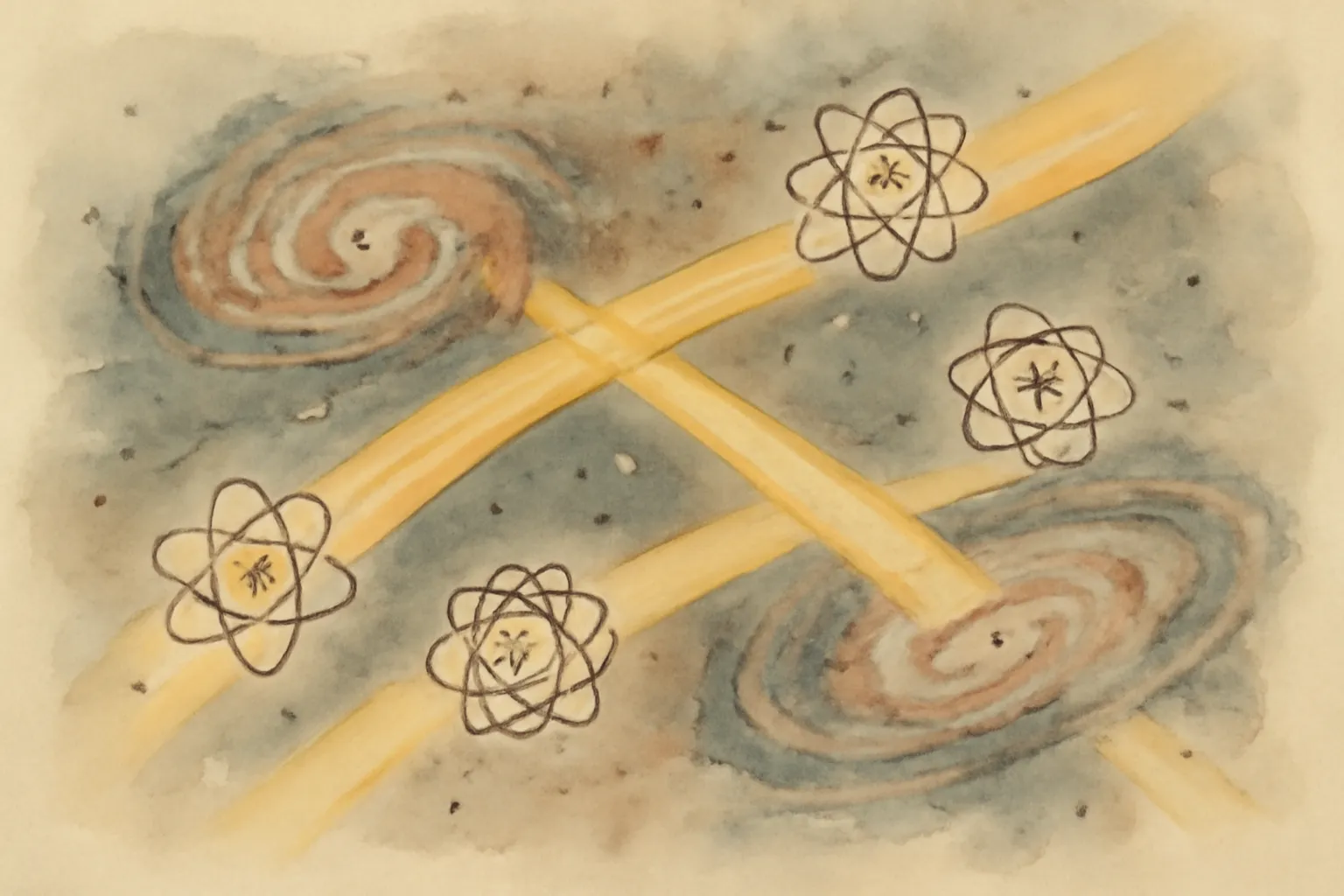
A recurring theme is the universality of physical laws: the same rules apply everywhere, from the smallest atom to the largest galaxy. Feynman illustrates how this universality allows us to make predictions and understand phenomena far beyond our direct experience. It’s a humbling and empowering idea—suggesting that by studying the world around us, we can uncover truths that hold across the cosmos.
5.The Strange World of Quantum Mechanics
Feynman introduces quantum mechanics not as an esoteric or forbidding subject, but as a logical extension of what we observe at the smallest scales. He explains the counterintuitive behaviors of particles—such as wave-particle duality and uncertainty—in a way that respects their strangeness without oversimplifying. This helps readers appreciate both the power and the mystery of quantum theory.
6.The Role of Doubt and Uncertainty in Science
A hallmark of Feynman's teaching is his insistence on the importance of doubt, skepticism, and the willingness to admit what we do not know. He frames science as a living, evolving pursuit, where uncertainty is not a weakness but a driving force for discovery. This attitude encourages readers to embrace questions and ambiguity as vital parts of learning.