
Nonfiction · Computers · Computer Science
The Book of Why: The New Science of Cause and Effect by Judea Pearl and Dana Mackenzie — Summary, Key Ideas & Quotes
2018425 pages✦ 3-min Big ideas★ 4.2 (5)
Rate it
A Turing Award-winning computer scientist and statistician shows how understanding causality has revolutionized science and will revolutionize artificial intelligence “Correlation is not causation.” This mantra, chanted by scientists for more than a century, has led to a virtual prohibition on causal talk. Today, that taboo is dead. The causal revolution, instigated by Judea Pearl and his colleagues, has cut through a century of confusion and established causality–the study of cause and effect–on a firm scientific basis. His work explains how we can know easy things, like whether it was rain or a sprinkler that made a sidewalk wet; and how to answer hard questions, like whether a drug cured an illness. Pearl’s work enables us to know not just whether one thing causes another: it lets us explore the world that is and the worlds that could have been. It shows us the essence of human thought and key to artificial intelligence. Anyone who wants to understand either needs The Book of Why.
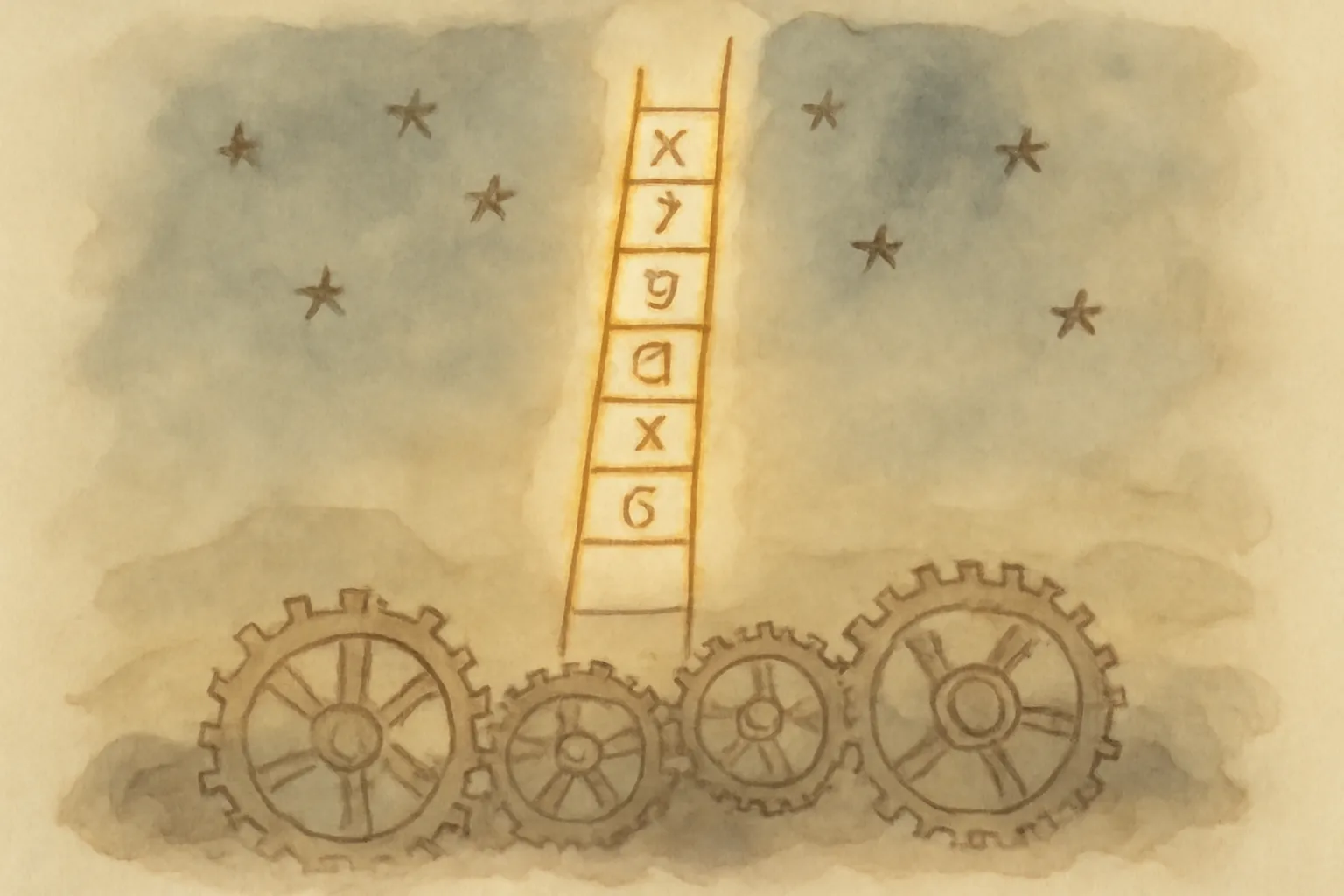
Pearl introduces the 'ladder of causation,' a hierarchy that distinguishes between three levels of reasoning: association (seeing patterns), intervention (changing things to see what happens), and counterfactuals (imagining what would have happened). Most traditional statistics operate only at the first level, but true causal understanding requires climbing higher, especially to the counterfactual level, which is essential for human reasoning and advanced AI.
A core innovation is the use of directed acyclic graphs (DAGs) to visually and mathematically represent causal relationships. These diagrams clarify assumptions, reveal hidden confounders, and provide a language for expressing complex causal questions. Pearl argues that without such models, scientists are often blind to the real structure of problems and can be misled by mere correlations.
“You see the world not as it is, but as you are.”
“The science of why is the science of cause and effect.”