
History, Military · Military History · Politics and government
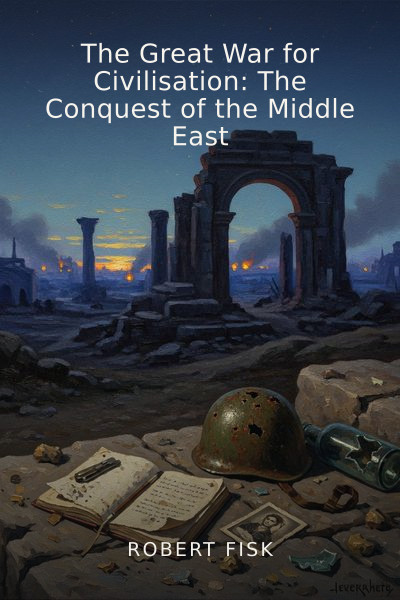
The Great War for Civilisation: The Conquest of the Middle East by Robert Fisk — Summary, Key Ideas & Quotes
20051145 pages✦ 3-min Big ideas★ 5.0 (2)
Rate it
During the thirty years that award-winning journalist Robert Fisk has been reporting on the Middle East, he has covered every major event in the region, from the Algerian Civil War to the Iranian Revolution, from the American hostage crisis in Beirut (as one of only two Western journalists in the city at the time) to the Iran-Iraq War, from the Russian invasion of Afghanistan to Israel’s invasions of Lebanon, from the Gulf War to the invasion and ongoing war in Iraq. Now he brings his knowledge, his firsthand experience and his intimate understanding of the Middle East to a book that addresses the full complexity of its political history and its current state of affairs. --Random House Publishing
Fisk’s narrative is built on his direct experience as a journalist covering the Middle East over three tumultuous decades. Rather than relying solely on secondary sources or official accounts, he brings readers into the field alongside him, sharing vivid, sometimes harrowing encounters with war, revolution, and the ordinary people caught in between. This personal approach not only humanizes the conflicts but also challenges sanitized or simplistic versions of events, emphasizing the complexity and tragedy of real lives disrupted by violence.
A recurring theme in the book is the enduring impact of Western imperialism—British, French, American—on the Middle East. Fisk traces how arbitrary borders, colonial interventions, and betrayals (such as the Sykes-Picot Agreement and Balfour Declaration) set the stage for decades of instability and resentment. He argues that many of today’s crises are rooted in these historical wounds, and that Western powers often repeat the same mistakes, misunderstanding or disregarding the region’s realities.
“War is the total failure of the human spirit.”
“Journalists should be neutral and unbiased on the side of those who suffer.”