
Campaigns · Military History · World War, 1939-1945
The Liberation Trilogy by Rick Atkinson — Summary, Key Ideas & Quotes
2007816 pages✦ 3-min Big ideas★ 4.3 (3)
Rate it
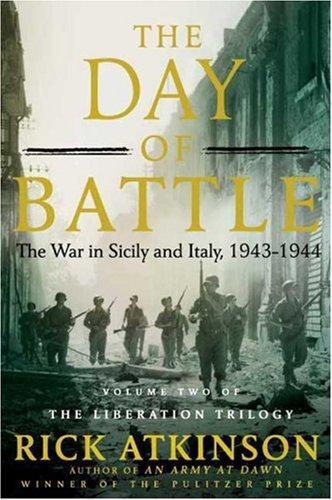
In the second volume of his epic trilogy about the liberation of Europe in World War II, Pulitzer Prize winner Rick Atkinson tells the harrowing story of the campaigns in Sicily and Italy. In An Army at Dawn -- winner of the Pulitzer Prize -- Rick Atkinson provided a dramatic and authoritative history of the Allied triumph in North Africa. Now, in The Day of Battle, he follows the strengthening American and British armies as they invade Sicily in July 1943 and then, mile by bloody mile, fight their way north toward Rome. The Italian campaign's outcome was never certain; in fact, Roosevelt, Churchill, and their military advisers engaged in heated debate about whether an invasion of the so-called soft underbelly of Europe was even a good idea. But once under way, the commitment to liberate Italy from the Nazis never wavered, despite the agonizingly high price. The battles at Salerno, Anzio, and Monte Cassino were particularly difficult and lethal, yet as the months passed, the Allied forces continued to drive the Germans up the Italian peninsula. Led by Lieutenant General Mark Clark, one of the war's most complex and controversial commanders, American officers and soldiers became increasingly determined and proficient. And with the liberation of Rome in June 1944, ultimate victory at last began to seem inevitable. - Publisher.
Atkinson’s trilogy is distinguished by its focus on the lived experience of soldiers, commanders, and civilians. He weaves personal stories and letters into the broader military narrative, showing how the war was shaped not just by grand strategy but by the fears, hopes, and flaws of individuals. This approach transforms distant battles into immediate, relatable drama, emphasizing that the outcome of the war depended on countless acts of endurance, error, and bravery.
A central theme is the challenge of alliance: the British and Americans, though united against the Axis, often clashed over tactics, leadership, and priorities. Atkinson reveals how these tensions threatened to undermine the campaign, yet also forced innovation and adaptation. The trilogy explores the personalities—Eisenhower, Montgomery, Patton, and others—whose ambitions and disagreements shaped the course of the conflict.
“For every man who died in battle, three more died of disease.”
“War is the unfolding of miscalculations.”
