
Self (Philosophy) · Literary collections · Zelf
The Mind's I by Douglas Hofstadter and Daniel Dennett — Summary, Key Ideas & Quotes
1962501 pages✦ 3-min Big ideas★ 4.7 (6)
Rate it
With contributions from Jorge Luis Borges, Richard Dawkins, John Searle, and Robert Nozick, The Mind's I explores the meaning of self and consciousness through the perspectives of literature, artificial intelligence, psychology, and other disciplines. In selections that range from fiction to scientific speculations about thinking machines, artificial intelligence, and the nature of the brain, Hofstadter and Dennett present a variety of conflicting visions of the self and the soul as explored through the writings of some of the twentieth century's most renowned thinkers.
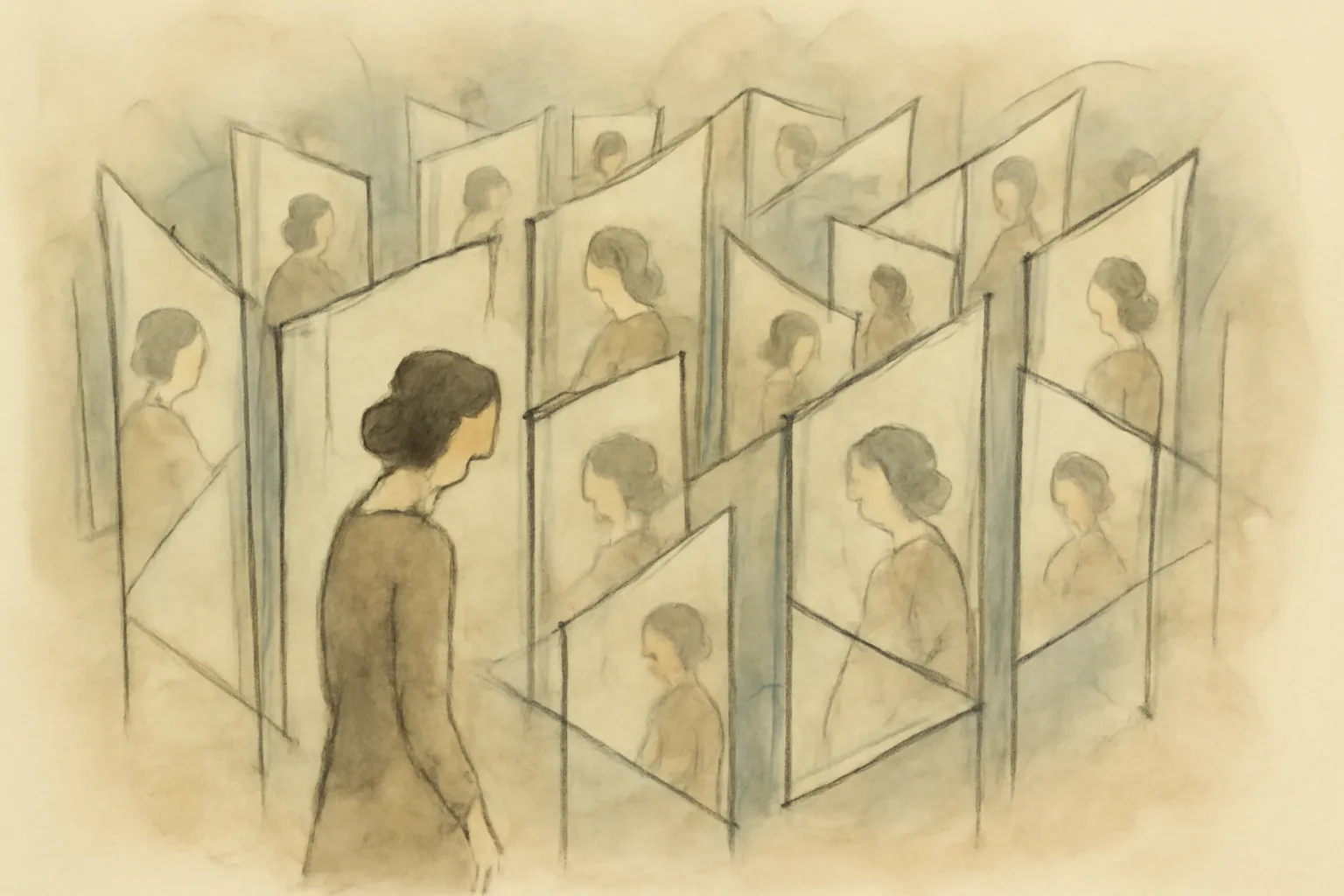
One of the central themes is the idea that the self may not be a fixed, indivisible entity, but rather a construct—a narrative or pattern that emerges from the complex workings of the brain. The book presents arguments and thought experiments suggesting that what we call 'I' is not a soul or a homunculus inside our heads, but a process, a story woven from experience, memory, and perception. This challenges deeply held intuitions about personal identity and invites readers to consider the self as something fluid and emergent.
The Mind's I explores whether machines could ever be conscious or possess selves in the way humans do. Through selections like Turing's and Searle's famous arguments, the book examines the criteria for personhood and whether artificial intelligence could ever cross that threshold. This raises questions about what it means to think, feel, and be aware, and whether these qualities are exclusive to biological organisms or could arise from sufficiently complex computation.
“What is it like to be a bat?”
“I am a strange loop.”