
hunting · foodies · feral pigs
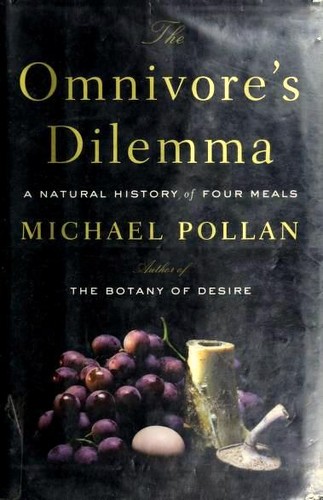
The Omnivore's Dilemma: A Natural History of Four Meals by Michael Pollan — Summary, Key Ideas & Quotes
2006450 pages✦ 3-min Big ideas★ 4.2 (45)
Rate it
What should we have for dinner? The question has confronted us since man discovered fire, but according to Michael Pollan, the bestselling author of The Botany of Desire, how we answer it today, at the dawn of the twenty-first century, may well determine our very survival as a species. Should we eat a fast-food hamburger? Something organic? Or perhaps something we hunt, gather, or grow ourselves? The omnivore’s dilemma has returned with a vengeance, as the cornucopia of the modern American supermarket and fast-food outlet confronts us with a bewildering and treacherous food landscape. What’s at stake in our eating choices is not only our own and our children’s health, but the health of the environment that sustains life on earth. In this groundbreaking book, one of America’s most fascinating, original, and elegant writers turns his own omnivorous mind to the seemingly straightforward question of what we should have for dinner. To find out, Pollan follows each of the food chains that sustain us—industrial food, organic or alternative food, and food we forage ourselves—from the source to a final meal, and in the process develops a definitive account of the American way of eating. His absorbing narrative takes us from Iowa cornfields to food-science laboratories, from feedlots and fast-food restaurants to organic farms and hunting grounds, always emphasizing our dynamic coevolutionary relationship with the handful of plant and animal species we depend on. Each time Pollan sits down to a meal, he deploys his unique blend of personal and investigative journalism to trace the origins of everything consumed, revealing what we unwittingly ingest and explaining how our taste for particular foods and flavors reflects our evolutionary inheritance. The surprising answers Pollan offers to the simple question posed by this book have profound political, economic, psychological, and even moral implications for all of us. Beautifully written and thrillingly argued, The Omnivore’s Dilemma promises to change the way we think about the politics and pleasure of eating. For anyone who reads it, dinner will never again look, or taste, quite the same. ([source][1])
Pollan reveals that most Americans are disconnected from the origins of their food, with industrial agriculture—especially corn—dominating the supermarket. He traces how corn is transformed into countless products, from sweeteners to processed foods to animal feed, illustrating how the industrial food system obscures the true nature and cost of what we consume. This complexity makes it difficult for consumers to understand the environmental, health, and ethical implications of their choices.
Through his deep dive into industrial farming, Pollan exposes the environmental degradation, animal welfare issues, and health risks inherent in large-scale food production. He argues that the pursuit of efficiency and profit leads to monocultures, heavy use of chemical fertilizers and pesticides, and inhumane treatment of animals. These practices, while producing cheap food, carry significant hidden costs for society and the planet.
“Eat food. Not too much. Mostly plants.”
“The way we eat represents our most profound engagement with the natural world.”
