
A poignant exploration of the unremarkable heroism in the face of war, chronicling the journey of an unlikely soldier navigating love, loss, and self-discovery
Read full overviewShow less›
In 'The Rough Road,' William John Locke presents the compelling story of James Marmaduke Trevor, affectionately known as Doggie, who embarks on a transformative journey during the tumultuous years of World War I. This narrative delves deep into the psyche of an ordinary man, raised in the shadows of overprotective upbringing, who finds himself thrust into the chaos of war. Through Doggie's experiences, readers are invited to witness the evolution of his character, shaped by the trials of military life, the complexities of love, and the harsh realities of loss. The novel not only highlights the nuances of human relationships against the backdrop of global conflict but also offers a profound commentary on the nature of heroism, identity, and personal growth. As Doggie grapples with his own insecurities and the expectations placed upon him, the story reveals that true courage often lies in the quiet resolve of those who are not traditionally celebrated as heroes.
William John Locke's 'The Rough Road' offers a profound exploration of the human experience during one of history's most tumultuous periods. Through the lens of Doggie Trevor's journey, we gain insight into the complexities of war, love, and self-discovery. The narrative challenges traditional notions of heroism, revealing that true courage often lies in the quiet resilience of those deemed unremarkable. As readers, we are invited to reflect on the impact of societal expectations, the significance of relationships, and the enduring quest for meaning in the face of adversity. Ultimately, the novel serves as a poignant reminder that every individual's story matters, and that even in the darkest of times, hope and transformation are possible.
- 1The Unlikely Hero
- 2The Influence of Women
- 3The Psychological Toll of War
- 4Societal Expectations and Masculinity
- 5The Impact of War on Relationships
A glimpse inside

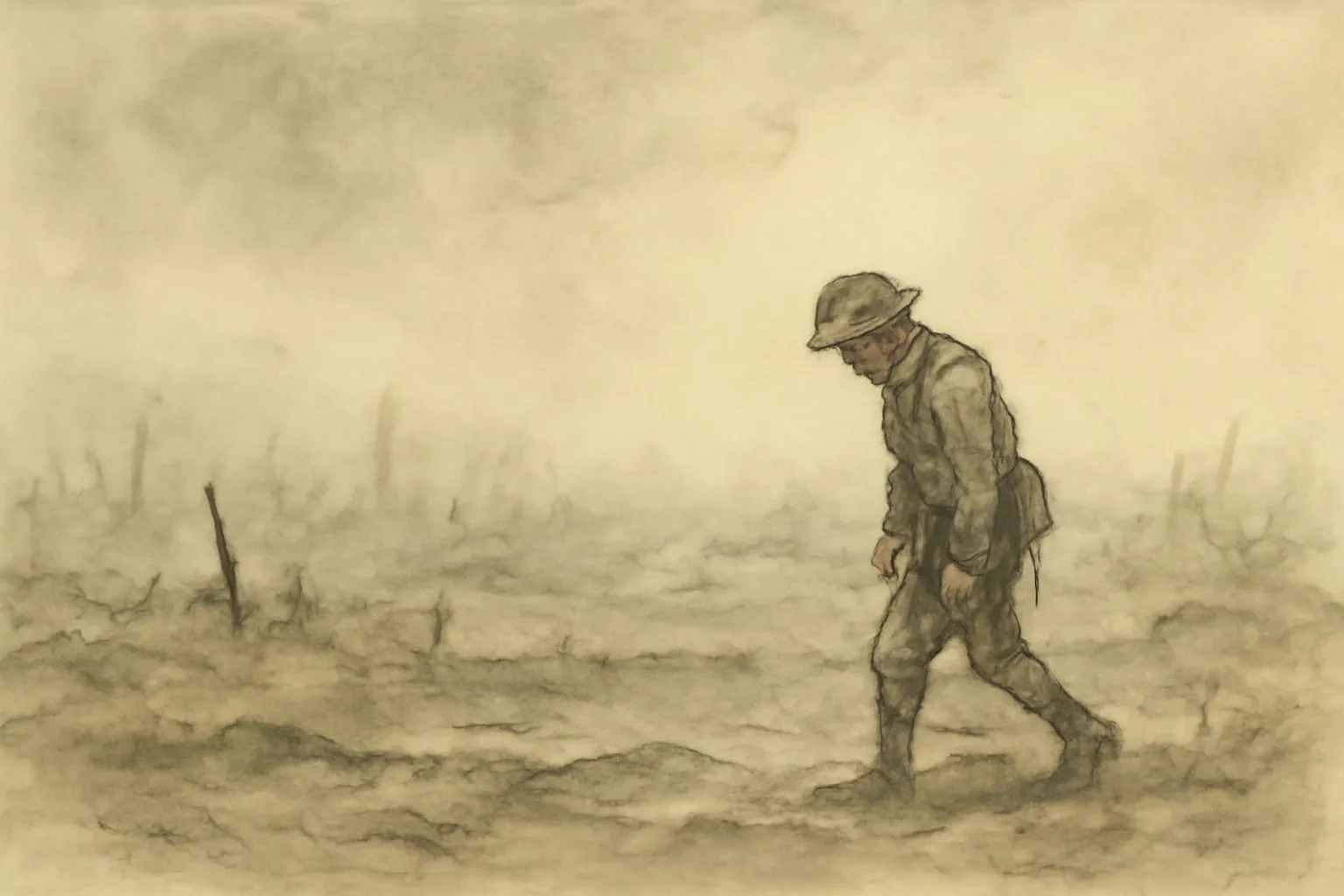
Doggie Trevor is not your typical war hero; he doesn't earn medals or accolades. Instead, he embodies the millions of ordinary men who were swept into the maelstrom of wa… Read moreDoggie Trevor is not your typical war hero; he doesn't earn medals or accolades. Instead, he embodies the millions of ordinary men who were swept into the maelstrom of war. Raised in a sheltered environment by an overprotective mother, Doggie's upbringing has left him ill-prepared for the harsh realities of life in the trenches. Yet, it is precisely this ordinariness that makes his story relatable and poignant. Readers witness how Doggie rises to the occasion, not through acts of grand heroism, but by simply enduring the trials of war and emerging on the other side with a profound sense of self-awareness. His journey reflects the idea that heroism can be found in the mundane acts of bravery that often go unnoticed, challenging the traditional notions of valor. In a society quick to glorify the heroic deeds of soldiers, Doggie's tale serves as a reminder that survival and perseverance in the face of adversity is a form of heroism in itself. Show less
Women play a crucial role in shaping Doggie's journey, particularly through the characters of Peggy and Jeanne. Peggy represents the world Doggie is familiar with—one of… Read moreWomen play a crucial role in shaping Doggie's journey, particularly through the characters of Peggy and Jeanne. Peggy represents the world Doggie is familiar with—one of societal expectations and romantic notions. As he grapples with his feelings for her, he also struggles with the expectations of masculinity that come with wartime. Doggie's connection with Peggy is marked by innocence and childhood affection, yet it is complicated by his newfound responsibilities as a soldier. Meanwhile, Jeanne, a French woman he meets during the war, symbolizes the resilience and suffering of a nation torn apart by conflict. Their relationship becomes a crucial point of reflection for Doggie, prompting him to confront his own feelings about love, honor, and duty. The stark contrast between Peggy's sheltered life and Jeanne's harsh realities serves to highlight the different ways women experience the war, making their influence on Doggie's transformation even more significant. Locke uses these relationships to explore themes of loyalty, sacrifice, and the emotional burdens carried by those left behind. Show less
Read the full text — free
About the author
William John Locke has 2 works free to read on Lumina, including The Joyous Adventures of Aristide Pujol
All 2 books by William John Locke →