
Race relations · Fathers and sons · Fiction
The Sellout by Paul Beatty — Summary, Key Ideas & Quotes
2015304 pages✦ 3-min Big ideas★ 3.8 (22)
Rate it
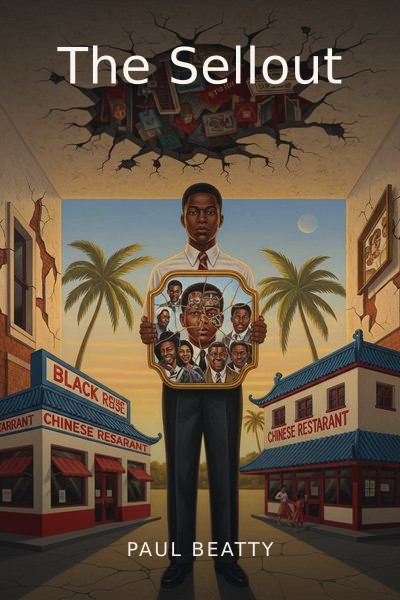
A biting satire about a young man's isolated upbringing and the race trial that sends him to the Supreme Court, Paul Beatty's *The Sellout* showcases a comic genius at the top of his game. It challenges the sacred tenets of the United States Constitution, urban life, the civil rights movement, the father-son relationship, and the holy grail of racial equality―the black Chinese restaurant. Born in the "agrarian ghetto" of Dickens―on the southern outskirts of Los Angeles―the narrator of *The Sellout* resigns himself to the fate of lower-middle-class Californians: "I'd die in the same bedroom I'd grown up in, looking up at the cracks in the stucco ceiling that've been there since '68 quake." Raised by a single father, a controversial sociologist, he spent his childhood as the subject in racially charged psychological studies. He is led to believe that his father's pioneering work will result in a memoir that will solve his family's financial woes. But when his father is killed in a police shoot-out, he realizes there never was a memoir. All that's left is the bill for a drive-thru funeral. Fuelled by this deceit and the general disrepair of his hometown, the narrator sets out to right another wrong: Dickens has literally been removed from the map to save California from further embarrassment. Enlisting the help of the town's most famous resident―the last surviving Little Rascal, Hominy Jenkins―he initiates the most outrageous action conceivable: reinstating slavery and segregating the local high school, which lands him in the Supreme Court.
The Sellout uses biting humor and outrageous scenarios to lampoon the persistent racial tensions and hypocrisies of contemporary America. Beatty’s satire isn’t just for laughs—it’s a tool for exposing the ways in which supposedly 'post-racial' society remains deeply segregated and unequal. By exaggerating real social issues, the novel invites readers to question what is considered normal or acceptable, making discomfort a catalyst for reflection.
At the heart of the novel is the narrator’s decision to reinstate segregation and even slavery in his hometown, a move so shocking it highlights the absurdity of racial categories themselves. Beatty’s outlandish plot forces us to confront the ways in which race is socially constructed—often arbitrarily, always with real consequences. The book’s humor never lets us forget the pain and complexity behind these constructs.
“Sometimes it’s the people no one imagines anything of who do the things that no one can imagine.”
“This may be hard to believe, coming from a black man, but I’ve never stolen anything.”