
Middle-aged men · Life change events · Male friendship
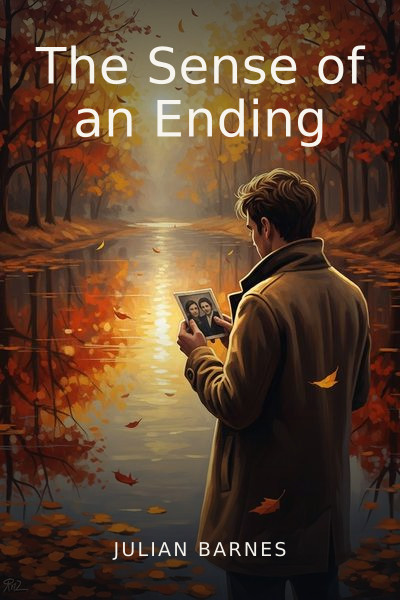
The Sense of an Ending by Julian Barnes — Summary, Key Ideas & Quotes
2011154 pages✦ 3-min Big ideas★ 3.9 (27)
Rate it
By an acclaimed writer at the height of his powers, The Sense of an Ending extends a streak of extraordinary books that began with the best-selling Arthur & George and continued with Nothing to Be Frightened Of and, most recently, Pulse. This intense new novel follows a middle-aged man as he contends with a past he has never much thought about—until his closest childhood friends return with a vengeance, one of them from the grave, another maddeningly present. Tony Webster thought he’d left all this behind as he built a life for himself, and by now his marriage and family and career have fallen into an amicable divorce and retirement. But he is then presented with a mysterious legacy that obliges him to reconsider a variety of things he thought he’d understood all along, and to revise his estimation of his own nature and place in the world. A novel so compelling that it begs to be read in a single sitting, with stunning psychological and emotional depth and sophistication, The Sense of an Ending is a brilliant new chapter in Julian Barnes’s oeuvre.
Barnes’s novel centers on the idea that memory is not a fixed record but a subjective, malleable process. Tony Webster’s recollections, which form the backbone of the narrative, are revealed to be selective and self-serving. The story challenges readers to question how much of what we remember is shaped by our desires, fears, and need for self-justification. The novel suggests that our personal histories are constructed, often unconsciously, to protect our sense of self, and that the truth may be far more complicated—and painful—than we allow ourselves to believe.
A central theme is the lasting impact of seemingly minor choices. Tony views himself as a passive, harmless figure, but as the story unfolds, he is forced to confront the ripple effects of his youthful actions. Barnes explores how the consequences of what we do—or fail to do—can extend far beyond our intentions, affecting others in ways we may never fully understand. This idea challenges the comforting notion that only dramatic acts matter, and asks us to reconsider the moral weight of our everyday behavior.
“What you end up remembering isn’t always the same as what you have witnessed.”
“History is that certainty produced at the point where the imperfections of memory meet the inadequacies of documentation.”
“There is accumulation. There is responsibility. And beyond these, there is unrest. There is great unrest.”
