Philosophy
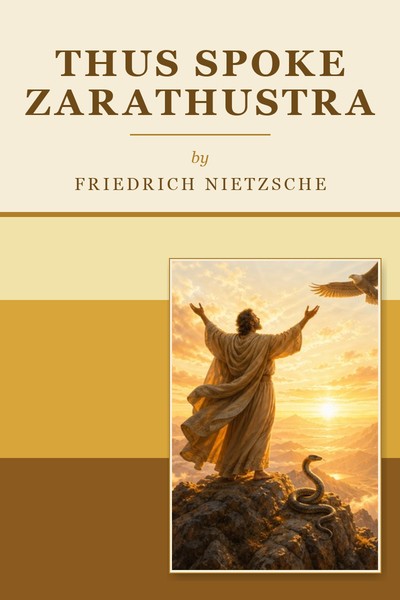
Thus Spoke Zarathustra by Friedrich Nietzsche — Summary, Key Ideas & Full Text
291 pages81 chapters5h 51m read4h 9m speed read✦ 8-min Big ideasFree · no account
Rate it
Discover the transformative philosophy of Nietzsche's Zarathustra, where the quest for higher ideals and the embrace of individuality challenge the foundations of morality and existence
Friedrich Nietzsche's 'Thus Spoke Zarathustra' is a profound exploration of the human spirit and the quest for meaning beyond traditional values. Through the character of Zarathustra, Nietzsche articulates his vision of the 'Übermensch' or 'Superman,' a figure who transcends conventional morality to create his own values. This philosophical novel is rich with parables, poetic language, and deep insights into the nature of existence, morality, and the human condition. Readers will engage with concepts such as the will to power, the eternal recurrence, and the critique of established morals, inviting them to reflect on their own beliefs and values. As you journey through Zarathustra's teachings, you'll uncover the importance of self-overcoming, the celebration of life, and the courage to embrace one's individuality in a world filled with constraints.
Nietzsche's 'Thus Spoke Zarathustra' presents a radical rethinking of morality, existence, and the human condition. Through the character of Zarathustra, Nietzsche challenges readers to confront their beliefs and embrace the complexities of life with courage and creativity. The exploration of key concepts such as the Will to Power, Eternal Recurrence, and the transformative journey of self-creation invites a profound engagement with one's values and aspirations. Ultimately, Nietzsche's philosophy encourages individuals to rise above conventional morality, forge their own paths, and strive for greatness in a world that often seeks conformity. In doing so, readers are empowered to embrace their individuality and contribute to the ongoing evolution of humanity.

Friedrich Nietzsche has 3 works free to read on Lumina, including Beyond Good and Evil, On the Genealogy of Morals
All 3 books by Friedrich Nietzsche →