1.The Misunderstood Propagandist

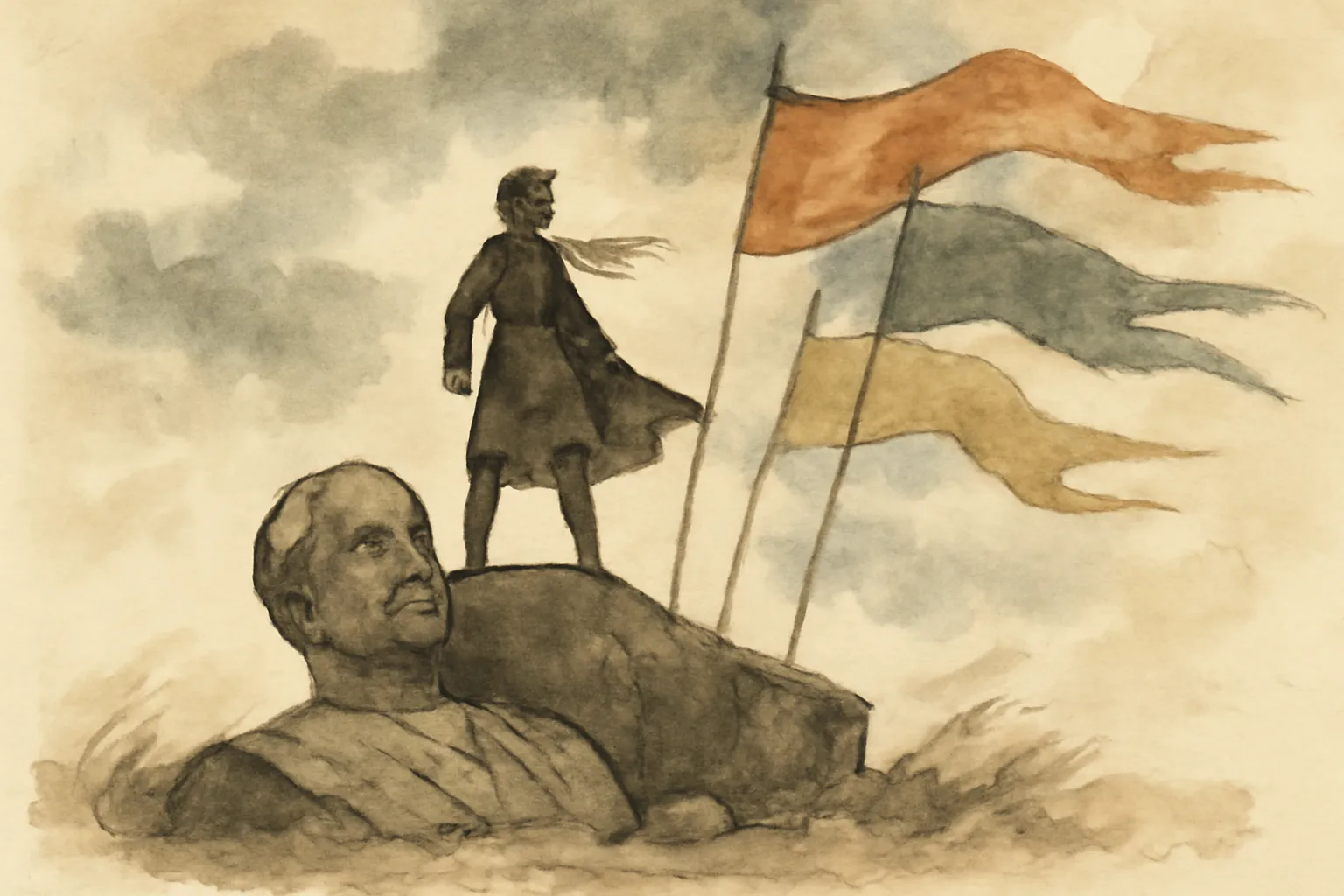
Goldman begins by emphasizing that being a propagandist for social justice is not merely a profession but a calling driven by deep convictions. She highlights the sacrifices that individuals like herself make in pursuit of truth and justice, often facing severe backlash and misrepresentation. Despite the sensationalism surrounding her name, Goldman insists that the real struggle is not just for recognition but for the liberation of the individual spirit. She draws parallels between her experiences and those of other historical figures who have faced similar fates, arguing that society often fails to appreciate the contributions of living pioneers. This notion sets the stage for her broader critique of societal norms and the importance of recognizing and supporting the work of those who challenge injustice. Goldman's struggles reflect the broader theme of the lonely path of the idealist, who often must endure isolation and hostility from both the public and their peers. Her reflection on propagandism uncovers the deeper motivations that drive individuals to speak out against oppression, highlighting the moral imperative to challenge the status quo.
2.Conflict within the Movement

Goldman discusses the internal conflicts within the anarchist and socialist movements, illustrating how theoretical differences and personal rivalries can lead to fragmentation. She critiques the socialists for sacrificing the idea of liberty in favor of state power, arguing that true liberation cannot come from political means. Her experiences upon arriving in America, where she quickly immersed herself in anarchist circles, reveal the vibrant yet contentious atmosphere of activism. Goldman reflects on her early influences, such as John Most, whose passionate oratory inspired her to embrace anarchism fully. This internal strife within the movement underscores the challenges faced by those advocating for radical change, as they must navigate not only external opposition but also divisions among their ranks. Goldman emphasizes the necessity of unity among those advocating for social justice, warning that infighting can weaken the movement and distract from the common goal of liberation. The conflicts she describes are emblematic of the broader struggles within social movements, where personal ambitions can sometimes overshadow collective aims.
3.The Persecution of Anarchists

Goldman recounts the tumultuous period following the assassination of President McKinley, where she became the target of a massive manhunt. The authorities' attempts to link her to the assassin, Leon Czolgosz, illustrate the paranoia and hostility directed towards anarchists during this time. Despite the lack of evidence connecting her to the crime, Goldman faced severe repercussions, including arrest and harsh interrogation. This episode highlights the broader societal tendency to scapegoat marginalized groups during times of crisis, revealing the deep-seated fears that anarchism evokes in the public consciousness. The psychological toll of such persecution is palpable in Goldman's reflections, as she grapples with feelings of despair and isolation while maintaining her commitment to her ideals. Through her experiences, Goldman sheds light on the nature of state power and its tendency to vilify dissenters as a way to consolidate control and maintain the status quo. The heightened climate of fear during this period illustrates how political repression can stifle not just individual voices but also the movements that seek to foster social change.
4.Redefining Crime

In her exploration of crime, Goldman argues that it is a symptom of societal dysfunction rather than an inherent moral failing. She posits that crime arises from the misdirection of human energy, a result of oppressive economic and political systems. By highlighting the conditions that lead individuals to commit crimes, she challenges the punitive measures that society employs, advocating instead for an understanding of the social context behind criminal acts. Goldman cites Peter Kropotkin's views on the degrading effects of punishment, arguing that the prison system exacerbates social problems rather than alleviating them. This radical rethinking of crime calls for a more compassionate approach to justice, one that addresses the root causes of societal issues rather than merely punishing those who are caught in its web. She emphasizes that as long as individuals are trapped in lives they detest, crime will remain an inevitable outcome. By advocating for a society that prioritizes the well-being of its members, Goldman envisions a world where individuals can find fulfillment in their lives, reducing the likelihood of criminal behavior.
5.The Individual vs. the Mass

Goldman takes a bold stance against the glorification of the majority, arguing that true progress is often driven by individuals rather than the collective. She expresses skepticism towards the masses, asserting that they can be a hindrance to revolutionary change due to their inertia and conformity. This perspective reflects her belief in the transformative power of the individual, whose unique contributions can lead to a more liberated society. She draws on historical examples to illustrate how the few, often marginalized, have been the catalysts for significant social change. By prioritizing individual autonomy, Goldman envisions a world where people can freely associate and collaborate based on shared goals, unencumbered by the weight of societal expectations. This idea reinforces the anarchist principle of voluntary cooperation and the importance of personal agency in the pursuit of social justice. Goldman’s views challenge the prevailing narratives that valorize the majority, urging readers to recognize the potential of the individual as a force for meaningful change.
6.The Role of Women in Society

Goldman addresses the plight of women within the socio-economic landscape, arguing that their liberation is inextricably linked to the broader struggle for social justice. She critiques the limitations placed on women by traditional roles, emphasizing that true emancipation requires more than just legal rights; it necessitates a fundamental shift in societal attitudes. The challenges faced by working women, who often find themselves trapped in cycles of poverty and exploitation, are central to her analysis. Goldman advocates for a reimagining of women's roles that allows for both personal fulfillment and economic independence, urging women to embrace their identities beyond societal expectations. She argues that the fight for women's rights must intersect with other social struggles, as issues of race, class, and gender influence one another. By highlighting the interconnectedness of these struggles, Goldman calls for a holistic approach to women's liberation that empowers women to take charge of their own destinies.
7.The Dangers of Militarism

Goldman critiques the escalating costs of militarism, providing stark statistics to illustrate the financial burden it places on society. She argues that the resources allocated to military endeavors could be better spent addressing social issues such as poverty and education. The discussion underscores how militarism diverts attention and resources away from pressing humanitarian needs, perpetuating cycles of violence and conflict. By exposing the absurdity of prioritizing military expenditures over the well-being of citizens, Goldman emphasizes the moral implications of a society that glorifies war. She posits that the cycle of violence perpetuated by militarism only serves to deepen societal divisions and distract from pressing humanitarian needs. This critique resonates with her broader arguments against state power and the need for a radical rethinking of priorities in the quest for a just society, where the focus shifts from aggression to nurturing social welfare.
8.The Failures of Suffrage

Goldman critically examines the suffrage movement, asserting that granting women the right to vote has not led to significant improvements in their economic conditions. She emphasizes that mere political rights do not equate to true empowerment, as systemic inequalities persist. Through her analysis, Goldman highlights the limitations of electoral politics, arguing that they often serve to maintain the status quo rather than facilitate genuine change. The experiences of women in suffrage states, where issues such as unequal pay and social welfare remain unaddressed, illustrate her point. By advocating for a more radical approach to women's rights, Goldman calls for a re-evaluation of strategies aimed at achieving true equality and liberation. She argues that suffrage alone does not challenge the underlying structures of power that perpetuate inequality and oppression, ultimately questioning the efficacy of reforms that do not address the root causes of women's subjugation.
9.The Struggle for Artistic Freedom

Goldman stresses the importance of artistic expression as a means of challenging societal norms and fostering social change. She critiques the censorship imposed by authorities, which often stifles creativity and limits the exploration of vital issues. By advocating for a more open and free artistic landscape, Goldman argues that art can serve as a powerful tool for social critique and transformation. The role of the artist in society is not merely to entertain but to provoke thought and inspire action. This perspective aligns with her anarchist beliefs, as she champions the liberation of both individuals and ideas from oppressive systems. The connection between art and activism is a central theme in Goldman's work, reinforcing the notion that cultural expression is vital for a thriving, equitable society. She encourages artists to embrace their role as catalysts for change, using their platforms to advocate for social justice and challenge oppressive norms.