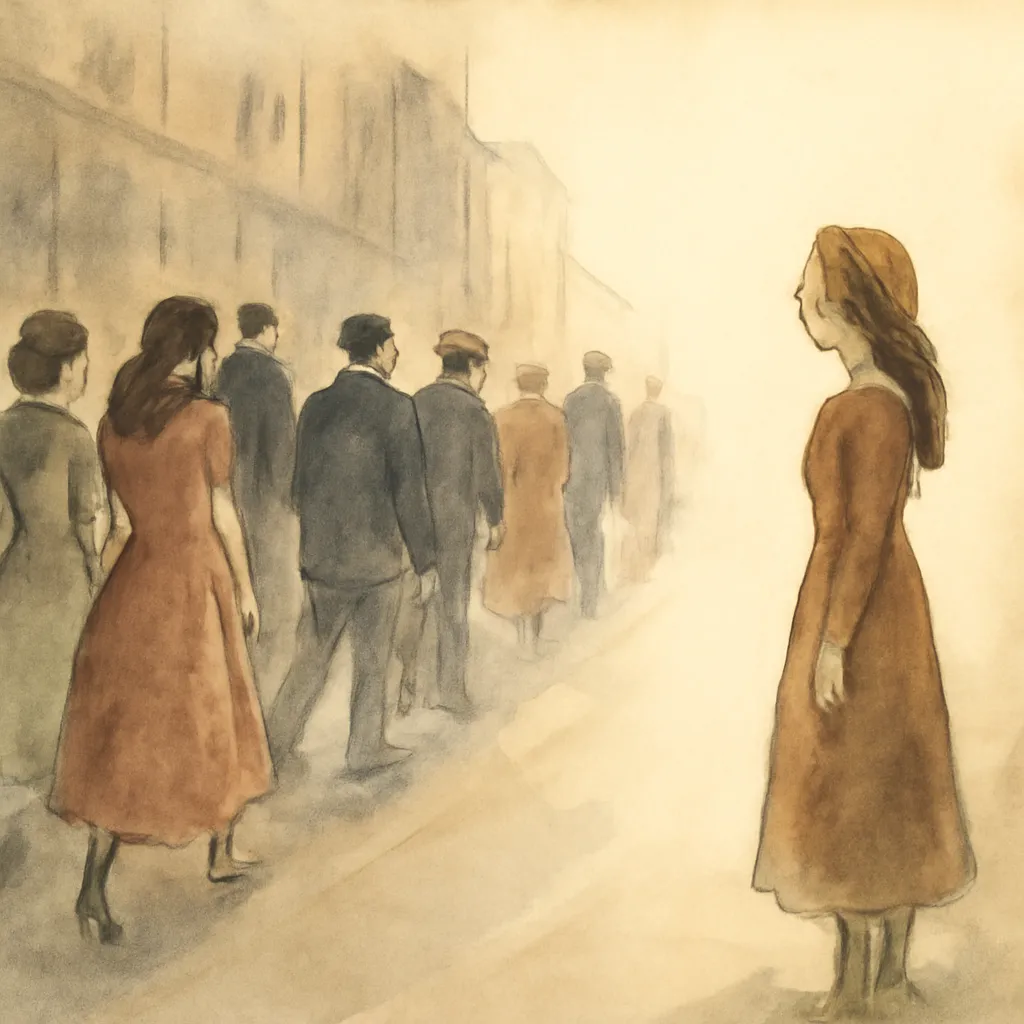
1.The Burden of Expectations
Bambi's early conversations with her father reveal the weight of expectations placed upon her. Professor Parkhurst envisions a future where Bambi is supported by a husband, but Bambi challenges this notion, asserting her desire for independence and success. She feels that her father’s focus on happiness lacks the practicality needed in a world where financial security is paramount. This tension reflects broader societal norms where women are often seen as needing a man for support, while Bambi's ambition to support herself and her partner reveals the struggle for autonomy that many women face. Bambi's articulate critique of her father's views showcases her growing awareness of her own identity and desires, setting the stage for her journey of self-discovery. She ultimately confronts the limitations of her father's vision, realizing that true fulfillment comes from pursuing her aspirations rather than conforming to traditional roles.
2.The Complexity of Relationships

Bambi and Jarvis's marriage is a central focus of the narrative, showcasing the complexities inherent in relationships built on love and ambition. Initially, Bambi takes on a nurturing role, supporting Jarvis's artistic endeavors while suppressing her own aspirations. As Jarvis immerses himself in writing, Bambi grapples with her identity, questioning whether her contributions are acknowledged or valued. Their dynamic illustrates the often unspoken sacrifices made in the name of love, as Bambi navigates the fine line between support and self-neglect. The tension in their relationship becomes palpable when Bambi realizes that her own dreams are being sidelined in favor of Jarvis's ambitions. The story poignantly captures the challenges couples face as they pursue their individual goals while maintaining their bond. Bambi’s role as the caretaker conflicts with her desire to be recognized as an individual in her own right, leading her to confront her feelings of resentment and the need for balance in their partnership.
3.The Quest for Artistic Success

Jarvis's attempts to sell his play serve as a metaphor for the struggle of artists to find their voice in a commercialized world. His experiences with various managers highlight the challenges of breaking into the industry while maintaining artistic integrity. The rejection from Belasco symbolizes not just a personal failure but also the harsh realities of the entertainment industry, where talent does not always equate to success. Jarvis’s journey reflects the frustrations of many artists who feel their work is undervalued, prompting readers to consider the balance between commercial viability and artistic authenticity. The competition in the artistic sphere becomes a backdrop against which Bambi and Jarvis must navigate their aspirations, illustrating how external pressures can influence personal relationships and creative endeavors. The relentless pursuit of recognition and success serves as a backdrop for Bambi's own creative awakening, as she observes the toll that rejection takes on her husband and the impact it has on their marriage.
4.Gender Norms and Modernity

As Bambi expresses her desire for independence, the story critiques traditional gender roles that confine women to domestic spheres. Bambi's assertion that modern husbands can be supported by their wives challenges the outdated expectations of her father's generation. This shift in perspective is crucial as it mirrors the changing landscape of the early 20th century, where women began to enter the workforce and assert their rights. Bambi’s journey reflects a growing awareness of female empowerment, as she seeks to define her success on her own terms, rather than conforming to societal expectations. The narrative captures the tension between traditional roles and the emerging modern identity, showcasing Bambi's struggle to carve out a place for herself in a world that often resists change. The evolving relationship dynamics challenge the norms of conventional marriage, allowing for a more egalitarian partnership where both voices are heard and valued, ultimately leading to Bambi's realization that she can be both a supportive partner and a successful individual.
5.The Influence of Mentorship

Mentorship plays a significant role in Bambi and Jarvis's lives, particularly through characters like Mr. Strong. His encouragement and belief in Bambi’s talent provide her with a sense of validation that she lacks from her husband. Mr. Strong's presence challenges Jarvis, sparking jealousy and insecurity but also prompting him to confront his own feelings and ambitions. The dynamic between Bambi, Jarvis, and Mr. Strong illustrates how mentorship can inspire growth but also complicate existing relationships, as the characters navigate their emotions and aspirations in a competitive environment. Mr. Strong’s belief in Bambi's potential contrasts with Jarvis's struggles, providing her with the support necessary to explore her creative endeavors. This relationship underscores the importance of having mentors who recognize and nurture talent, encouraging individuals to step outside their comfort zones and pursue their ambitions. The influence of mentorship raises questions about the balance of power in relationships and the ways in which external validation can affect personal dynamics.
6.The Nature of Happiness
The pursuit of happiness is a recurring theme, with Bambi often questioning what it truly means to be happy. Her father’s simplistic view of happiness contrasts sharply with her experiences, leading her to realize that fulfillment comes from more than just financial stability or societal approval. As she begins to carve out her identity as a writer, Bambi discovers that happiness is intertwined with passion and the courage to pursue one’s dreams. The exploration of happiness in the narrative emphasizes that true contentment is often found in the journey rather than the destination. Bambi’s evolution throughout the story illustrates that happiness is not a fixed goal but rather a fluid experience shaped by personal choices and passions. The narrative encourages readers to reflect on their own definitions of happiness, suggesting that it is essential to prioritize personal fulfillment and self-actualization over external expectations.
7.The Power of Self-Expression
Bambi’s decision to write her own story marks a pivotal moment in her journey toward self-discovery. Through writing, she channels her thoughts, dreams, and frustrations, allowing her to reclaim her voice in a world that often seeks to silence women. This act of self-expression becomes an empowering tool, enabling her to articulate her ambitions and desires clearly. It signifies a break from her previous identity as merely a supportive spouse, illustrating that creativity can be a powerful form of personal liberation. Bambi's writing journey resonates with anyone who has struggled to find their voice amid societal pressures, reinforcing the idea that self-expression is crucial for personal growth and fulfillment. The narrative showcases how the act of creation not only serves as a means of escape but also fosters a deeper understanding of one's identity and purpose in life, allowing Bambi to assert her individuality in a male-dominated society.
8.Confronting Personal Insecurities
Bambi’s relationship with Jarvis is fraught with insecurities that manifest as jealousy and misunderstanding. When Jarvis believes Bambi is more interested in Mr. Strong than in him, it leads to a rift that forces both characters to confront their vulnerabilities. This exploration of insecurity highlights the fragility of relationships, particularly when ambition and personal aspirations come into play. The narrative suggests that open communication and trust are essential for overcoming these insecurities, emphasizing the importance of emotional honesty in sustaining healthy relationships. As Bambi and Jarvis navigate their feelings, they learn that acknowledging insecurities can strengthen their bond rather than weaken it. The story illustrates that vulnerability, when embraced, can lead to deeper connections and greater understanding between partners as they seek to support one another through their respective journeys.
9.The Impact of Society on the Individual
The story paints a vivid picture of early 20th-century society, where social norms and expectations heavily influence individual choices. Bambi's struggles reflect the broader societal constraints placed on women, who often find themselves torn between personal aspirations and societal expectations. The characters' experiences underscore the notion that societal pressures can stifle creativity and personal growth, prompting readers to consider how contemporary norms continue to shape individual identities. Bambi's journey serves as a reminder that breaking free from societal expectations is crucial for personal fulfillment, and that the journey toward self-actualization often requires challenging the status quo. The narrative encourages readers to consider their own relationships to societal norms and how those relationships can either empower or confine their own aspirations and identities.
10.The Triumph of the Human Spirit
Despite the challenges Bambi and Jarvis face, their story ultimately celebrates resilience and the triumph of the human spirit. Bambi’s determination to pursue her dreams, despite setbacks and misunderstandings, showcases the importance of perseverance. The narrative suggests that while success may be elusive, the journey towards it is what truly matters. Bambi’s evolution from a passive participant to an active creator of her destiny embodies the spirit of resilience, encouraging readers to embrace their struggles as essential parts of their growth. The book concludes with a powerful affirmation of the human spirit’s capacity to overcome obstacles, inspiring readers to pursue their own dreams with courage and conviction. The story becomes a testament to the strength of love and ambition, encouraging individuals to persist in the face of adversity and to redefine success on their own terms.