1.The Compiler as a Multi-Stage Translator
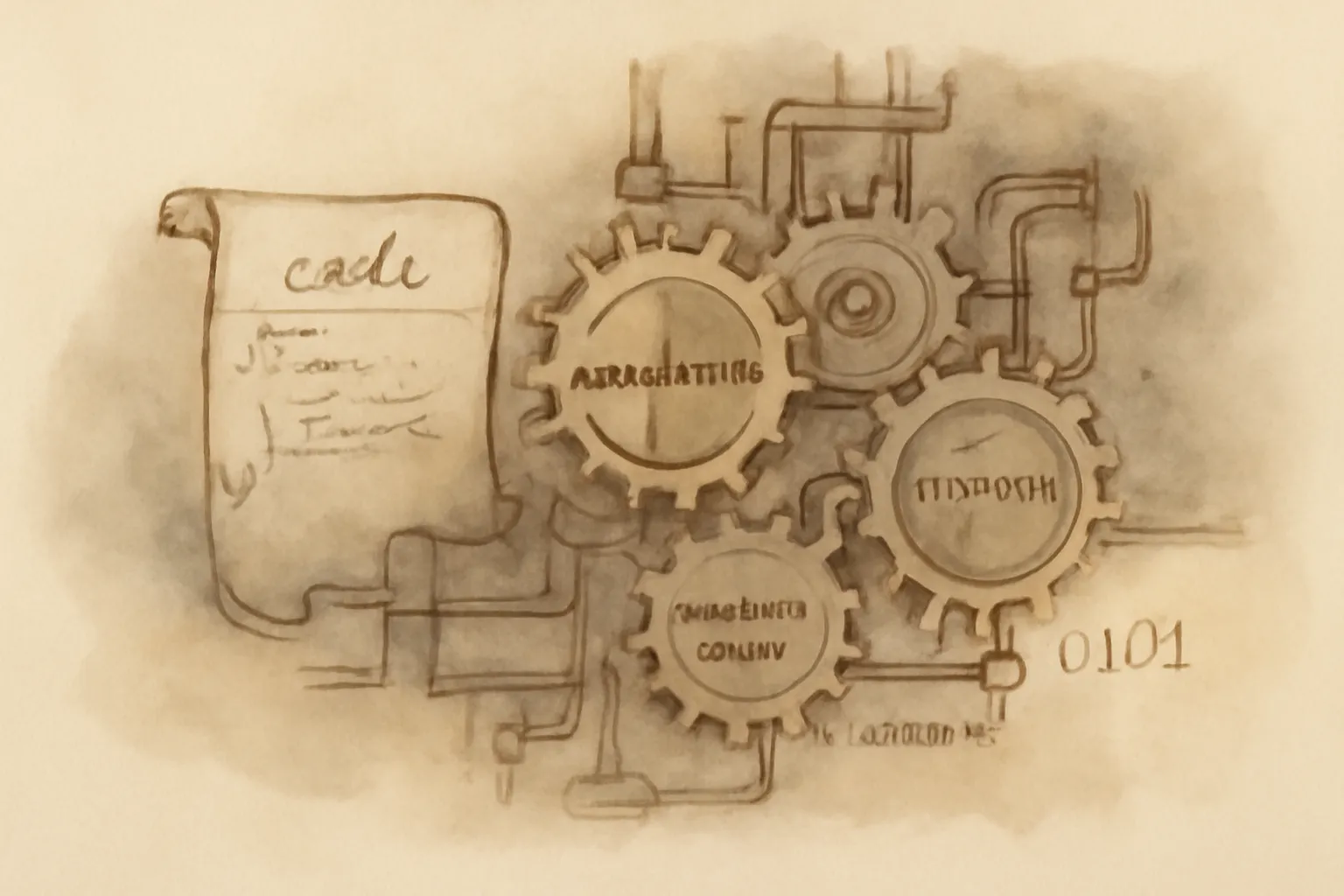
The book frames the compiler as a pipeline of distinct, interdependent stages—lexical analysis, syntax analysis, semantic analysis, optimization, and code generation. Each stage transforms the program closer to executable code, with clear interfaces and responsibilities. Understanding this modular structure is crucial for both building compilers and appreciating how programming languages are implemented. The book’s approach encourages readers to see compilers not as monolithic black boxes but as orchestrated systems where each part can be studied, improved, or replaced.
2.Lexical and Syntax Analysis: From Text to Structure
Aho et al. rigorously explain how raw program text is converted into structured data. Lexical analysis uses regular expressions and finite automata to break input into tokens, while syntax analysis applies context-free grammars and parsing algorithms (like LL and LR parsers) to build parse trees. These foundational techniques not only power compilers but are also widely applicable in text processing, interpreters, and language design.
3.Syntax-Directed Translation and Semantic Analysis
The book introduces syntax-directed translation as a way to attach meaning to syntactic structures, enabling the compiler to build intermediate representations and enforce language rules. Semantic analysis, including type checking and symbol table management, ensures that programs are not just grammatically correct but also meaningful and safe. These concepts bridge the gap between syntax and the actual behavior of programs.
4.Run-Time Environments and Memory Management
A core insight from the book is that compilers must generate code that works within a specific run-time environment. This includes managing stack frames, symbol tables, parameter passing, and storage allocation. By detailing these mechanisms, the authors show how language features (like recursion or dynamic allocation) are enabled by concrete implementation strategies.
5.Intermediate Code Generation and Optimization
The text emphasizes the importance of generating intermediate representations—machine-independent code that can be optimized and later translated to target machine code. The book covers a variety of optimization techniques, from simple peephole optimizations to more advanced data-flow analyses, highlighting their impact on program performance and resource usage.
6.Theoretical Foundations Meet Practical Engineering
What sets this book apart is its integration of theory (formal languages, automata, grammars) with practical engineering. Readers are equipped not just to understand existing compilers, but to design their own, balancing mathematical rigor with real-world constraints. This dual focus has made the book a touchstone for both academic study and professional compiler development.