1.The Dual Nature of Modern Satanism
Waite emphasizes that modern Satanism is not simply a revival of medieval demonology but represents a new cultural phenomenon rooted in the complexities of contemporary thought. He identifies two primary forms of devil worship: one that consciously aligns with the evil principle and another that regards the devil as a figure of rebellion against traditional religious perspectives. This distinction is crucial for understanding the motivations of modern practitioners, who may seek empowerment, autonomy, or spiritual enlightenment through these beliefs. Waite explores how the worship of Lucifer can be interpreted as an assertion of personal freedom, challenging the moral absolutism often associated with mainstream religion. By framing Satanism in this way, Waite encourages readers to confront their assumptions about good and evil and consider the deeper philosophical questions that surround the figure of Lucifer.
2.Nineteenth-Century Revival and the Mystical
The book's first chapter situates modern diabolism within the broader intellectual currents of the nineteenth century. Waite notes that this era marked a decline in the literal belief in demons, with materialist philosophy gaining traction. However, alongside this rationalist movement, there was a countervailing resurgence of interest in the mystical and the occult. Spiritualism and the exploration of transcendental phenomena flourished, often operating in secrecy and evoking both fascination and fear. Waite investigates how this revival of mystical thought created fertile ground for the reemergence of old beliefs in new forms, leading to a complex relationship between enlightenment rationality and the allure of the supernatural. He illustrates how the cultural landscape of the time contributed to a rethinking of previously held beliefs about evil, culminating in a nuanced understanding of modern Satanism that cannot be dismissed as mere superstition.
3.Catholic Church's Conflation of Lucifer and Satan
Waite explores how the Catholic Church has historically conflated Lucifer with Satan, framing this identification as a theological imperative. He reveals that, according to Church doctrine, Lucifer is not merely a separate entity but synonymous with the embodiment of evil. This perspective shapes the Church's approach to modern diabolism, branding any form of Luciferian worship as inherently malevolent. Waite argues that this conflation not only influences anti-Satanic literature but also perpetuates cultural fear and misunderstanding surrounding these beliefs. He highlights how the Church has effectively marginalized alternate interpretations of Lucifer, such as those that view him as a symbol of enlightenment and individuality. Waite's analysis reframes the discussion around modern Satanism, urging readers to consider the impact of religious narratives on societal perceptions of good and evil.
4.Freemasonry: A Contested Landscape
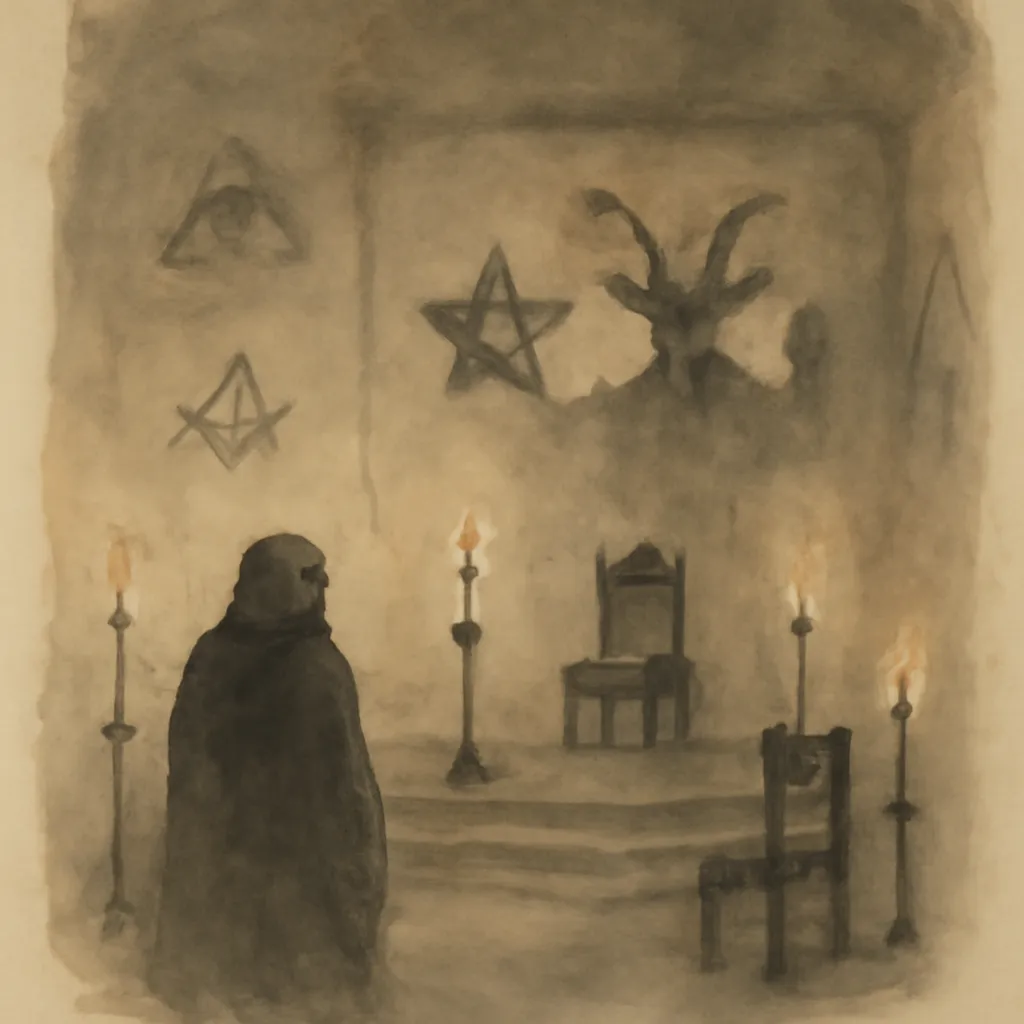
The relationship between Freemasonry and modern Satanism is another focal point in Waite's examination. He posits that the secretive nature of Masonic practices, coupled with allegations of connections to Luciferian worship, has fueled accusations of diabolism against the organization. Waite discusses how anti-Masonic literature—particularly from Catholic sources—has painted Freemasonry as a conduit for Satanic practices, attempting to link the fraternity’s rituals to the worship of Lucifer. He critically assesses these claims, emphasizing that while some elements within Freemasonry may embrace esoteric traditions, the organization as a whole cannot be accurately labeled as inherently Satanic. This nuanced approach invites readers to confront the complexities of belief systems and the dangers of oversimplification in discussions of secret societies. Waite urges a more informed understanding of Freemasonry, challenging the binary view of good versus evil as applied to these organizations.
5.Personal Testimonies: Voices from the Shadows
Waite incorporates a range of testimonies from individuals who claim to have participated in Luciferian practices, providing a first-hand perspective on the rituals and beliefs associated with modern Satanism. These personal accounts are essential for understanding the motivations that drive individuals into these practices, often rooted in desires for empowerment, autonomy, or exploration of spiritual truths. Waite emphasizes that while some testimonies may lack credibility or be steeped in exaggeration, they nonetheless offer valuable insights into the genuine experiences and beliefs of their authors. This exploration of personal narratives underscores the fact that modern Satanism can be both a personal journey and a reaction against societal norms. By presenting these diverse voices, Waite enriches the discussion around contemporary belief systems, allowing for a more empathetic and nuanced understanding of those who engage with these practices.
6.The Legacy of Leo Taxil: A Controversial Figure
One of the pivotal figures in Waite's analysis is Leo Taxil, a notorious anti-Masonic writer who claimed to expose the Satanic underbelly of Freemasonry. Taxil's sensational stories, particularly those involving the Palladian Order, have significantly shaped public perceptions of modern Satanism. Waite critiques Taxil's work, suggesting that while it generated considerable attention, it often relied on exaggeration and unfounded claims. The public's fascination with Taxil's revelations speaks to a broader societal fear of the unknown and a desire to make sense of perceived threats. Waite’s examination of Taxil serves as a cautionary tale about the power of narrative in shaping beliefs and the importance of critical analysis in discerning truth from fiction. He urges readers to consider how sensationalism can distort public understanding of complex issues, urging a more careful approach to claims about Satanism and its practitioners.
7.The Emergence of Female Freemasonry
Waite addresses the lesser-known aspect of female involvement in Freemasonry and its connections to modern Satanism. The emergence of female lodges, often described as 'adoptive lodges,' raises intriguing questions about gender roles within esoteric traditions. He argues that these lodges, while not inherently Satanic, have been mischaracterized by anti-Masonic literature as breeding grounds for diabolism. Waite explores how the inclusion of women in these secret societies reflects broader societal changes regarding gender and power dynamics. This exploration of gender within the context of occult practices challenges the often male-centric narratives of traditional esotericism and highlights the complexities of modern belief systems. By analyzing the dynamics of female Freemasonry, Waite not only sheds light on the evolving nature of gender roles but also encourages a reevaluation of what constitutes legitimate spiritual practices.
8.Critical Examination of Supernatural Claims
In his critique of the supernatural claims made by various witnesses of Lucifer, Waite emphasizes the need for skepticism and critical thinking. He argues that many of the alleged miraculous events and transcendental phenomena reported by practitioners lack credible evidence and often fall into the realm of fabrication or exaggeration. Waite illustrates this point by analyzing specific claims, revealing how they often violate the bounds of plausibility. By dissecting these claims, he encourages readers to approach narratives of the occult with a discerning eye, recognizing the potential for distortion in the name of sensationalism. This critical lens is essential for understanding the broader implications of belief in the supernatural and the ways in which such beliefs can be manipulated for various agendas. Waite’s insistence on rigorous scrutiny serves as a reminder of the importance of maintaining a balanced perspective in discussions of the arcane.
9.Philosophical Underpinnings of Luciferianism
Waite delves into the philosophical aspects of Luciferianism, arguing that it often represents a rejection of conventional morality and an embrace of individualism. He describes it as a form of 'reversed Christianity,' where Lucifer is viewed not as a symbol of evil but as a liberator and a bringer of light. This philosophical stance challenges traditional notions of good and evil, prompting practitioners to reevaluate their beliefs and values. Waite posits that this inversion of morality can be both liberating and dangerous, as it invites individuals to explore the darker aspects of human nature. This examination of the philosophical dimensions of Luciferianism encourages readers to engage with the more profound questions of existence and morality, exploring how personal beliefs can shape one's understanding of the world. Waite’s inquiry into these themes ultimately calls for a deeper introspection regarding the nature of belief and the ethical implications of one's spiritual choices.
10.Historical Context as a Lens for Understanding Diabolism
Waite stresses the significance of historical context in understanding modern diabolism. He argues that many contemporary beliefs and practices are deeply rooted in historical events, cultural shifts, and theological debates. By tracing these influences, Waite provides a comprehensive framework for understanding the evolution of diabolic worship. He articulates how historical moments, such as the Enlightenment and the rise of secularism, have shaped modern perceptions of evil and the occult. This historical perspective not only enriches the discussion of modern Satanism but also highlights the interconnectedness of various belief systems throughout history. Waite’s approach encourages readers to consider how past events shape current perceptions of evil and the ongoing dialogue surrounding spirituality and morality, demonstrating the importance of contextual analysis in assessing modern beliefs.