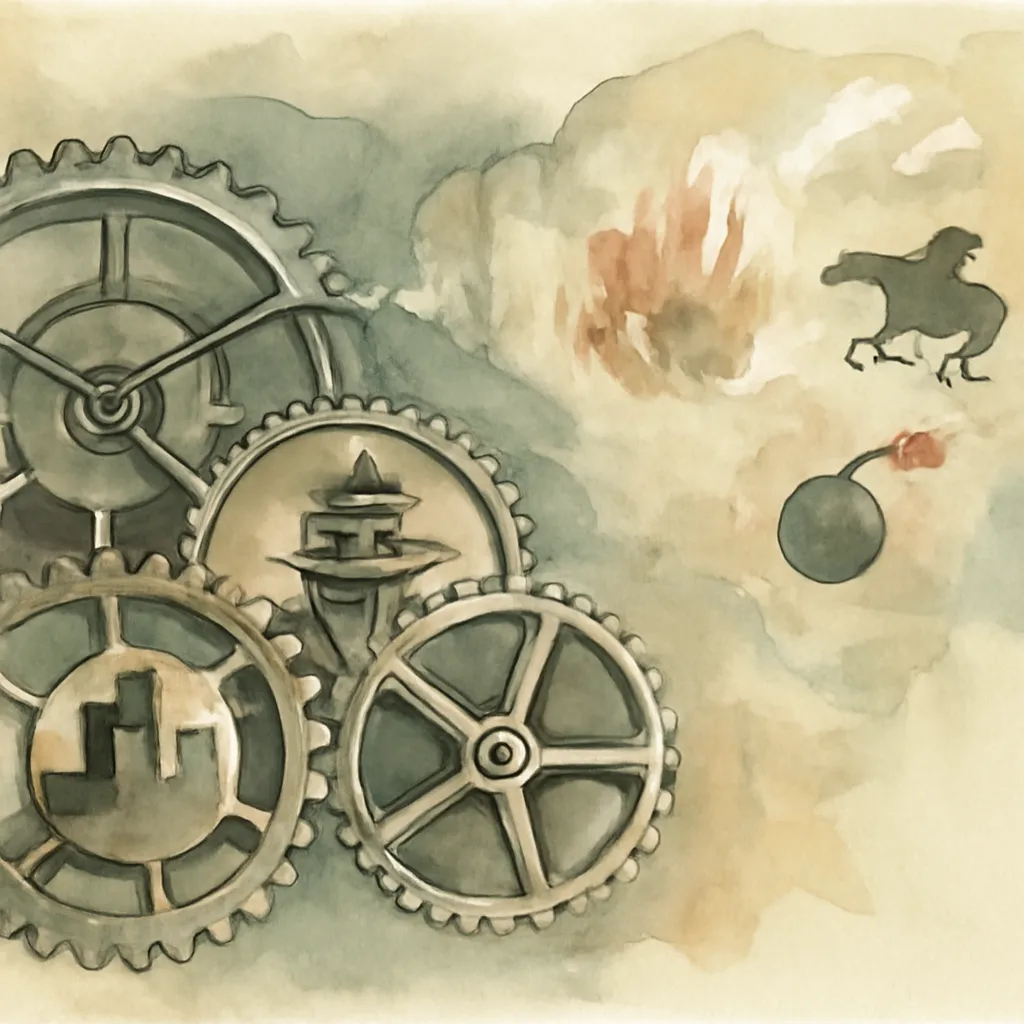
1.Psychohistory and the Prediction of Mass Behavior
At the heart of Foundation is the concept of psychohistory—a fictional science that combines mathematics, history, and sociology to predict the future of large populations. This idea raises provocative questions about determinism versus chaos: can the arc of civilization be foreseen or even guided? The story explores both the strengths and limits of such predictive power, especially when confronted with unpredictable individuals or events that disrupt the statistical models.
2.The Fragility and Resilience of Civilization
Asimov's galaxy is on the brink of a dark age, and the Foundation is established as a bulwark against the loss of knowledge and culture. The narrative examines how societies respond to crisis—whether through adaptation, preservation, or desperate measures. The struggle to maintain civilization's achievements in the face of entropy is a central tension, mirroring real-world concerns about cultural decline and renewal.
3.The Power and Peril of Hidden Elites
The existence of the Second Foundation introduces the theme of secret guardianship: a hidden group manipulating events from the shadows for the greater good. This raises ethical questions about who should wield such power, the legitimacy of unseen influence, and the potential dangers of benevolent manipulation. The tension between transparency and secrecy is a recurring motif.
4.The Role of the Individual Versus the Masses
While psychohistory predicts the actions of masses, the emergence of the Mule—a mutant with unique mental powers—demonstrates the disruptive force of singular individuals. The book interrogates the balance between historical inevitability and the capacity for exceptional people to alter the course of events, highlighting the unpredictability inherent in any system.
5.Knowledge as Power and Survival
Throughout Foundation, knowledge is portrayed as the ultimate tool for survival, both for individuals and societies. The preservation and strategic use of scientific and historical understanding become weapons in the struggle for dominance and security. The story suggests that intellectual capital can be as decisive as military or economic might.
6.The Ethical Ambiguity of Manipulation
Manipulation—of people, events, and even perceptions—is a recurring strategy employed by both the Foundation and its adversaries. The book invites readers to consider the moral costs of such tactics: is it justified to deceive or control others for a supposedly greater good? This ambiguity adds depth to the story's political and psychological dimensions.