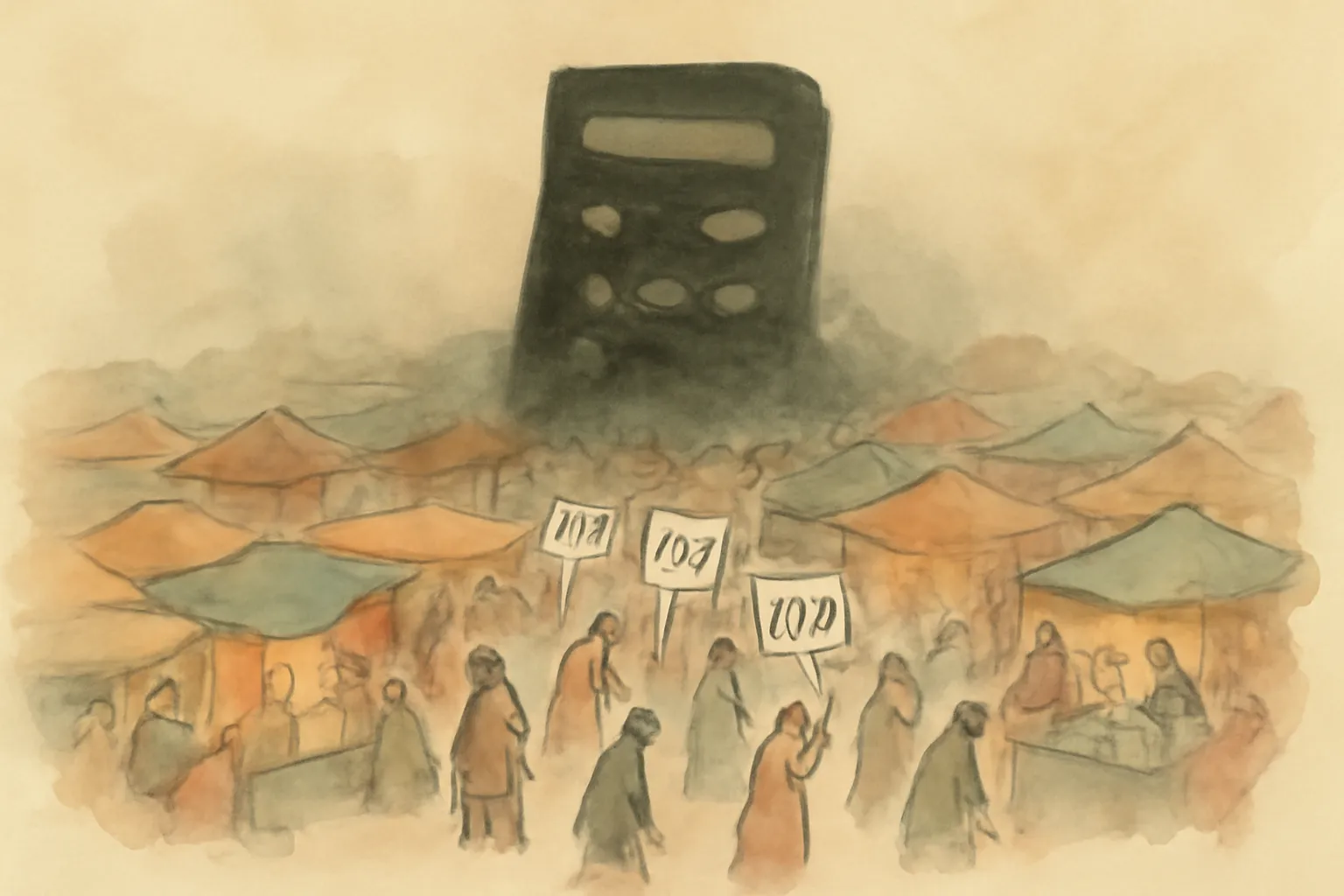
1.The Prevalence and Danger of Innumeracy
Paulos argues that mathematical illiteracy is widespread, even among educated people, and that it has serious consequences. He demonstrates how innumeracy leads to poor decision-making in areas such as health, finance, and politics. The inability to grasp probabilities, large numbers, and basic statistical concepts leaves individuals vulnerable to scams, superstition, and manipulation by those who exploit mathematical ignorance.
2.Misunderstanding Probability and Risk
A major theme is how people routinely misjudge probability and risk. Paulos illustrates how we overestimate rare dangers (like plane crashes) and underestimate common risks (like car accidents), often due to media sensationalism or cognitive biases. He shows that innumeracy leads to irrational fears and poor policy choices, and that a basic understanding of probability would help individuals make more rational decisions.
3.The Seduction of Coincidence and Numerological Fallacies
Paulos explains why people are so easily impressed by coincidences and patterns, attributing meaning where there is none. He discusses how innumeracy fuels belief in pseudoscience, astrology, and numerology, as people fail to appreciate how likely coincidences actually are in large populations. This misunderstanding can lead to magical thinking and the spread of misinformation.
4.The Media’s Role in Spreading Innumeracy
The book criticizes the media for perpetuating mathematical errors, whether by sensationalizing statistics or failing to provide context. Paulos points out that journalists often lack basic numeracy skills themselves, which leads to misleading headlines and public confusion. He calls for greater mathematical literacy among both reporters and their audiences to improve the quality of public discourse.
5.Education and the Roots of Mathematical Anxiety
Paulos explores why so many people are uncomfortable with math, tracing it to educational practices that emphasize rote memorization over understanding. He argues that math is often taught in a way that feels disconnected from real life, fostering anxiety and avoidance. Paulos advocates for teaching math as a creative, engaging subject that is relevant to everyday experience.
6.Why Numeracy Matters for Democracy
Innumeracy isn’t just a personal problem; it has societal implications. Paulos contends that a numerate public is essential for a functioning democracy, as citizens need to interpret data, evaluate risks, and understand statistics to make informed choices. Without these skills, societies are more susceptible to manipulation, demagoguery, and poor policy decisions.