1.Milton's Early Life and Influences
John Milton was born into a family that valued education and the arts, with a father who was a committed Puritan and an amateur musician. His early education was a mix of home schooling and formal instruction at St. Paul's School, where he developed a voracious appetite for reading. By the age of twelve, he was already writing poetry, albeit of little merit. His formative years were spent steeped in the classics at Cambridge, where he honed his literary skills and began to dream of immortality through his writing. The vibrant, bustling atmosphere of London, filled with shipping and adventure, further influenced his poetic imagery, as seen in his later works where he frequently drew on nautical themes. This blend of personal upbringing and exposure to a rich cultural milieu laid the foundation for Milton's future as a poet and thinker.
2.The Political Context of Milton's Work
Milton's literary career unfolded against a backdrop of intense political upheaval in England, marked by the English Civil War and the subsequent rise of Puritanism. His early poems reflect a growing political consciousness, transitioning from youthful mirth to a more somber engagement with the political realities of his time. Milton was deeply influenced by the radical ideas circulating in the Puritan movement, which championed liberty and individual conscience. His prose works, often seen as a departure from poetic aesthetics, reveal his commitment to political reform and his belief in the power of the written word to effect change. Critics have often lamented the intertwining of Milton's poetic and political endeavors, yet this fusion is essential to understanding his vision of human liberty and the role of the poet in society.
3.The Evolution of Milton's Prose Works
Milton's prose writings serve a practical aim, advocating for reforms in a society rife with corruption and tyranny. Although many of his proposed reforms were not realized, the clarity and persuasive power of his arguments resonate through history. His prose can be classified into various tracts, each addressing specific political and religious issues, often invoking biblical themes, such as the story of Samson, to illustrate his points. The occasional nature of these writings highlights their immediacy, yet they also reflect Milton's broader philosophical beliefs about liberty, virtue, and human potential. Despite the initial prejudice against politically engaged poets, Milton's prose is a testament to his belief that poetry and politics can coexist, enriching both realms. His sharp wit and eloquent style in these works suggest that he viewed himself not just as a poet, but as a vital participant in the political discourse of his time.
4.Paradise Lost: A Universal Epic
Milton's *Paradise Lost* stands as a monumental achievement in the epic tradition, addressing themes of humanity's fall and redemption. The poem transcends the narrative of a single individual or nation, instead focusing on the fate of all humankind and the cosmic battle between good and evil. Milton's innovative treatment of this theme is evident in his expansive cosmography, which encompasses Heaven, Earth, and Hell, and in his exploration of profound moral questions about free will and divine justice. The central act of disobedience, epitomized by Eve's fateful decision to eat the forbidden fruit, serves as a catalyst for the unfolding drama of human history. Milton's ability to weave together diverse elements—from classical references to contemporary political thought—creates a rich tapestry that engages readers on multiple levels. His portrayal of Satan as a complex anti-hero complicates traditional notions of good and evil, inviting readers to reflect on the nature of rebellion and its consequences.
5.Characterization in Paradise Lost
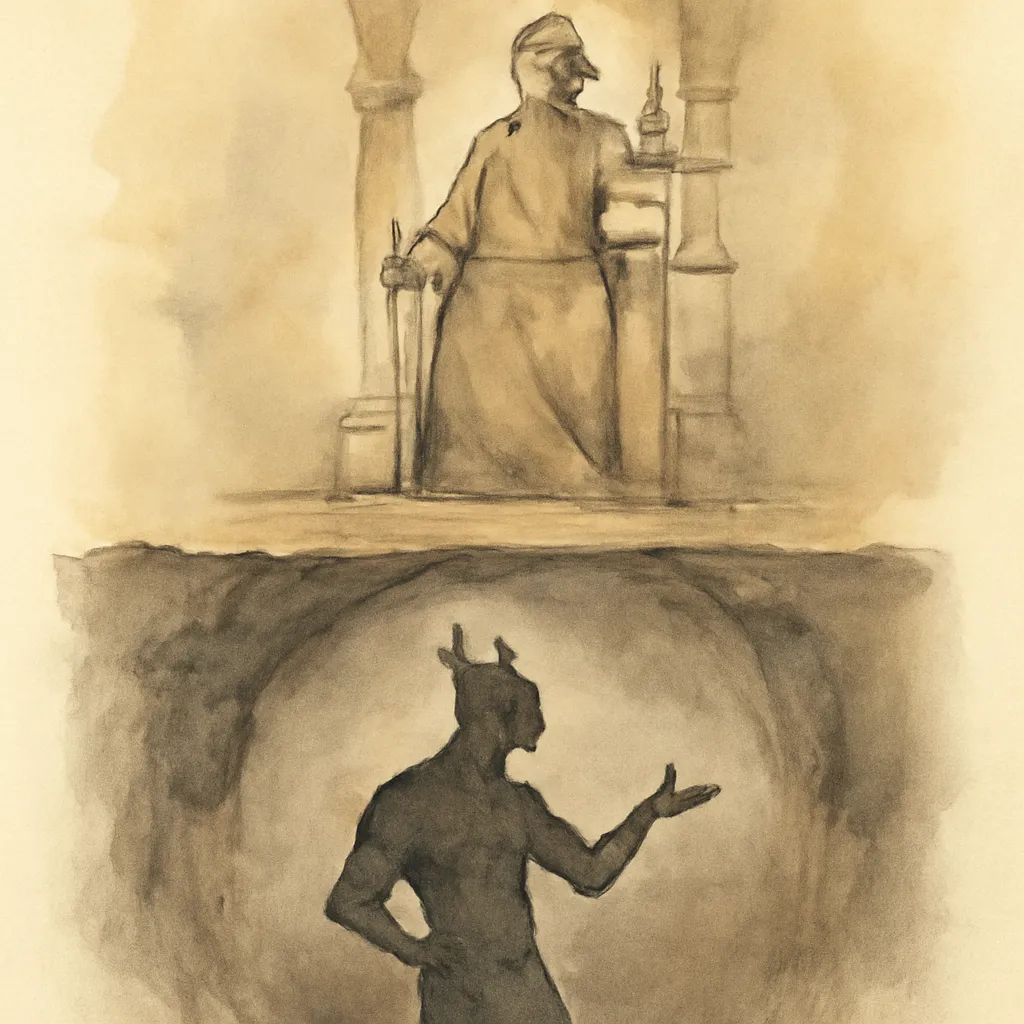
The characters in *Paradise Lost* are vividly drawn, each embodying different facets of Milton's philosophical and theological inquiries. God, as the supreme being, operates with a sense of divine justice, while Satan emerges as a charismatic figure whose rebellion raises questions about authority and autonomy. Milton's depiction of Adam and Eve reflects his views on love, beauty, and the human condition, challenging the reader to consider the nature of their relationship and the implications of their choices. The interplay between these characters is not just a narrative device; it serves Milton's argumentative purpose of justifying divine providence and exploring the complexities of human existence. The dialogues and interactions among the characters are laden with philosophical depth, inviting readers to engage with the moral dilemmas faced by each figure. Through their struggles, Milton examines the broader themes of temptation, redemption, and the quest for knowledge.
6.Milton's Distinctive Style and Meter
Milton's poetic style is characterized by its use of blank verse, a departure from the rigid structures of earlier English poetry. His innovative use of meter creates a musical quality that enhances the emotional resonance of his themes. The richness of his vocabulary and his preference for Saxon words over Latinate ones contribute to the accessibility and power of his verse. Milton's diction is a carefully crafted mosaic, rich in imagery and allusion, allowing him to convey complex ideas with clarity. His use of mixed metaphors and syntactical complexity often reflects the intensity of his themes and emotions. Despite the challenges posed by his style, Milton's poetry remains a model of eloquence and depth, influencing generations of poets who followed. His metrical innovations and stylistic choices have left a lasting imprint on English literature, establishing a standard against which subsequent poets have measured their work.
7.The Influence of Milton on English Poetry
Milton's impact on English poetry is profound and far-reaching, marking a transition between the Elizabethan and Augustan eras. His unique voice and style forged a path for later poets, even as he remained a solitary figure in his own time. The absence of a direct lineage among his contemporaries speaks to his originality and the distinctiveness of his vision. While poets like Dryden and Pope reformed English verse, Milton's innovations contributed to a broader understanding of poetic expression. His works inspired a wave of adaptations and imitations during the 18th century, signaling his central role in the evolution of poetic diction. Milton's use of personification, epic catalogues, and grand similes established a new standard for poetic ambition. The enduring popularity of *Paradise Lost* and his other writings ensure that his influence is felt not just in literary circles but also in the cultural and philosophical discussions that shape society.
8.The Legacy of Milton's Religious and Political Thought
Milton's writings reflect a deep engagement with the religious and political issues of his time, positioning him as a critical voice in the discourse on liberty and governance. His Puritan beliefs inform much of his work, as he grapples with the tension between divine authority and individual conscience. This struggle is particularly evident in his prose, where he advocates for freedom of thought and expression, challenging the established norms of Church and State. Milton's legacy as a political thinker is marked by his unwavering commitment to liberty and his critique of tyranny, making him a precursor to later democratic ideals. His exploration of faith, reason, and morality invites readers to consider the complexities of belief and the responsibilities that come with freedom. Through his life and work, Milton embodies the tensions of his era, leaving a legacy that continues to resonate in contemporary discussions of individual rights and societal obligations.
9.Milton's Unique Position in Literary History
Milton occupies a unique niche in literary history, bridging the gap between the Elizabethan and Augustan ages while remaining distinct from both. His works reflect a departure from the romanticism of the Elizabethans, as he sought to redefine poetic expression and thematic exploration. Unlike his contemporaries, Milton did not seek to imitate or follow established trends; instead, he carved out a space for himself as 'a vast species alone.' His refusal to conform to the literary conventions of his time has led some critics to view him as a belated Elizabethan, while others recognize his role as a revolutionary figure in English literature. This tension between continuity and innovation defines Milton's legacy, as he both reflects the cultural milieu of his time and challenges it through his writing. By examining Milton's place in the literary canon, readers can appreciate the complexities of his contribution to poetry and the enduring significance of his ideas.