1.The Multiverse: Beyond the Big Bang
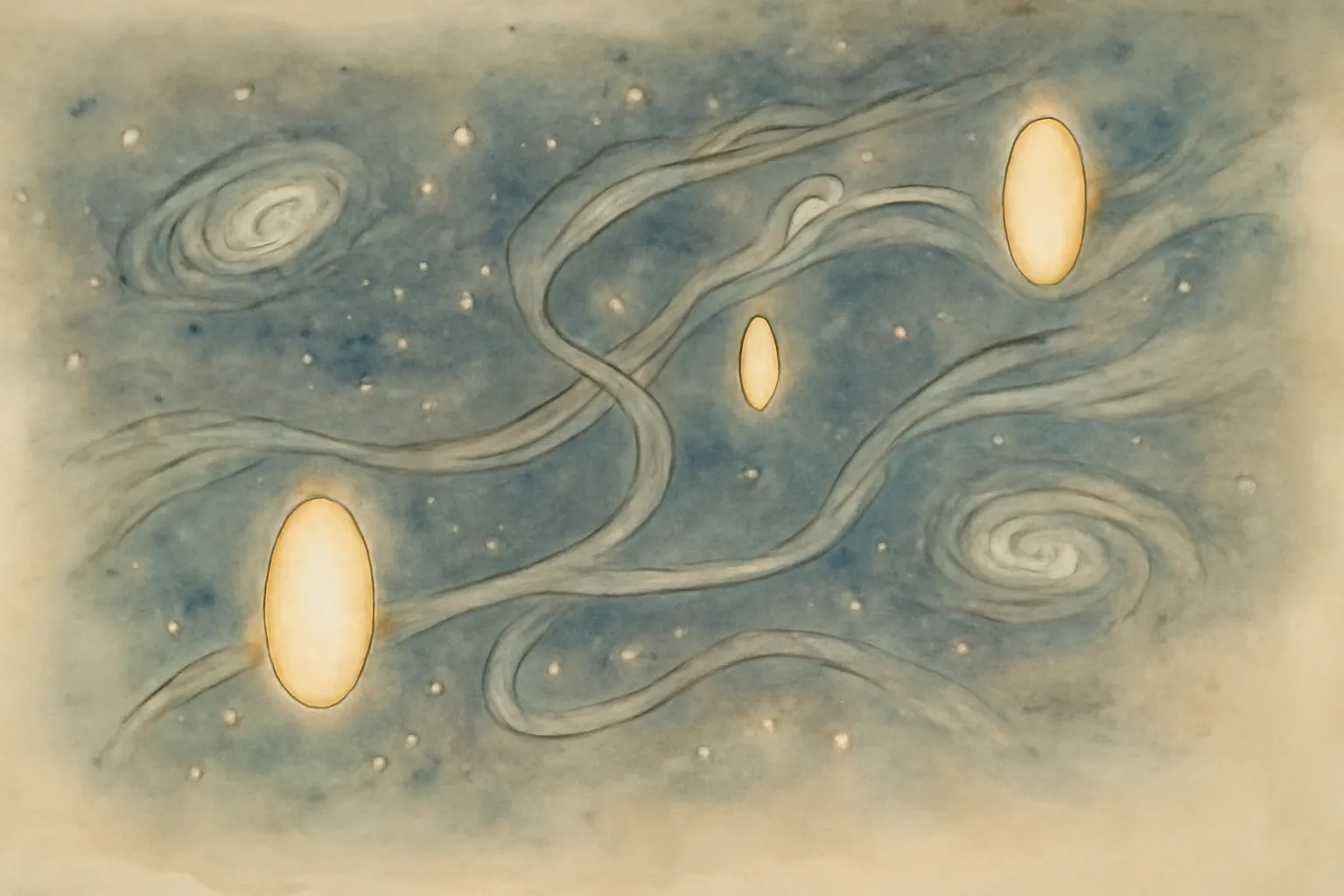
Kaku explores the revolutionary idea that our universe may be just one of countless others—a multiverse—emerging from advances in inflationary cosmology and string theory. He explains how the inflationary model of the Big Bang suggests that 'bubbles' of space-time could spawn separate universes, each with its own physical laws. This concept challenges our most basic assumptions about reality and opens the door to the possibility that our universe is not unique, but part of a vast cosmic landscape.
2.M-Theory and the Fabric of Reality
Central to the book is M-theory, a leading candidate for a 'theory of everything' that unifies all fundamental forces and particles. Kaku explains how M-theory extends string theory by positing higher-dimensional objects (branes) and extra dimensions, potentially offering a framework in which parallel universes naturally arise. He makes these abstract ideas tangible, showing how they could reshape our understanding of space, time, and existence itself.
3.The Fate of the Universe
Kaku discusses the latest discoveries about the universe’s expansion, dark energy, and the possibility of a cosmic 'big freeze' or 'big rip.' He examines scenarios for how our universe might end and what that means for life, consciousness, and the possibility of escape to other universes. The book invites readers to contemplate both the fragility and the grandeur of cosmic existence.
4.Humanity’s Place in the Cosmos
Far from being a dry scientific treatise, 'Parallel Worlds' raises profound philosophical questions about our place in the universe. Kaku reflects on how new physics challenges traditional views of uniqueness and destiny, suggesting that humanity’s search for meaning is intertwined with the fate of the cosmos. The book encourages readers to see themselves as part of a much larger, possibly infinite, tapestry of existence.
5.Bridging Science and Imagination
Kaku skillfully connects rigorous science with the imaginative worlds of science fiction, demonstrating how ideas once considered fantastical—like wormholes, time travel, and universe-hopping—are now topics of serious scientific inquiry. He shows that the boundary between science and speculation is porous, and that today’s wildest theories may be tomorrow’s discoveries.
6.The Role of Observation and Technology
The book highlights how advances in observational technology—like the Hubble Space Telescope and cosmic microwave background experiments—have transformed cosmology from speculation to precision science. Kaku emphasizes that our ability to probe the universe’s origins and structure is accelerating, promising even more profound discoveries in the future.