
Cosmology · Big bang theory · Supergravity
Parallel Worlds by Michio Kaku — Summary, Key Ideas & Quotes
2004428 pages✦ 3-min Big ideas★ 3.8 (4)
Rate it
Is our universe dying? Could there be other universes?In Parallel Worlds, world-renowned physicist and bestselling author Michio Kaku--an author who "has a knack for bringing the most ethereal ideas down to earth" (Wall Street Journal)--takes readers on a fascinating tour of cosmology, M-theory, and its implications for the fate of the universe.In his first book of physics since Hyperspace, Michio Kaku begins by describing the extraordinary advances that have transformed cosmology over the last century, and particularly over the last decade, forcing scientists around the world to rethink our understanding of the birth of the universe, and its ultimate fate. In Dr. Kaku's eyes, we are living in a golden age of physics, as new discoveries from the WMAP and COBE satellites and the Hubble space telescope have given us unprecedented pictures of our universe in its infancy.As astronomers wade through the avalanche of data from the WMAP satellite, a new cosmological picture is emerging. So far, the leading theory about the birth of the universe is the "inflationary universe theory," a major refinement on the big bang theory. In this theory, our universe may be but one in a multiverse, floating like a bubble in an infinite sea of bubble universes, with new universes being created all the time. A parallel universe may well hover a mere millimeter from our own. The very idea of parallel universes and the string theory that can explain their existence was once viewed with suspicion by scientists, seen as the province of mystics, charlatans, and cranks. But today, physicists overwhelmingly support string-theory, and its latest iteration, M-theory, as it is this one theory that, if proven correct, would reconcile the four forces of the universe simply and elegantly, and answer the question "What happened before the big bang?"Already, Kaku explains, the world's foremost physicists and astronomers are searching for ways to test the theory of the multiverse using highly sophisticated wave detectors, gravity lenses, satellites, and telescopes. The implications of M-theory are fascinating and endless. If parallel worlds do exist, Kaku speculates, in time, perhaps a trillion years or more from now, as appears likely, when our universe grows cold and dark in what scientists describe as a big freeze, advanced civilizations may well find a way to escape our universe in a kind of "inter-dimensional lifeboat." An unforgettable journey into black holes and time machines, alternate universes, and multidimensional space, Parallel Worlds gives us a compelling portrait of the revolution sweeping the world of cosmology.
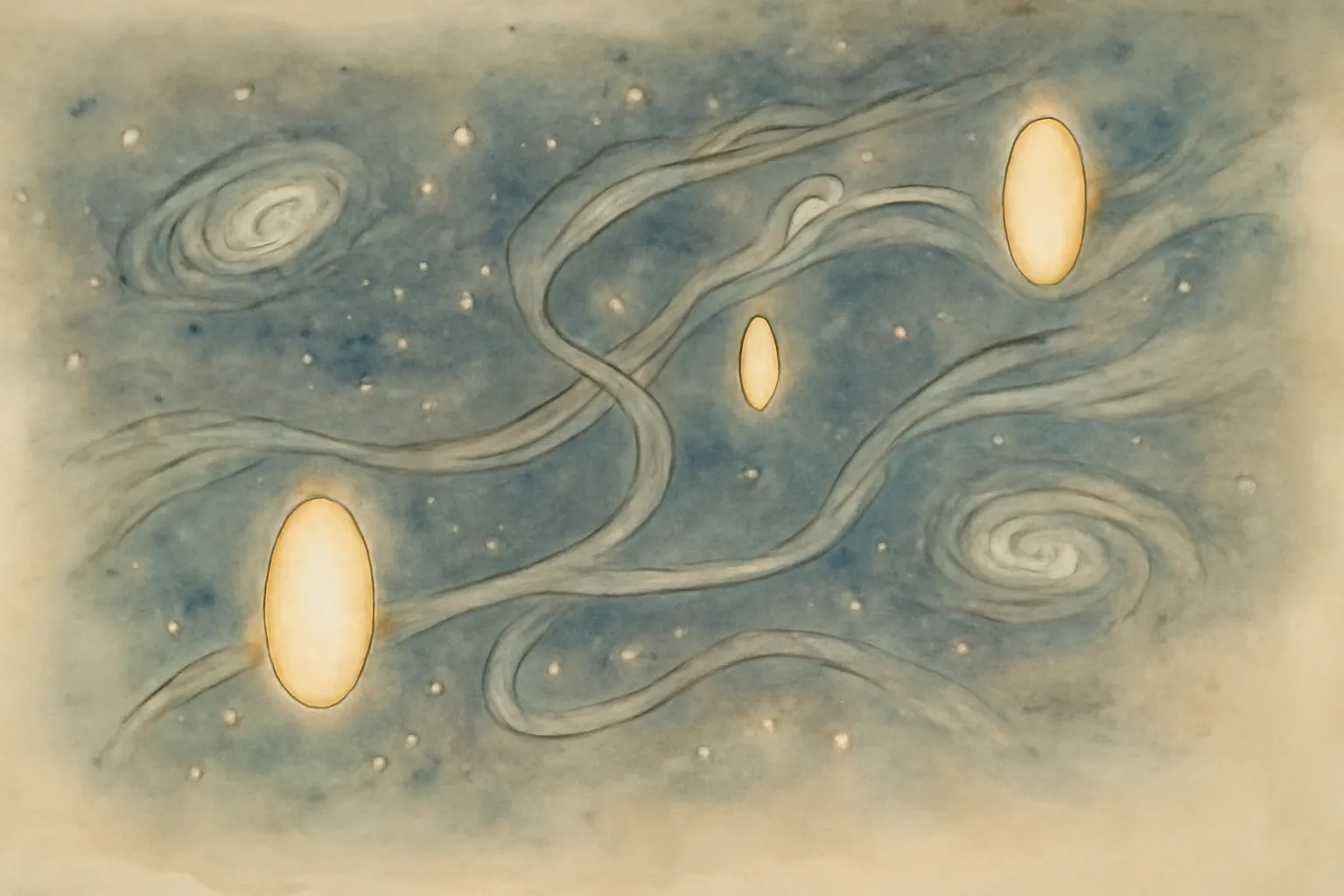
Kaku explores the revolutionary idea that our universe may be just one of countless others—a multiverse—emerging from advances in inflationary cosmology and string theory. He explains how the inflationary model of the Big Bang suggests that 'bubbles' of space-time could spawn separate universes, each with its own physical laws. This concept challenges our most basic assumptions about reality and opens the door to the possibility that our universe is not unique, but part of a vast cosmic landscape.
Central to the book is M-theory, a leading candidate for a 'theory of everything' that unifies all fundamental forces and particles. Kaku explains how M-theory extends string theory by positing higher-dimensional objects (branes) and extra dimensions, potentially offering a framework in which parallel universes naturally arise. He makes these abstract ideas tangible, showing how they could reshape our understanding of space, time, and existence itself.
“In some sense, the multiverse is no longer a speculation; it has become a working hypothesis.”


