1.Active Listening as a Core Skill
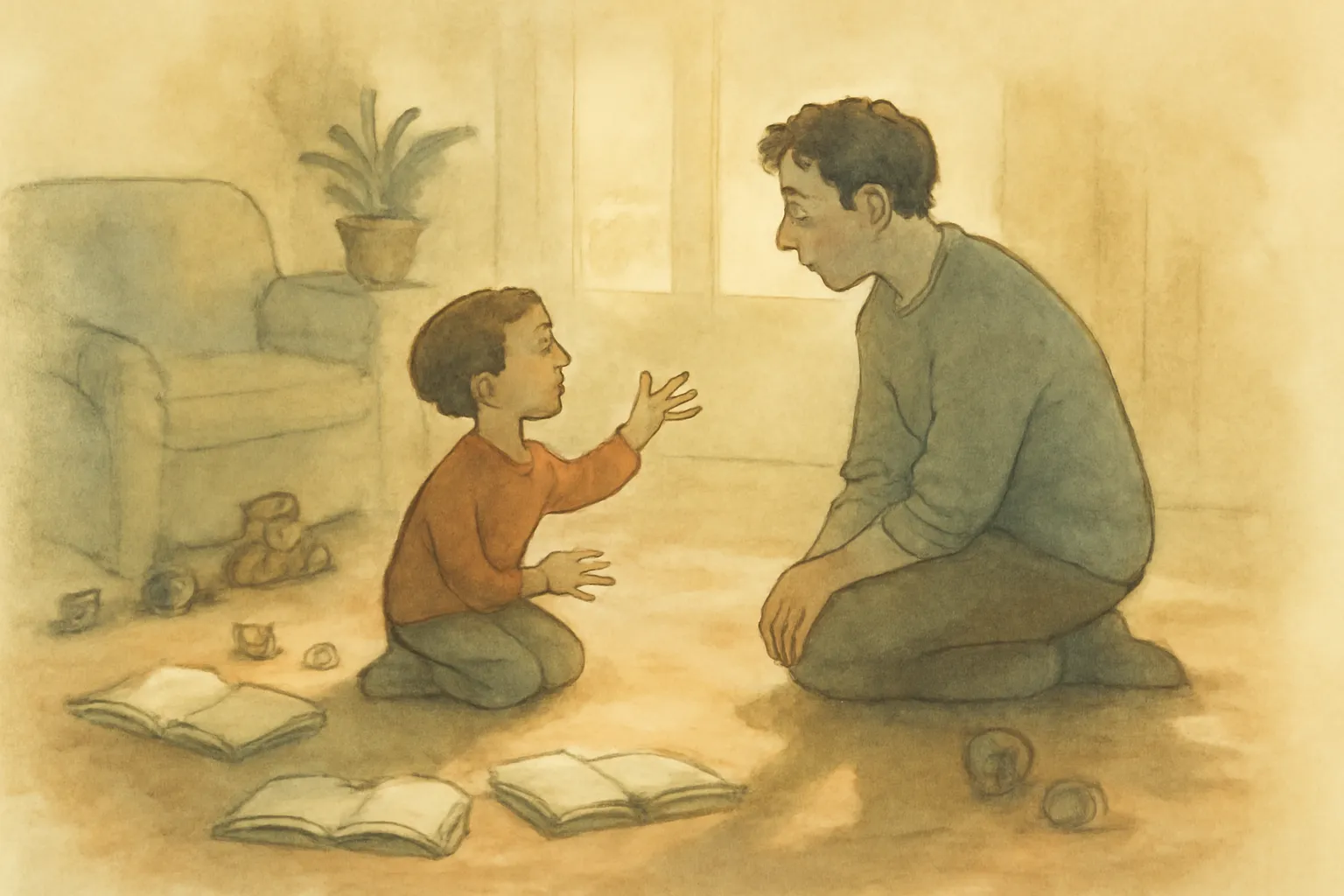
Gordon emphasizes that truly hearing your child is foundational to effective parenting. Active listening means giving your full attention, reflecting feelings, and avoiding judgment or immediate solutions. This approach helps children feel understood and respected, which in turn encourages them to open up and trust their parents. By modeling this skill, parents teach children how to communicate their own feelings and needs constructively.
2.I-Messages vs. You-Messages
Instead of blaming or criticizing children with 'You' statements (e.g., 'You're so messy!'), Gordon advocates for 'I-Messages' that express the parent's feelings and needs without assigning fault (e.g., 'I feel frustrated when toys are left out because I trip over them'). This shift reduces defensiveness and invites collaboration, making it easier to resolve issues without power struggles.
3.The 'No-Lose' Conflict Resolution Method
A cornerstone of P.E.T. is the 'No-Lose' method, which rejects both authoritarian and permissive approaches. Instead of one side winning at the other's expense, parents and children work together to find solutions that satisfy everyone’s needs. This process not only resolves immediate conflicts but also teaches children valuable problem-solving and negotiation skills.
4.Letting Children Own Their Problems
Gordon encourages parents to distinguish between their own problems and those that belong to the child. When a problem is the child's, the parent’s role is to support and guide, not to take over. This fosters independence, self-reliance, and confidence in children, as they learn to manage their own challenges with parental support rather than intervention.
5.Moving Beyond Punishment and Rewards
Instead of relying on punishment or rewards to control behavior, P.E.T. promotes intrinsic motivation and mutual respect. Gordon argues that external controls can undermine trust and self-esteem, while collaborative problem-solving and clear communication build lasting responsibility and internal discipline in children.
6.Creating a Climate of Respect
At its heart, P.E.T. is about building a family culture rooted in respect for both parents and children. By treating children as capable individuals with valid feelings and perspectives, parents model the kind of respectful, empathetic relationships they hope their children will carry into the world.