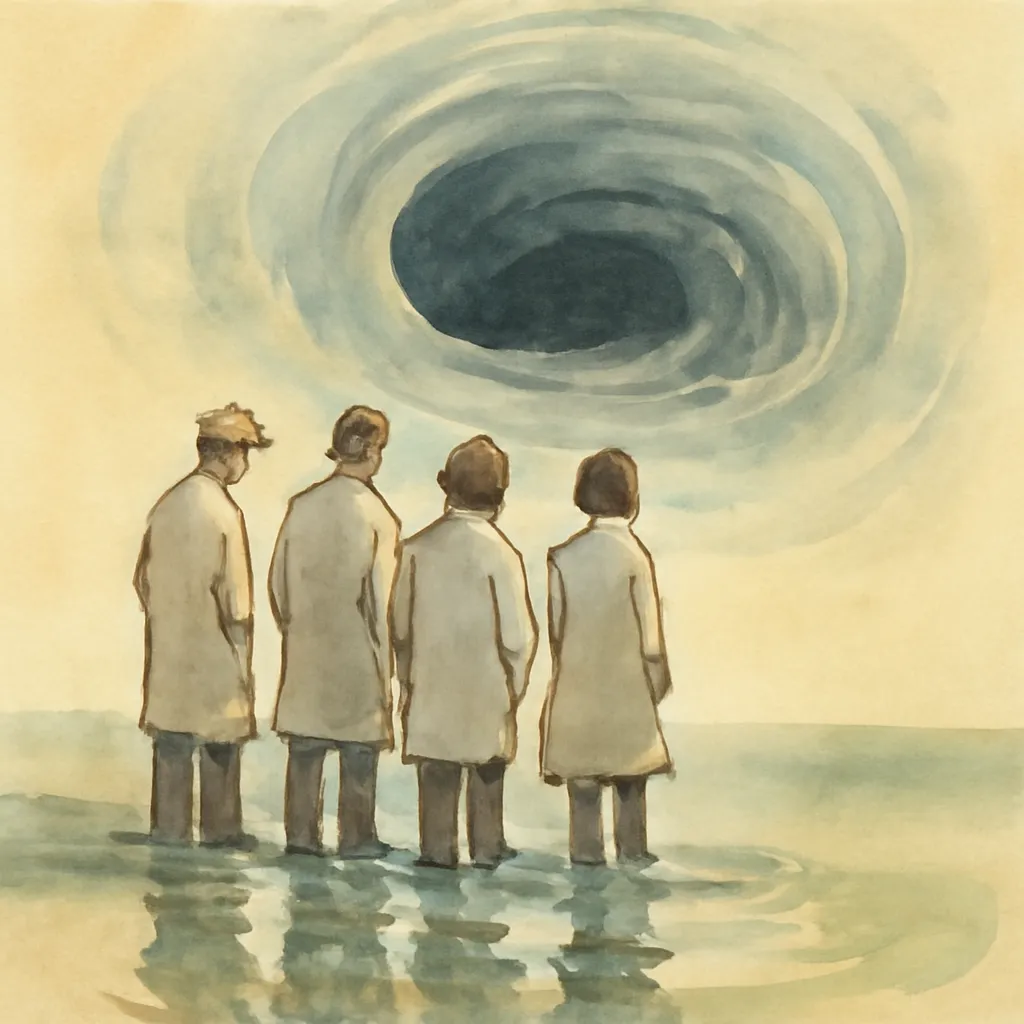
1.The Incomprehensibility of the Alien
At the heart of Solaris is the idea that some forms of intelligence may be so fundamentally different from our own that genuine communication is impossible. The sentient ocean of Solaris does not respond to human attempts at contact in any recognizable way; instead, it creates physical manifestations from the scientists’ subconscious minds. This challenges the assumption that the universe is ultimately knowable and that human logic or language can bridge every gap. Lem uses this premise to question the anthropocentric bias of science fiction and to suggest that the truly alien may remain forever beyond our grasp.
2.The Limits of Science and Rationality
The scientists on Solaris station are trained to observe, measure, and explain, yet they are utterly confounded by the planet’s phenomena. Their theories about the ocean’s motives and mechanisms continually fall short, exposing the limits of empirical inquiry when faced with something that defies categorization. Lem critiques the overconfidence of scientific rationalism, suggesting that some mysteries resist reduction to data or theory, and that humility is essential when confronting the unknown.
3.Memory, Guilt, and the Unconscious
Solaris’s most disturbing effect is its ability to materialize the deepest, often repressed, memories and traumas of the scientists. For protagonist Kris Kelvin, this means confronting a replica of his deceased lover, Rheya. These 'visitors' force the characters to face unresolved guilt, grief, and longing, blurring the line between reality and psychological projection. Lem uses this device to explore how the past shapes our present and how the human mind is both a refuge and a prison.
4.Humanity’s Self-Reflection
Despite their mission to study the alien, the scientists are ultimately forced to study themselves. The ocean’s enigmatic responses act as a mirror, reflecting their own fears, desires, and limitations. Lem suggests that the search for extraterrestrial intelligence is as much about understanding ourselves as it is about finding the Other. The inability to communicate with Solaris becomes a metaphor for the difficulty of true self-knowledge.
5.Isolation and Existential Uncertainty
The setting of the isolated space station amplifies feelings of loneliness, existential dread, and the fragility of human relationships. Cut off from Earth and confronted by inexplicable phenomena, the characters grapple with the meaning of their own existence and the possibility that the universe is indifferent—or even hostile—to human concerns. Lem’s portrayal of isolation is both literal and philosophical, inviting readers to question the nature of connection and meaning.
6.Critique of Human Hubris
Throughout Solaris, Lem subtly critiques the human tendency to project our own categories, emotions, and expectations onto the universe. The scientists’ failure to understand Solaris is not just a technical problem, but a result of their inability to move beyond their own perspectives. The novel warns against the arrogance of assuming that the cosmos will conform to human understanding or desires.