1.The Medical Gaze
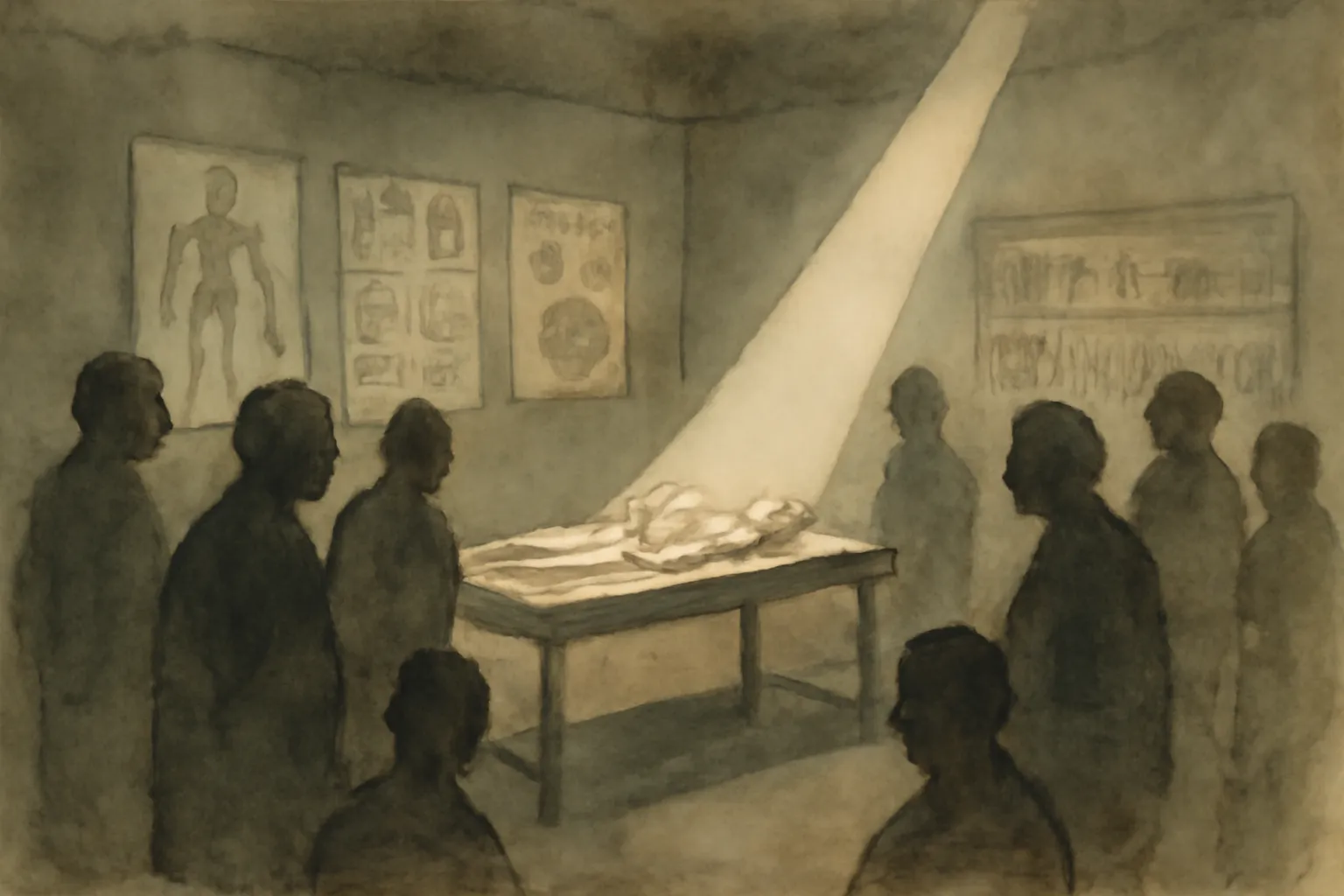
Foucault introduces the concept of the 'medical gaze'—a new way doctors began to look at patients in the late 18th and early 19th centuries. Instead of seeing the patient as a whole person, medicine shifted to viewing the body as an object to be observed, examined, and classified. This gaze separated symptoms from the individual's narrative, prioritizing what could be seen, measured, or dissected. The medical gaze is not just a technique but a form of power, shaping how illness and health are understood and managed.
2.Transformation of Medical Institutions
The book traces the rise of the modern clinic as a site of knowledge production. Hospitals and clinics became places not only for treatment but for systematic observation and recording of disease. This institutional shift allowed for the accumulation of data, the comparison of cases, and the development of new medical categories. It marked a move away from individualized, home-based care to standardized, institutionalized medicine, fundamentally altering the patient-doctor relationship.
3.Knowledge and Power
Foucault argues that the emergence of clinical medicine was not just about scientific progress—it was deeply entwined with new forms of social control. The ability to observe, record, and classify bodies gave doctors unprecedented authority. Medical knowledge became a tool for organizing society, defining norms, and managing populations. This intertwining of knowledge and power is central to Foucault’s broader philosophical project.
4.The Birth of the Modern Patient
With the rise of the clinic, the patient was redefined. No longer just a sufferer seeking relief, the patient became a case—a set of observable signs and symptoms to be interpreted by experts. This shift diminished the patient’s own voice and experience, placing authority in the hands of the medical profession. The modern patient, as Foucault describes, is both subject and object within the clinical system.
5.The Role of Language and Classification
Foucault explores how medical language changed alongside clinical practices. New ways of describing, recording, and classifying disease emerged, making illness something that could be mapped and compared. The very act of naming and categorizing disease was an exercise of power, shaping what could be known and treated. This focus on language highlights how medicine is not just a science but a system of representation.
6.Historical Contingency of Medical Truths
A key argument is that medical truths are not timeless or universal—they are products of specific historical circumstances. Foucault shows how what counts as evidence, diagnosis, or even disease itself has changed over time, shaped by social, political, and institutional forces. This challenges the idea of objective, value-free science, urging readers to question how knowledge is constructed.