1.The Political Power of the Dogaressas
The position of a Dogaressa was not merely ceremonial; it held substantial political weight. In many cases, the character and reputation of a Doge's wife influenced the council's decision during elections. The phrase 'Cherchez la Femme' aptly describes how the Lords of the Council often considered the Dogaressa's personality and public demeanor in their deliberations. Women like Dogaressa Teodora and Marina Galina were not just silent figures beside their husbands; they actively shaped the political landscape. Their presence could lend legitimacy and stability to their husbands' reigns, exemplifying how women could wield influence in a patriarchal society. This dynamic can be observed in various historical moments when a Dogaressa's public actions or personal traits swayed the opinions of powerful nobles, demonstrating that their influence extended beyond the domestic sphere.
2.Cultural and Artistic Patronage
The Dogaressas played a crucial role in the cultural life of Venice, often serving as patrons of the arts. Despite the scarcity of their portraits in Venetian art, their impact on artistic endeavors was profound. The book highlights how these women supported various crafts, from lace-making to painting, fostering a vibrant artistic community. For instance, Dogaressa Giovanna Dandolo-Malipiero is noted for her patronage of printing and lace-making, significantly contributing to Venice's reputation as a center of luxury and artistry. Furthermore, the Dogaressas often hosted salons and gatherings that brought together artists, writers, and intellectuals, creating an environment where culture could thrive. Their influence extended to the guilds, where the Dogaressas encouraged the production of exquisite goods that adorned both the city and its elite. This patronage ensured that Venice remained at the forefront of artistic innovation during the Renaissance.
3.Marriage Traditions and Social Customs
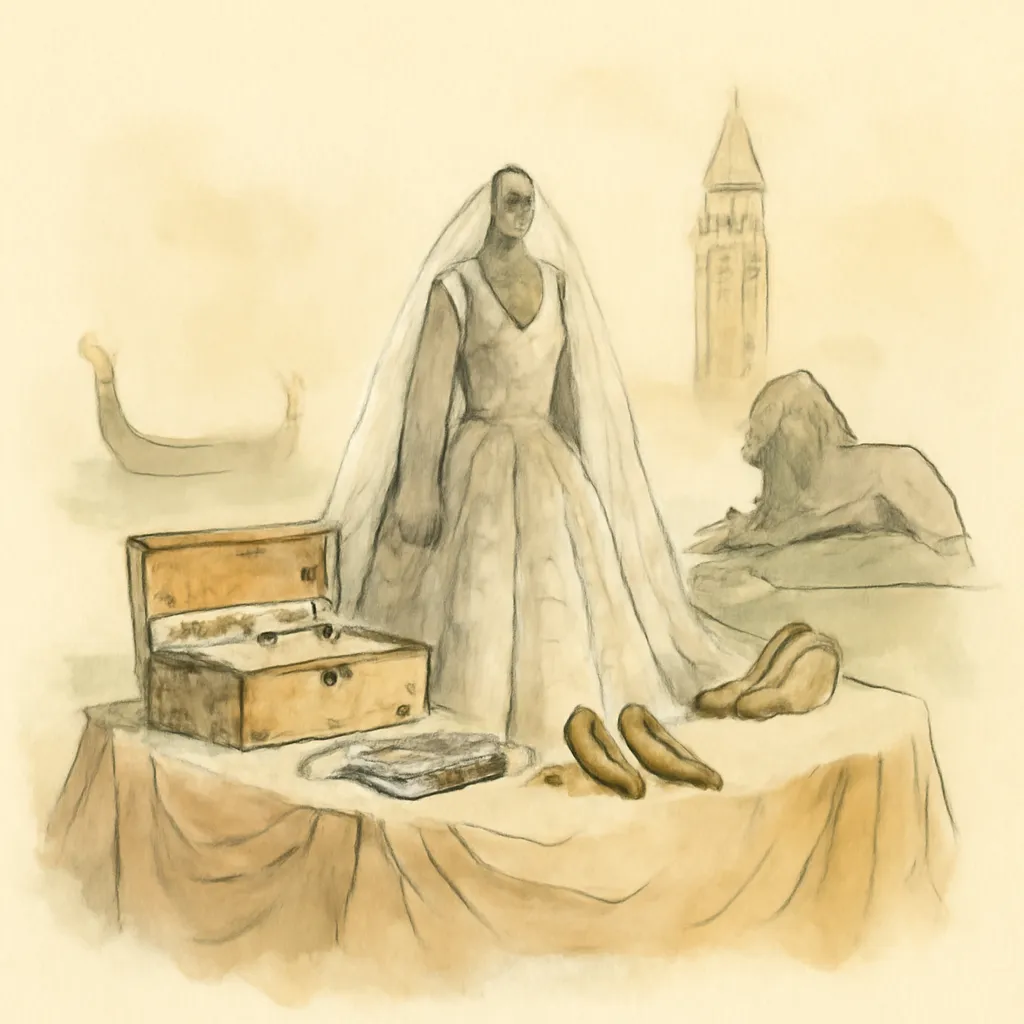
Marriage in Venice was steeped in tradition and ceremony, reflecting the city's rich cultural tapestry. The book delves into the intricate marriage customs of the time, including the grand bridal trousseaux and the symbolic rituals that accompanied weddings. The Dogaressas often had lavish weddings, showcasing their families' wealth and status. The 'Festa delle Marie,' a festival celebrating brides, serves as a poignant example of how marriage customs intertwined with public life. These events were not just personal milestones; they were public spectacles that reinforced social hierarchies and showcased the power dynamics within Venetian society. The narrative of how a Dogaressa's marriage could elevate her family's status illustrates the transactional nature of these unions, where love was often secondary to political alliances and societal advancement.
4.The Role of Dogaressas in Religion
Religion was a cornerstone of life in Venice, and the Dogaressas held significant roles within the spiritual landscape of the city. Many Dogaressas entered religious life after their husbands' deaths, becoming nuns or dedicating themselves to charitable works. The book illustrates how these women used their status to promote religious devotion and support the church. For instance, the story of a Dogaressa who became a nun after her husband's demise exemplifies the transition from public life to spiritual service. This transition often reflected the social expectations placed on women, highlighting how their identities were closely tied to their husband’s status. Moreover, Dogaressas were known to patronize religious institutions, providing funding for church repairs and charitable initiatives, thus ensuring their legacy persisted within the spiritual fabric of Venice.
5.Personal Sacrifices and Challenges
The lives of the Dogaressas were not without personal sacrifices and challenges. Many faced the harsh realities of political intrigue, marital infidelity, and the pressures of public life. The book recounts the poignant stories of women who endured betrayal and hardship yet displayed remarkable resilience. Dogaressa Aloycia, for example, suffered profoundly from her husband's infidelities but remained a figure of grace and dignity. These narratives reveal the emotional depth of the Dogaressas, illustrating their struggles and triumphs in a world dominated by male power and societal expectations. Their ability to navigate these challenges often involved forming alliances with other women or leveraging their influence in courtly life, showcasing the resourcefulness and adaptability of these remarkable women.
6.The Evolution of the Dogaressa's Role
Over the centuries, the role of the Dogaressa evolved in tandem with the shifting political and social landscape of Venice. Initially, these women had substantial influence, but as the Republic faced challenges, their roles became more constrained. The book traces this evolution, showing how the Dogaressas adapted to changing circumstances while still maintaining a level of agency. By the late Renaissance, the Dogaressas were often relegated to more ceremonial roles, yet some, like Dogaressa Morosina Morosini-Grimani, managed to assert their influence in unique ways. This transformation reflects broader societal changes and the ongoing negotiation of women's identities within the public sphere. The narrative emphasizes that although the Dogaressas' power waned, their legacies persisted, influencing future generations.
7.The Dogaressas as Symbols of Venetian Identity
The Dogaressas became emblematic of Venetian identity, representing the city's ideals of beauty, grace, and resilience. Their stories are interwoven with the very fabric of Venice, highlighting how these women embodied the spirit of the Republic. The book emphasizes how the Dogaressas' influence extended beyond their immediate families, impacting the broader cultural and social identity of Venice. Through their actions and legacies, they contributed to the romanticized image of Venice as a city of love and beauty, often personified through the figure of the Dogaressa herself. This symbolism underscores the integral role women played in shaping the narrative of their city, as they were often depicted in art and literature as the epitome of Venetian elegance and culture.
8.The Dogaressas and International Relations
Marriage alliances were a strategic tool in Venice's diplomacy, and the Dogaressas often found themselves at the center of these political maneuvers. The book discusses how these women were sometimes married off to foreign dignitaries to secure peace or strengthen alliances. For example, the marriage of Caterina Cornaro to the King of Cyprus illustrates how personal relationships could influence international politics. The Dogaressas’ roles in these alliances highlight the intersection of personal lives and political power, revealing how women were often used as pawns in the grand game of statecraft. The narrative also explores specific instances where a Dogaressa's diplomatic marriage led to significant political outcomes, emphasizing their importance in maintaining Venice's influence on the European stage.
9.The Legacy of the Dogaressas
The legacies of the Dogaressas endure, not just in historical records but in the cultural memory of Venice. The book explores how the stories of these women continue to inspire contemporary discussions about women's roles in society. Their lives serve as a reminder of the contributions women have made throughout history, often overlooked in traditional narratives. The Dogaressas left behind a rich legacy of resilience, creativity, and influence that shapes the identity of Venice today. This enduring impact prompts readers to reflect on the importance of recognizing women's contributions to history and society, encouraging a more inclusive understanding of the past that acknowledges the significant roles women have played in shaping our world.
10.A Unique Perspective on Venetian History
By focusing on the Dogaressas, the book provides a fresh perspective on Venetian history that often centers on male figures. The narratives of these women reveal the complexities of life in Venice, highlighting the interplay between gender, power, and society. These stories challenge the conventional historical narratives that frequently marginalize women's experiences. The unique lens through which the Dogaressas' lives are examined offers valuable insights into the cultural and social dynamics of Venice, encouraging readers to appreciate the multifaceted nature of history. This approach not only enriches our understanding of Venice but also emphasizes the importance of inclusive historical narratives, prompting a reevaluation of how we understand the past.