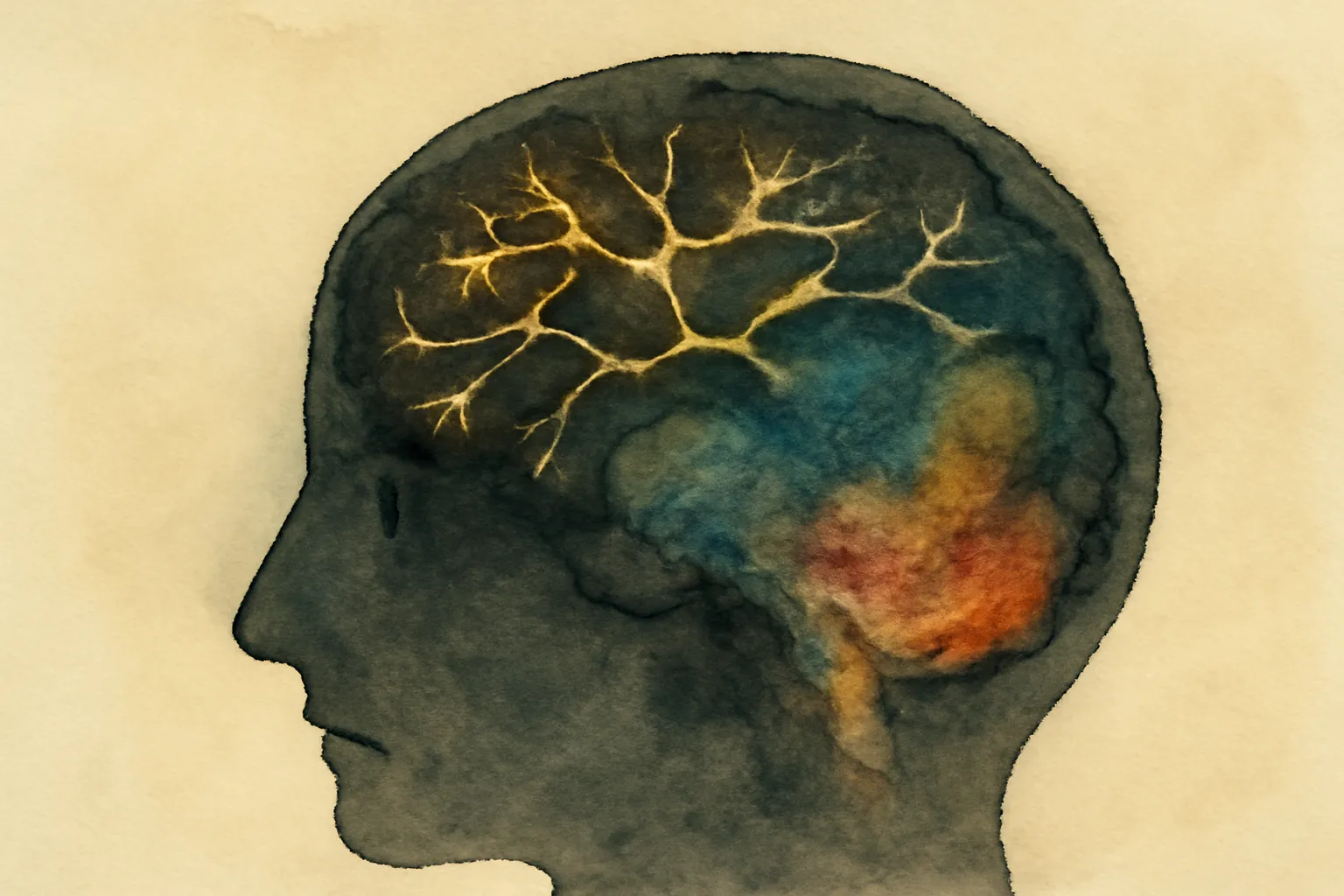
1.Emotions Are Brain States, Not Just Feelings
LeDoux argues that emotions are not simply feelings we experience, but complex brain states involving specific neural circuits. He distinguishes between the unconscious processing of emotions and conscious feelings, showing that much of our emotional life happens outside our awareness. This insight challenges the common belief that emotions are just subjective experiences, emphasizing their biological basis and evolutionary roots.
2.The Amygdala: The Brain’s Fear Center
A central theme is the amygdala’s critical role in processing fear. LeDoux details how sensory information can reach the amygdala through a 'low road'—a fast, primitive pathway that allows us to react to threats before conscious thought kicks in. This mechanism explains why we sometimes feel afraid before we know what’s scaring us, and why fear is so hard to control through rational thought alone.
3.Emotional Memories Are Hard to Erase
LeDoux explores how emotional memories, especially those related to fear, are stored differently from other memories. Traumatic experiences can leave lasting imprints in the brain, influencing behavior long after conscious memory fades. This helps explain persistent phobias and the challenges of overcoming trauma, highlighting the resilience—and stubbornness—of emotional learning.
4.Emotion and Survival: Evolution’s Blueprint
The book situates emotions within an evolutionary context, showing how they evolved as adaptive responses to environmental challenges. Fear, anger, and other emotions are not arbitrary; they are survival tools, hardwired into our brains to help us navigate danger, find mates, and build social bonds. This perspective reframes emotions as essential, not obstacles to rationality.
5.The Limits of Emotional Control
LeDoux challenges the notion that we can easily master our emotions through willpower. Because emotional responses originate deep in the brain, often bypassing conscious control, efforts to suppress or ignore them can be ineffective or even counterproductive. Recognizing these limits can foster greater self-understanding and compassion in ourselves and others.
6.Implications for Therapy and Everyday Life
Understanding the brain’s emotional systems has profound implications for treating anxiety, trauma, and mood disorders. LeDoux discusses how therapies that target emotional memories—rather than just conscious thoughts—may be more effective. For everyday life, his insights encourage us to respect the power of emotions and seek balance between feeling and thinking.