1.The Quest for Ideal Love

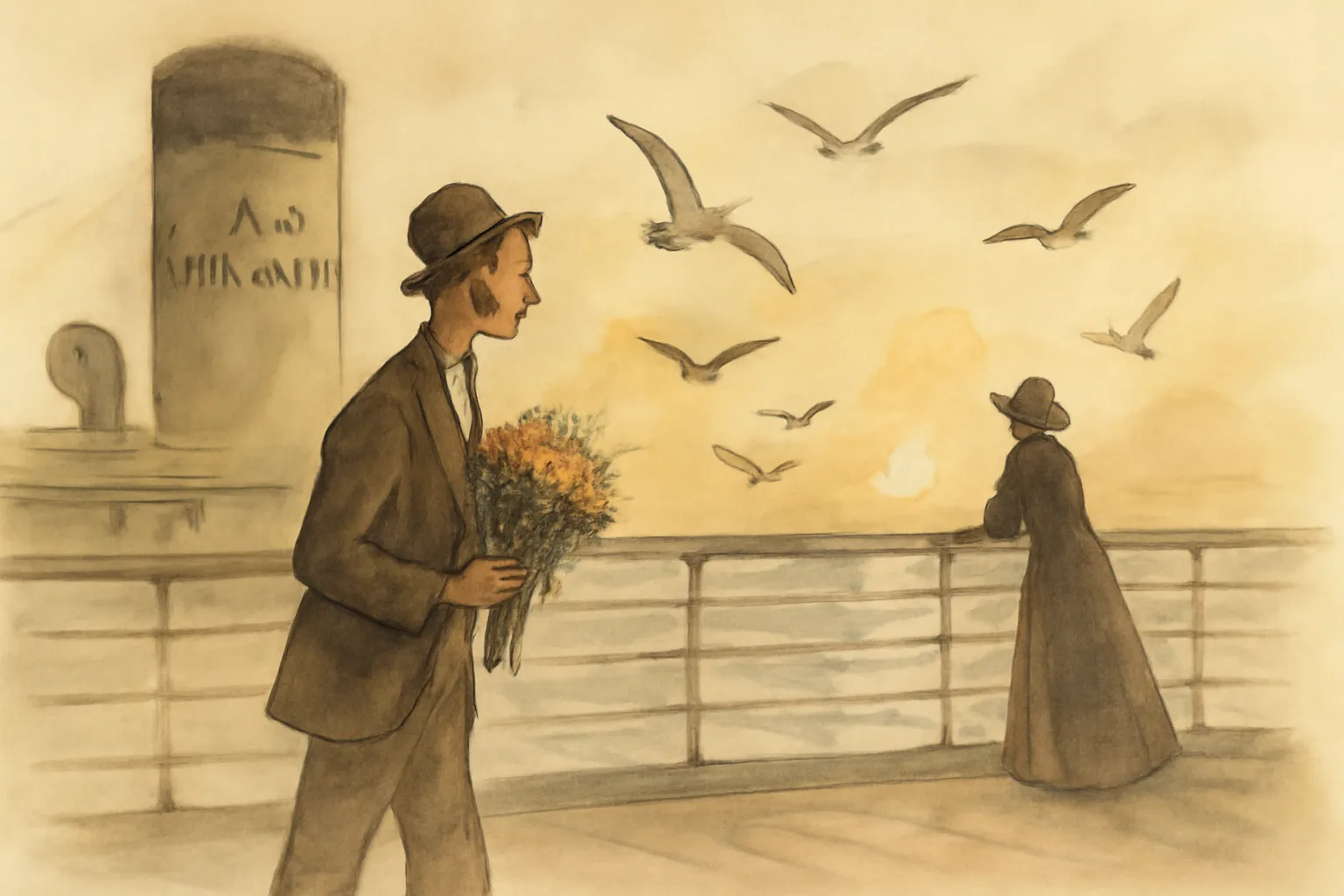
At the heart of the narrative is Sam Marlowe's infatuation with Billie Bennett, a girl who embodies lofty ideals and romantic expectations reminiscent of Sir Galahad. Billie seeks not just a partner, but a paragon of virtue and nobility, which puts Sam in a precarious position as he grapples with his own shortcomings. Their relationship begins on the R. M. S. Atlantic, where a stroke of luck allows Sam to momentarily rise to Billie’s expectations—an accidental heroism that sets the stage for their romantic entanglement. However, as the voyage progresses, the gap between Sam's reality as a charming but flawed young man and Billie's ideals widens, leading to comedic situations that reflect the challenges of modern romance. Wodehouse uses this dynamic to explore the theme of ideal versus reality, showcasing how the pursuit of perfection often leads to humorous disappointment and self-reflection. Sam’s journey illustrates that love is not merely about meeting ideals, but about acceptance and understanding the authenticity of human connection.
2.A Cast of Colorful Characters

Wodehouse populates his story with a vibrant cast that adds depth and humor to the narrative. Sam's cousin Eustace Hignett serves as a foil to our protagonist, providing a contrast between romantic desperation and the carefree attitude of Sam. Eustace has already faced rejection from Billie, which complicates Sam’s feelings towards her and increases the stakes of their interactions. The interactions between these characters reveal their distinct personalities, from Eustace’s melodramatic nature to Sam’s more relaxed approach to life. Additionally, figures like Mrs. Horace Hignett, a renowned lecturer on Theosophy, embody the intellectual pretensions of the time, offering commentary on societal norms and expectations with her authoritative yet humorous stance. Each character's quirks and relationships contribute to a rich tapestry of comedic situations, enhancing the reader's engagement with the story. They not only drive the plot forward but also reflect the various attitudes toward love and life, making the narrative a multifaceted exploration of human connections.
3.The Voyage as a Metaphor
The setting of the transatlantic voyage serves as a metaphor for the journey of love itself. As passengers navigate the ship's decks, they also navigate their feelings and relationships, with the ocean representing both the vastness of possibility and the tumultuous nature of romantic pursuits. Sam’s initial confidence is buoyed by the excitement of the voyage, yet as the days pass, the reality of his situation becomes increasingly complex. Wodehouse cleverly uses the ship's concert as a plot device, where Sam’s embarrassing performance mirrors his struggles in love, illustrating how public perception can influence personal relationships. The voyage also symbolizes the transitional phases of love—how it can be exhilarating but also fraught with uncertainty. This setting encapsulates the uncertainty and unpredictability of romance, emphasizing the humor found in human folly. The ship becomes a microcosm of society, with all its social structures and interactions, allowing Wodehouse to explore themes of class, identity, and the whims of fate in romantic endeavors.
4.The Comedy of Errors

Throughout 'The Girl on the Boat', Wodehouse employs a classic comedy of errors structure, where misunderstandings and mistaken identities lead to a series of humorous situations. Sam’s attempts to present himself as the ideal suitor often backfire, creating a comedic tension that drives the plot forward. One notable instance occurs during a ship’s concert, where Sam’s over-the-top performance is met with mixed reactions, highlighting his struggle to impress Billie and the absurdity of trying too hard. This comedic device not only entertains but also serves to critique the social norms surrounding courtship and masculinity. Wodehouse uses physical comedy and situational irony to reveal how characters' preconceived notions about love often lead to farcical situations. The humor derived from these misadventures encourages readers to reflect on the nature of human relationships and the lengths one goes to win affection, ultimately suggesting that love cannot be orchestrated to fit a script.
5.Romantic Idealism vs. Realism

Billie's character embodies the tension between romantic idealism and the often harsh realities of life. Her expectations for love are high, leading her to reject Eustace for what she perceives as his shortcomings. This idealism is juxtaposed against Sam’s more pragmatic approach, as he navigates his feelings for her while grappling with his own insecurities. Wodehouse uses this contrast to explore how societal pressures shape individual desires and choices. Billie’s rejection of Eustace, based on a trivial matter like an incomplete outfit, reflects the often superficial nature of romantic ideals and how they can lead to misguided decisions. The narrative questions whether true love can exist in a world filled with imperfections and whether the pursuit of an ideal is worth the potential heartache that accompanies it. This theme resonates throughout the story, prompting readers to consider their own views on love and fulfillment, and the importance of accepting one another's flaws.
6.The Role of Class and Society

Wodehouse subtly critiques the British class system and societal expectations through the interactions of his characters. The voyage on the Atlantic is not just a physical journey but also a social one, as characters from different backgrounds converge. Billie’s upper-class status influences her perceptions of love and relationships, creating barriers that Sam must navigate. Sam's modest origins instill in him a sense of inferiority that complicates their dynamic and makes him question whether he can ever be seen as her equal. Wodehouse uses humor to depict the absurdities of these social hierarchies, suggesting that love transcends class boundaries even as characters struggle against the constraints of their respective statuses. The contrast between the upper-class characters, like Billie, and those from more humble backgrounds, like Sam, highlights the societal expectations that govern their interactions, ultimately leading to a discussion on the nature of true equality in love. This exploration serves to remind readers of the arbitrary nature of class distinctions and the universal nature of love.
7.Friendship and Loyalty
Amid the romantic entanglements, the theme of friendship and loyalty emerges as a vital component of the narrative. Sam’s relationship with Eustace is fraught with tension, yet it also highlights the bonds of familial loyalty and the complexities of male friendship. Eustace's initial heartbreak serves as a catalyst for Sam's feelings for Billie, complicating their relationship further. Wodehouse illustrates how friendship can both support and hinder romantic pursuits, as Sam grapples with his loyalty to Eustace while pursuing Billie. This dynamic adds depth to the characters, showcasing their vulnerabilities and the challenges of navigating personal relationships within a web of social expectations. The narrative prompts readers to consider the impact of friendship on romantic endeavors and the ways in which loyalty can influence decisions in love, often leading to humorous outcomes rather than straightforward resolutions.
8.The Influence of Fate
Fate plays a significant role in shaping the characters' journeys, often leading them into humorous predicaments. Sam's feelings for Billie seem destined, yet they are continually thwarted by a series of comical misfortunes. Wodehouse employs this theme to explore the unpredictability of life and love, suggesting that despite our best efforts, external forces often dictate the outcomes of our desires. The characters' attempts to control their destinies frequently result in chaotic situations, reinforcing the idea that love is often a game of chance. For instance, the various misunderstandings and accidental encounters between Sam and Billie illustrate how fate has a hand in their relationship, often leading to moments of clarity amidst the confusion. Wodehouse’s light-hearted approach to fate serves to remind readers that while we may strive for control, the whims of life can lead us down unexpected paths, ultimately enhancing the comedic flair of the narrative.
9.The Humor of Self-Discovery
As Sam navigates his feelings for Billie, he embarks on a journey of self-discovery that is fraught with humor and introspection. His initial confidence is tested through a series of comedic blunders, leading him to confront his own insecurities and shortcomings. Wodehouse skillfully employs humor to highlight Sam's growth as a character, as he learns to embrace his flaws and navigate the complexities of love. This journey is not just about winning Billie’s heart but also about understanding himself in the process. Through various misadventures, such as his disastrous participation in the ship's concert, Sam learns that genuine connections are built on authenticity rather than pretense. The comedic elements serve to lighten the often serious themes of self-acceptance and personal growth, making Sam's journey relatable and engaging for readers. The narrative ultimately champions the idea that self-awareness and acceptance are crucial components of forming meaningful relationships.
10.A Satirical Look at Romance

Wodehouse’s narrative is laced with satire, offering a humorous critique of romantic conventions and societal expectations. The absurdity of the characters’ pursuits and the exaggerated situations they find themselves in serve to lampoon the seriousness with which love is often regarded. Through Sam’s misadventures, Wodehouse reveals the folly of taking romance too seriously, encouraging readers to find humor in the trials of love. The ship’s concert, where amateur performances are met with a mix of enthusiasm and dread, serves as a perfect microcosm of the romantic experience—filled with highs, lows, and unexpected moments. This satirical lens provides a refreshing perspective on relationships, suggesting that laughter and light-heartedness can be just as important as passion and idealism in the pursuit of love. By the end of the story, readers are left with a sense that love, while complicated, is ultimately a source of joy and amusement, worthy of both laughter and reflection.