1.Culture as a Web of Meaning
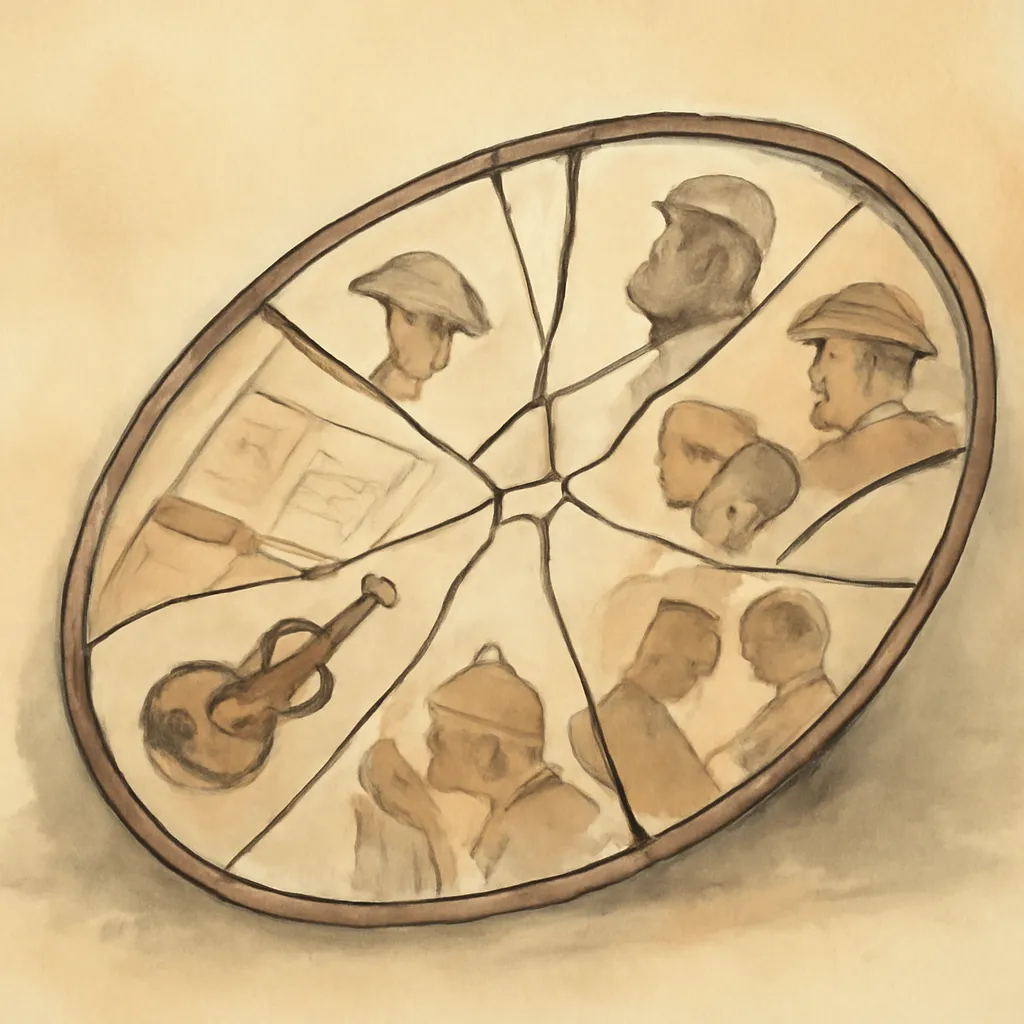
Geertz famously argues that culture is best understood as a 'web of significance' spun by humans themselves. Rather than treating culture as a set of rules or behaviors, he sees it as the shared symbols and meanings that give human life its texture and depth. This approach shifts anthropology from cataloging customs to interpreting the significance behind them, emphasizing that understanding a society requires grasping how its members interpret their own actions.
2.Thick Description
One of Geertz’s most influential contributions is the concept of 'thick description.' He contends that to truly understand cultural practices, anthropologists must go beyond surface observations and uncover the layers of meaning behind them. For example, a wink is not just a twitch of the eyelid, but a gesture loaded with social significance. 'Thick description' means interpreting not just what people do, but what those actions mean within their cultural context.
3.Interpretive Anthropology
Geertz positions anthropology as an interpretive science, akin to reading a text. He rejects the idea that culture can be studied with the same methods as the natural sciences, arguing instead that anthropologists must act as interpreters, decoding symbolic actions and stories. This interpretive turn places emphasis on understanding the perspectives of those within the culture, rather than imposing external frameworks.
4.Against Reductionism
Throughout the book, Geertz pushes back against reducing culture to economic, psychological, or biological factors. He insists that meaning itself is irreducible and that the richness of cultural life cannot be explained away by simplistic theories. This stance champions the complexity and uniqueness of each society, and warns against the dangers of oversimplification.
5.The Balinese Cockfight
Geertz’s essay on the Balinese cockfight exemplifies his method. He shows how this seemingly trivial event is actually a deep play—a symbolic drama that expresses status, rivalry, and identity in Balinese society. Through this vivid case study, he demonstrates how cultural practices encode layers of meaning that outsiders might miss without careful, empathetic interpretation.
6.Culture and Self-Understanding
Geertz argues that understanding culture is not just about studying others, but also about expanding our own self-awareness. By interpreting how other societies make sense of their worlds, we become more reflective about our own assumptions and values. This process fosters both empathy and critical thinking.