1.Europe as a Product of Internal Colonization
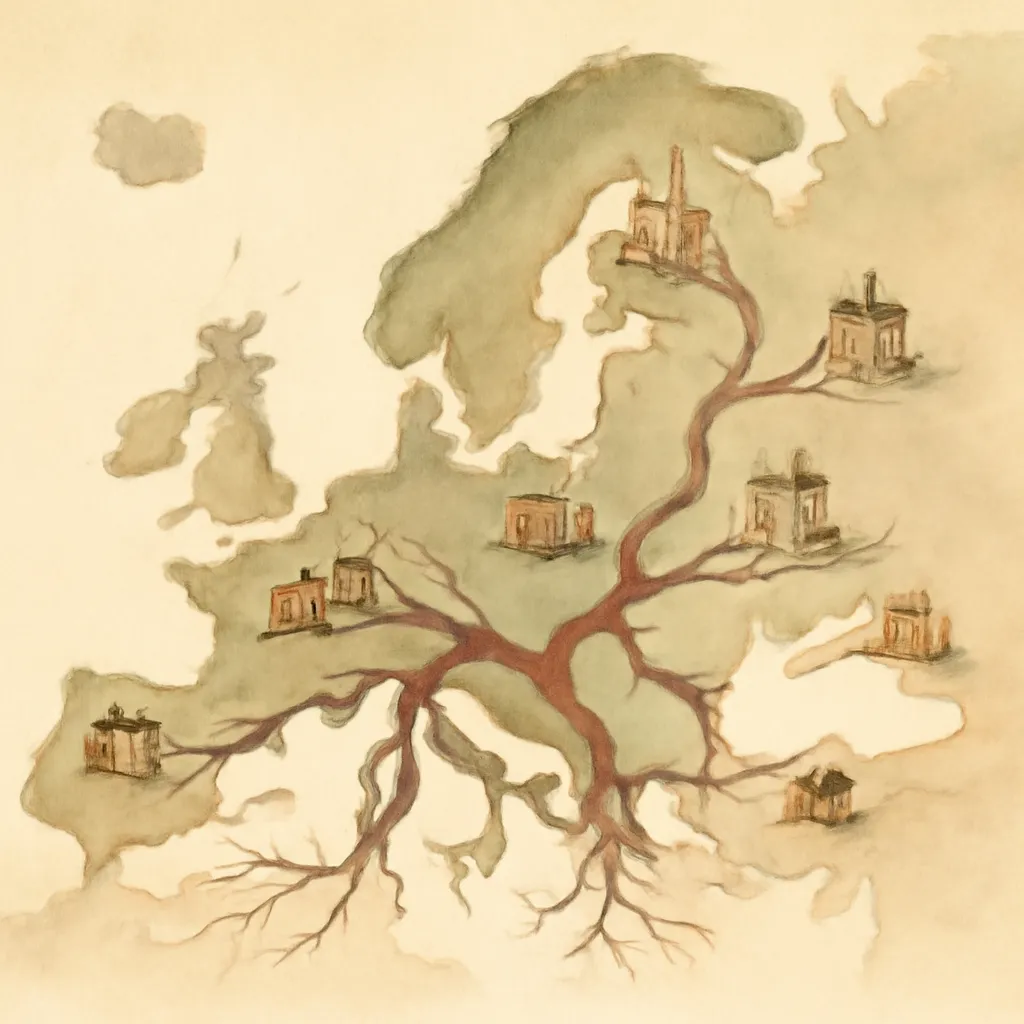
Bartlett challenges the common view of medieval Europe as merely a precursor to later colonial empires by showing that Europe itself was formed through internal colonization. Between 950 and 1350, regions like Ireland, the Baltic, and Eastern Europe were conquered and settled by people from Western Europe, bringing new laws, institutions, and cultures. This process was not just about military domination, but about transplanting populations and transforming societies, creating a patchwork of new communities that would eventually coalesce into a more unified Europe.
2.Cultural Homogenization and Standardization
A central theme is the drive toward cultural uniformity. Through conquest and settlement, Latin Christendom spread its language, legal systems, religious practices, and social norms across diverse regions. Bartlett details how local customs and languages were often suppressed or marginalized in favor of Latin, Roman law, and Western Christian rites. This standardization was uneven and contested, but by the end of the period, a more homogeneous European culture had emerged—one that would later underpin Europe’s global expansion.
3.The Role of Law and Institutions
Bartlett shows that the spread of European civilization was as much about institutions as it was about armies. New legal codes, feudal structures, and ecclesiastical hierarchies were imposed on conquered territories, often replacing or reshaping local traditions. These changes were instrumental in binding disparate regions into a common framework, fostering a sense of shared identity and order that transcended ethnic or linguistic differences.
4.Migration, Settlement, and Social Engineering
The book highlights the massive movement of people—knights, peasants, clergy—who settled in newly conquered lands. These migrations were often state-sponsored and aimed at permanently altering the demographic and social makeup of frontier regions. Bartlett explores how these settlers interacted with indigenous populations, sometimes mixing, sometimes displacing, and always transforming the social landscape. The result was the creation of new, hybrid societies at Europe’s edges.
5.Ideologies of Expansion and Justification
Bartlett delves into the intellectual and religious justifications for expansion. Crusading ideology, papal authority, and the rhetoric of 'civilizing missions' all played roles in legitimizing conquest and colonization. These justifications were not mere propaganda—they shaped the attitudes and actions of rulers, settlers, and the Church, embedding expansion into the very fabric of medieval European identity.
6.The Legacy: Foundations for Later European Expansion
By the end of the period, the processes Bartlett describes had created a Europe that was more unified, confident, and outward-looking. The institutions, attitudes, and patterns of conquest developed in the Middle Ages laid the groundwork for the later age of global exploration and colonization. Understanding this earlier phase is crucial for anyone interested in how Europe came to dominate much of the world.