1.The Perils of Power
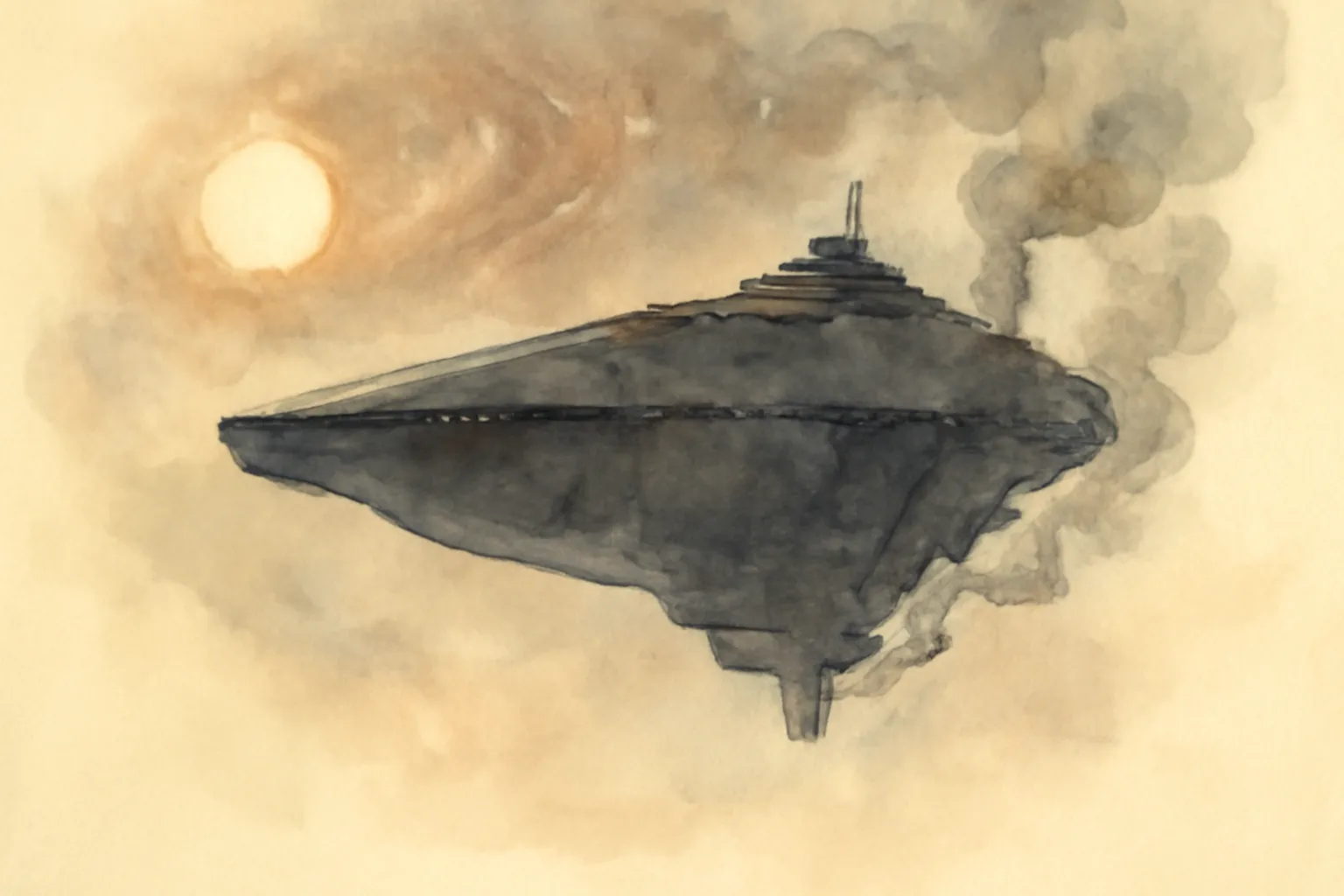
Central to The Misplaced Battleship is the notion that immense power, particularly in the form of advanced weaponry, can lead to catastrophic consequences if not handled responsibly. The battleship, a Warlord class vessel, epitomizes military might and the potential for unbridled destruction. Its capabilities are so formidable that it can obliterate entire fleets, making it a prime target for those with nefarious intentions. The narrative emphasizes that such power, while alluring, can easily be misused, leading to chaos and conflict in the galaxy. The story serves as a cautionary tale about the responsibilities that come with power and the moral choices faced by those who wield it. Through the eyes of diGriz, readers see how the presence of such a weapon can tempt individuals to compromise their ethics for personal gain, raising questions about the nature of power and its potential to corrupt.
2.Cunning and Deception

In a world where trust is an increasingly rare commodity, cunning and deception become essential survival tools. The protagonist, diGriz, is portrayed as a master thief who navigates a treacherous landscape filled with double-crosses and hidden agendas. His ability to manipulate situations to his advantage demonstrates the importance of intelligence and strategy in achieving one's goals. The interactions between diGriz and characters like Ferraro reveal layers of deceit, as each player has their own motives and agenda. For instance, the character Ferraro attempts to deny knowledge of the battleship's construction, showcasing how individuals can feign innocence to protect themselves while entangling others in their webs of lies. The narrative illustrates that in a high-stakes environment, being one step ahead of others can mean the difference between success and failure. This theme resonates throughout the story, as characters constantly vie for dominance, revealing the lengths to which they will go to achieve their ends.
3.The Complexity of Relationships

The relationships in The Misplaced Battleship are intricate and often fraught with tension, reflecting the multifaceted nature of human interaction. diGriz’s dealings with characters like Inskipp and Ferraro highlight the complexities of trust and betrayal. Inskipp, who leads the Special Corps, represents authority but also embodies the frustrations that come with it, struggling to balance his responsibilities with personal safety. His relationship with diGriz oscillates between mentor and adversary, underscoring the blurry lines between loyalty and self-preservation. Meanwhile, the character Angelina introduces an emotional layer, as her involvement with Pepe complicates matters further. Their relationship is marked by manipulation and emotional turmoil, revealing how personal connections can be both a source of strength and vulnerability. This exploration of relationships underscores the idea that they are seldom straightforward and often lead to unforeseen consequences. The dynamics between characters serve to illustrate how love, ambition, and betrayal can intertwine, creating a rich tapestry of motivations that drive the plot.
4.The Nature of Justice
Justice emerges as a recurring motif throughout the narrative, prompting readers to contemplate its nature and execution in a morally ambiguous universe. diGriz's pursuit of the battleship transcends mere reclamation of lost property; it is intertwined with a deeper quest for justice against those who would abuse power for their own ends. The story raises poignant questions about the effectiveness of legal systems and the morality of taking matters into one's own hands. Characters find themselves grappling with ethical dilemmas that force them to confront their own beliefs about justice and retribution. As the narrative unfolds, it becomes clear that true justice is often elusive, requiring individuals to navigate complex situations that challenge their convictions. This exploration of justice compels readers to reflect on their moral compass and the implications of their choices in a world where right and wrong are not easily defined.
5.The Quest for Identity
As diGriz embarks on his mission, he is also on a quest for identity, grappling with who he is in the context of his actions and choices. His role as a thief often conflicts with his moral compass, leading to moments of introspection that reveal his vulnerabilities. The battleship serves as a metaphor for the weight of his past and the choices he must make moving forward. The narrative suggests that identity is not static but rather shaped by experiences and choices, forcing diGriz to confront the consequences of his actions. His journey reflects the struggle many face when reconciling their past with their aspirations for the future. In a universe where one's identity can be easily lost or transformed, the quest for self-understanding becomes paramount. This theme resonates with readers, inviting them to consider their own identities and how they navigate the complexities of their lives.
6.The Illusion of Control
The Misplaced Battleship delves into the illusion of control that characters attempt to maintain in a chaotic universe characterized by unpredictability. DiGriz's efforts to outsmart Pepe and secure the battleship illustrate the lengths individuals will go to assert their dominance and influence outcomes. However, as the story unfolds, it becomes evident that control is often an illusion, especially in the face of unexpected events and betrayals. The narrative reveals that even the most carefully laid plans can unravel, leaving characters vulnerable and exposed. For instance, Pepe's initial confidence in his scheme is challenged as circumstances shift, illustrating how quickly control can slip away. This theme resonates with the broader human experience, reminding readers that life is unpredictable and that attempts to control every aspect can lead to unforeseen consequences, prompting reflection on the nature of agency and the acceptance of uncertainty.
7.Morality in a Corrupt World
The narrative paints a picture of a universe rife with corruption, where moral dilemmas abound, and characters grapple with the complexities of ethical behavior. The story operates within a framework that often rewards deceit and manipulation, challenging traditional notions of right and wrong. DiGriz, despite his criminal background, emerges as a somewhat sympathetic figure, navigating a morally ambiguous landscape where the lines between good and evil become increasingly blurred. His choices force readers to confront the complexities of morality, particularly when survival is at stake. The story suggests that in a corrupt world, individuals may be compelled to compromise their values, raising questions about the nature of integrity and the cost of ambition. This exploration of morality challenges readers to consider their own ethical beliefs and how they might navigate similar dilemmas in their lives.
8.The Role of Technology
Technology plays a crucial role in The Misplaced Battleship, influencing the characters' actions and the unfolding events. The battleship itself represents the pinnacle of technological advancement, boasting capabilities that can shift the balance of power within the galaxy. Additionally, the use of advanced detection devices, such as the lie-detecting robot, underscores the reliance on technology for truth and justice. However, the story also raises questions about the consequences of such advancements, particularly when they fall into the wrong hands. The interplay between technology and human behavior serves as a reminder that while technology can enhance capabilities, it can also exacerbate moral dilemmas and complicate relationships. The narrative underscores that technological prowess should be accompanied by ethical considerations, prompting reflection on how humanity interacts with its creations and the responsibilities that come with them.
9.The Significance of Timing
Timing emerges as a critical element in the narrative, influencing characters' decisions and the trajectory of events. DiGriz's arrival on Cittanuvo coinciding with Pepe's plans illustrates how the right timing can disrupt even the most elaborate schemes. The story emphasizes that in a fast-paced environment, being in the right place at the right time can lead to significant advantages. Conversely, miscalculations in timing can result in catastrophic failures, as seen in the unfolding chaos surrounding the battleship. DiGriz's ability to adapt to shifting circumstances showcases the importance of seizing opportunities as they arise. This theme resonates with the broader concept of strategic planning, reminding readers that success often hinges on the ability to anticipate and act decisively in critical moments.