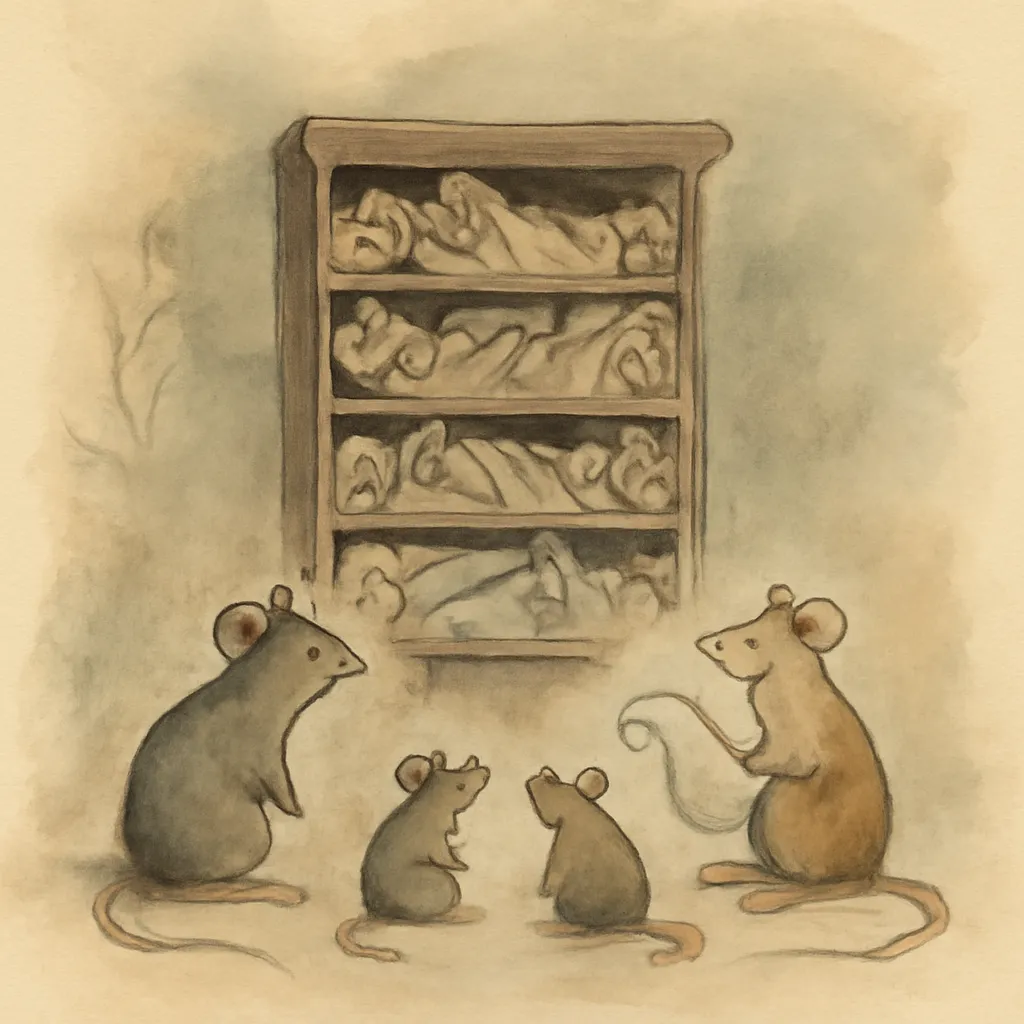
1.The Quest for Knowledge as a Life Journey
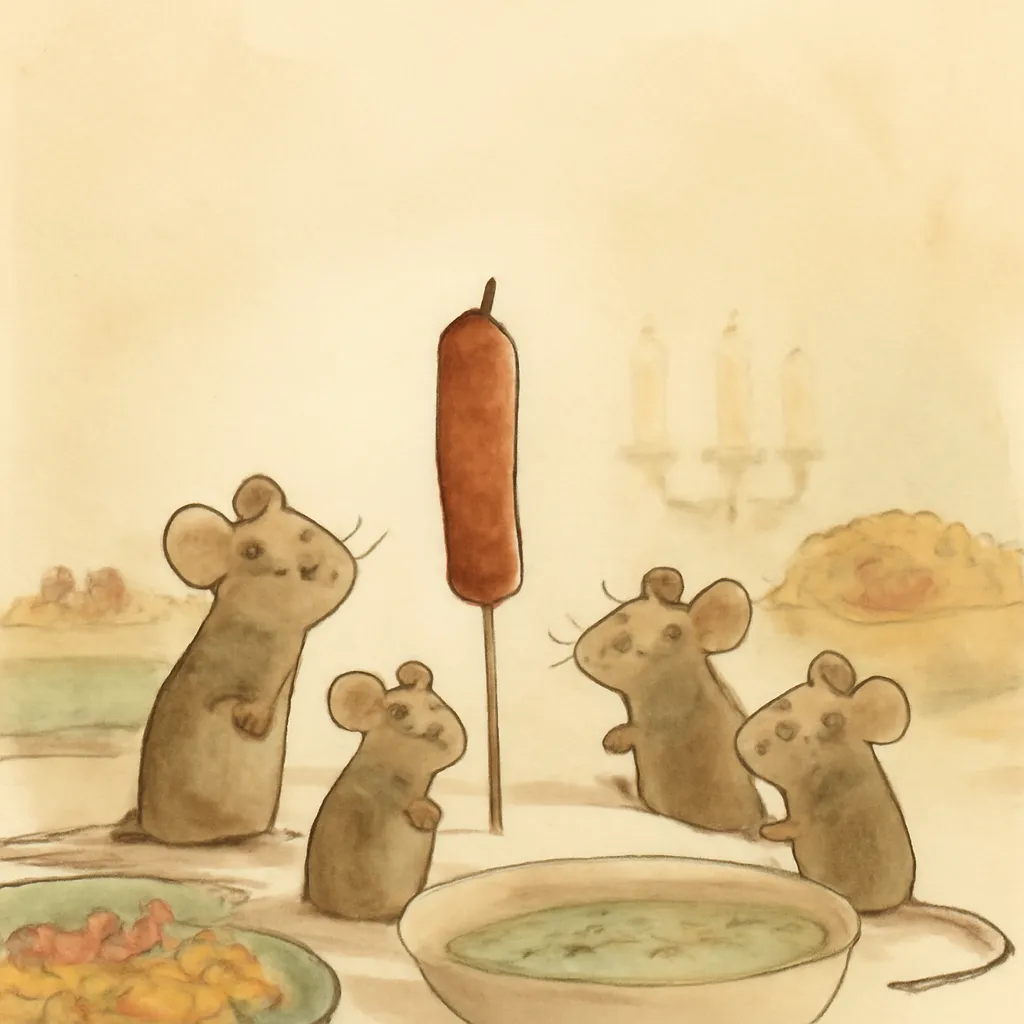
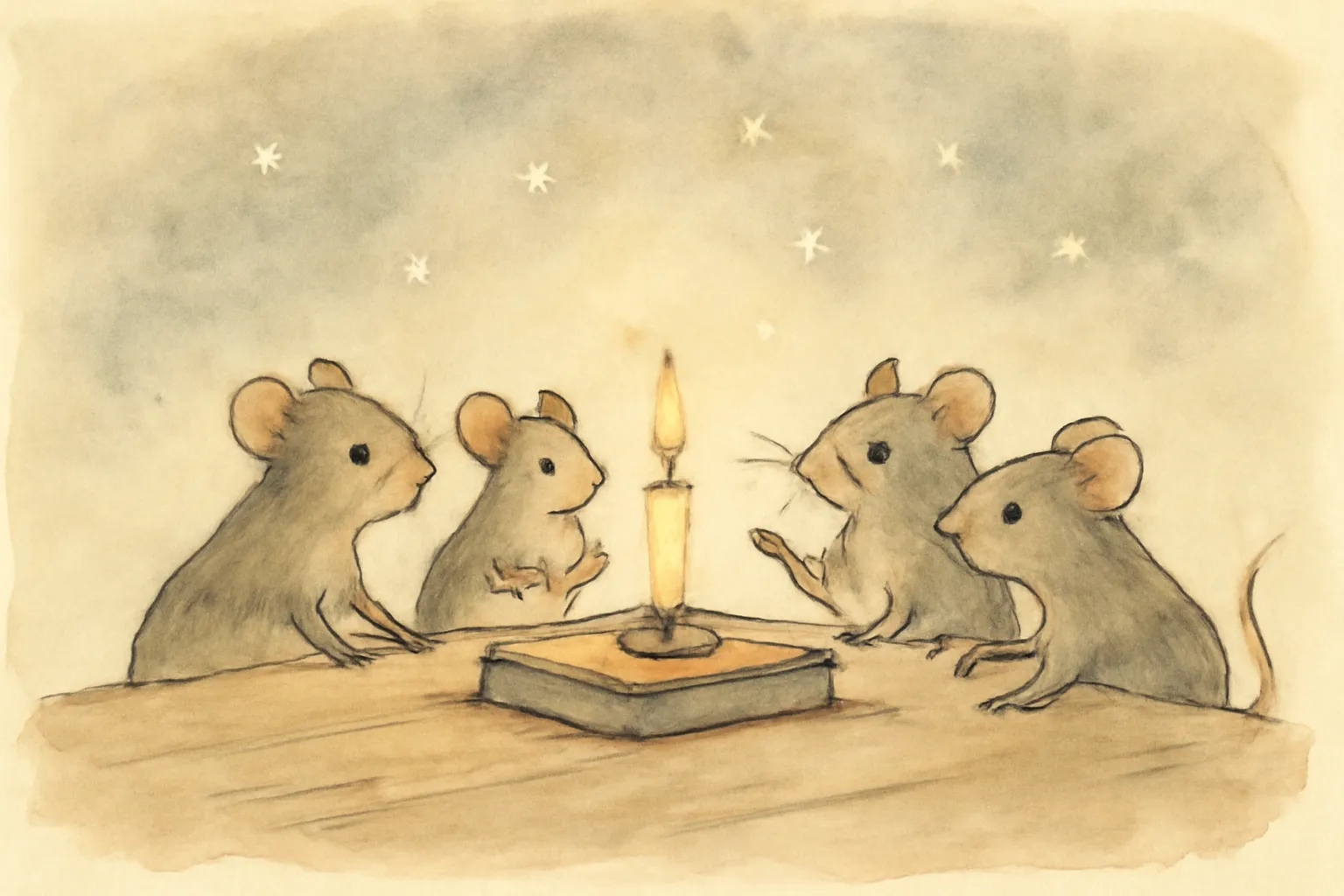
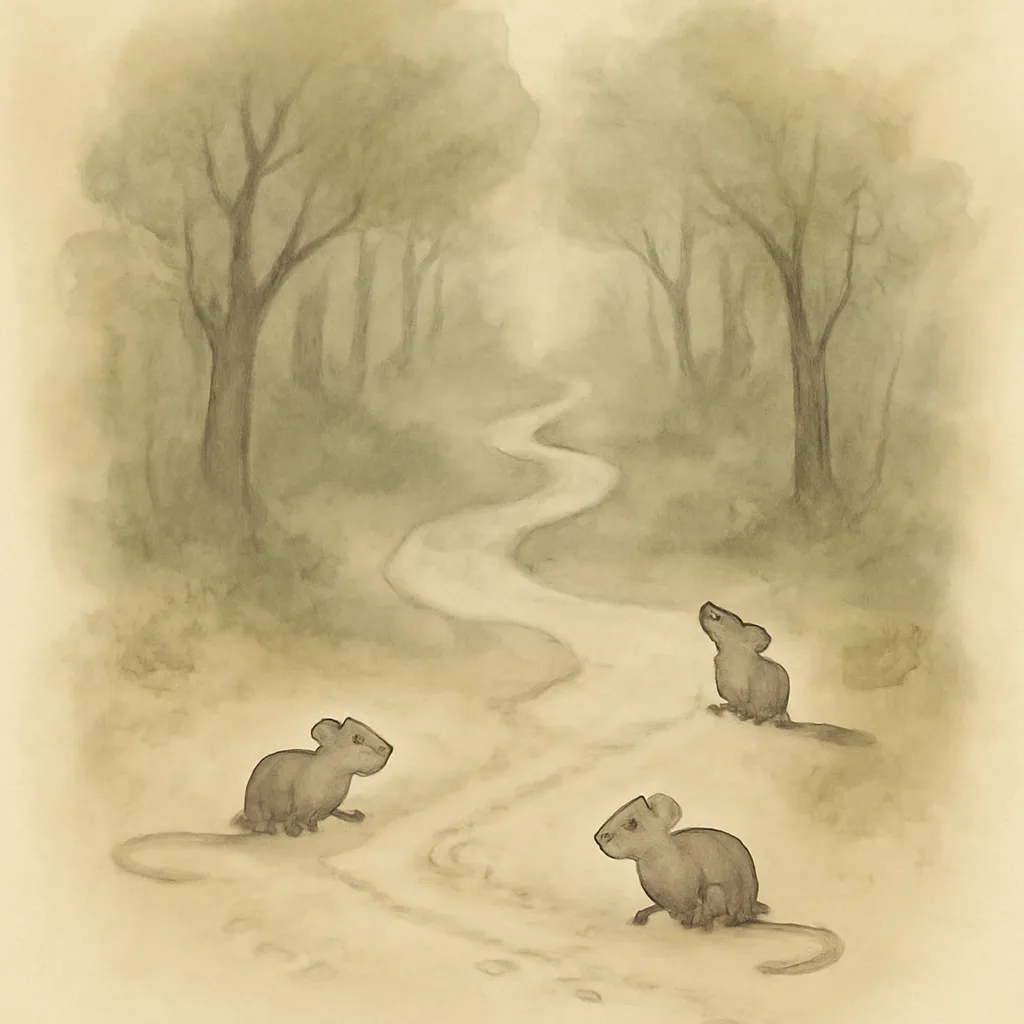
The narrative begins with a festive dinner among the mice, where a playful challenge is issued: to create soup from a sausage-stick, a seemingly simple task that ignites deep curiosity. This challenge is emblematic of the quest for knowledge, representing how intellectual pursuits often begin with a seemingly trivial question. The four young mice decide to embark on a journey to learn how to make the soup, highlighting that the search for knowledge is not just about the destination but the journey itself. Each mouse's adventure reflects the unique struggles and insights gained along the way. This quest mirrors the human experience, suggesting that the pursuit of knowledge often requires leaving the comfort of home and confronting the unknown, illustrating that true wisdom often lies beyond familiar boundaries. The mice's realization that the journey itself is a transformative experience emphasizes the value of exploration and learning through hardship and determination.
2.The Transformative Power of Adventure
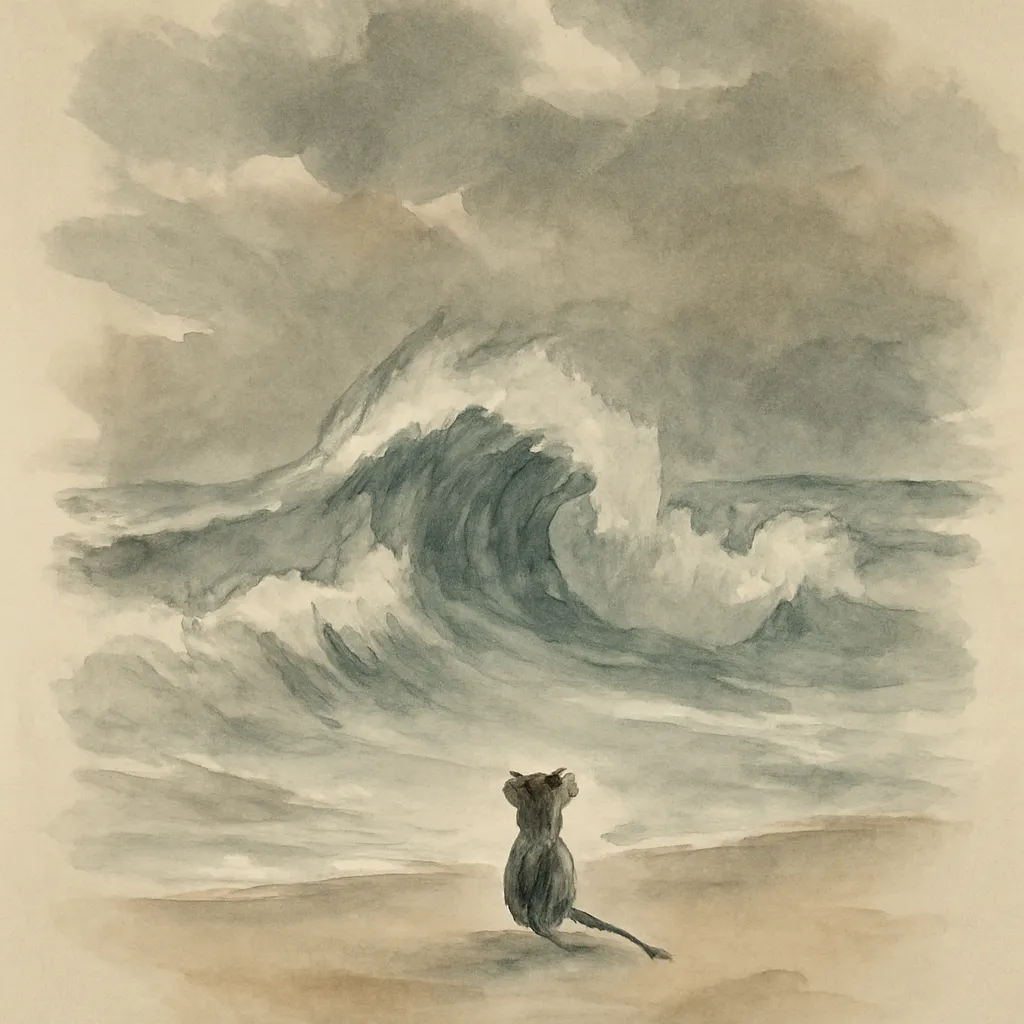
Adventure serves as a powerful catalyst for growth and transformation in the story. The first mouse's journey across the sea introduces her to new environments and experiences that challenge her preconceived notions. Amidst stormy weather and the beauty of foreign lands, she discovers the complexities of nature, from tangled woods to serene lakes. This duality of experience—joy intertwined with fear—emphasizes that adventure often brings about personal evolution. The act of venturing into the unknown forces the mice to confront their fears, adapt to new circumstances, and ultimately grow. Andersen illustrates that adventure is not merely an external experience; it is a profound internal transformation that shapes identity and broadens perspective. The lessons learned through hardship become pivotal moments of personal growth, demonstrating that the most profound changes often emerge when one steps outside of their comfort zone.
3.The Essence of Creativity and Artistic Pursuit
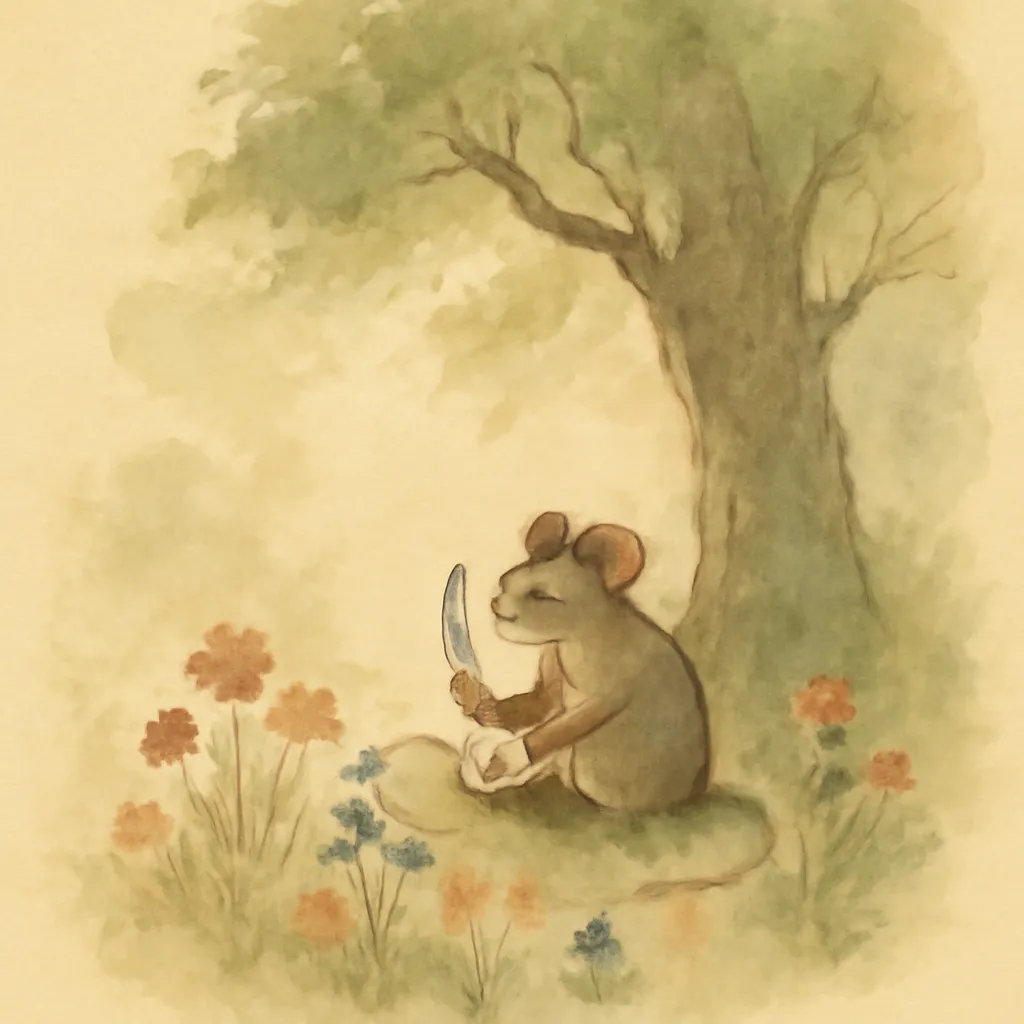
The second mouse's aspiration to become a poet serves as a deep exploration of creativity. She learns from her grandmother that the path to artistry requires good sense, imagination, and feeling—qualities that are essential for any creative endeavor. This notion of creativity as a blend of rationality and emotional depth highlights the complex nature of artistic expression. The second mouse’s journey to acquire these qualities is representative of the broader artistic struggle, as she seeks inspiration from the world around her. By engaging with her environment and other creatures, she discovers that creativity often arises from the interplay between observation and imagination. Andersen emphasizes that the artistic journey is shaped by both personal experiences and communal narratives, pointing to the idea that creativity thrives in a supportive environment. The encouragement found within community reinforces the notion that collaboration can spur the creative process, allowing individual voices to converge into a richer tapestry of artistic expression.
4.Tradition as a Foundation for Growth
Tradition emerges as a vital theme throughout the mice's adventures. The challenge of creating soup from a sausage-stick is rooted in culinary tradition, underscoring how knowledge is passed down through generations. The mice's varied backgrounds contribute to their understanding of this tradition, illustrating that cultural heritage informs personal identity. The stories shared among the mice serve to connect their experiences, preserving wisdom and fostering a sense of belonging. Andersen emphasizes that while innovation is essential, it must be built upon a foundation of tradition. This interplay between tradition and innovation showcases the importance of honoring one’s roots while also being open to new ideas. The narrative suggests that tradition offers stability and a roadmap for navigating the complexities of life, while innovation propels culture forward, creating a dialogue between the past and the present.
5.The Strength of Community and Collaboration
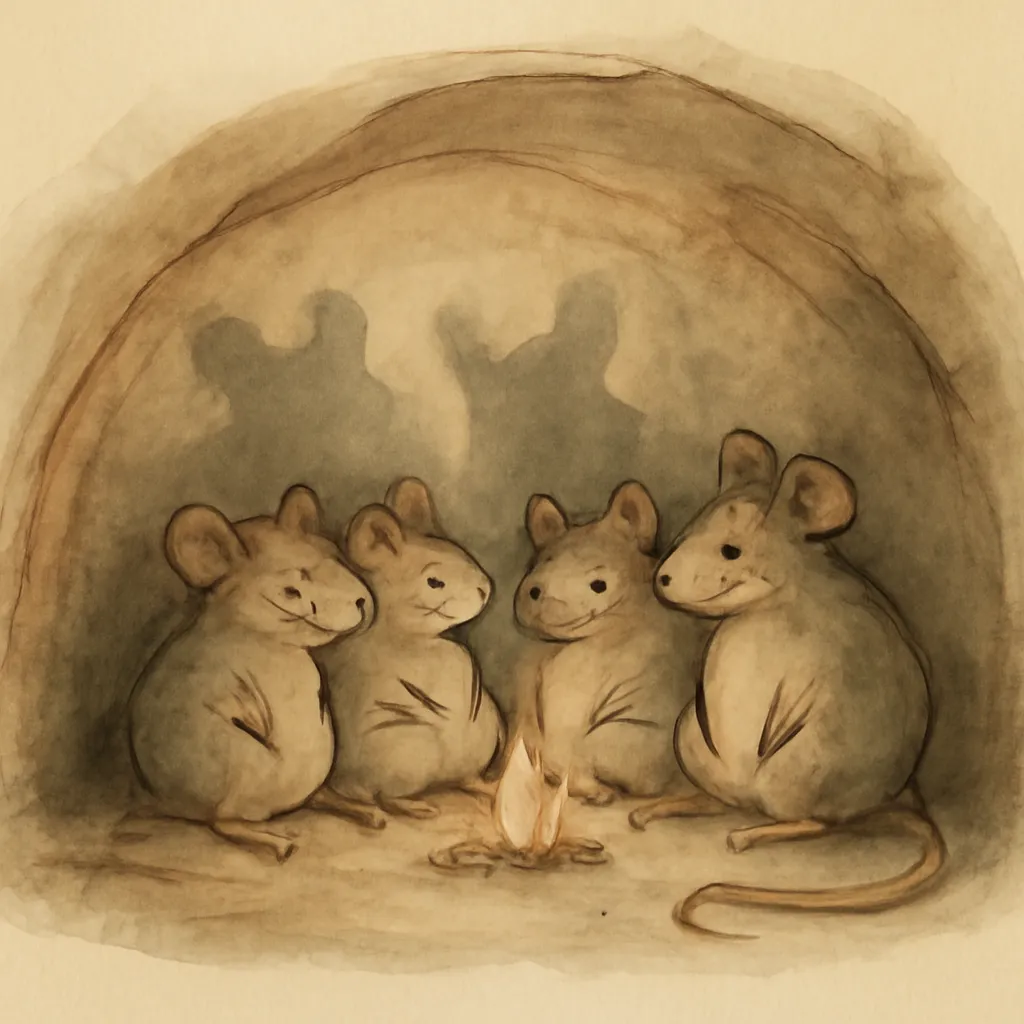
Community plays a pivotal role in the mice's journey, emphasizing the interconnectedness of individual experiences. Throughout the narrative, the camaraderie among the mice fosters an environment where collaboration flourishes. The initial dinner gathering highlights the joy of shared experiences, where each mouse contributes to the conversation and the challenge at hand. As they navigate their quests, the mice learn from one another, reinforcing the notion that knowledge is not solely an individual pursuit but a communal endeavor. Andersen illustrates that support from a community can inspire creativity, encourage risk-taking, and ultimately lead to collective success. This portrayal of community underscores the idea that collaboration enriches the learning experience and nurtures a sense of unity. The mice's experiences reflect how interdependence strengthens their resolve and fosters an environment where ideas can thrive, amplifying their individual journeys into a collective narrative.
6.Imagination: The Key to Understanding
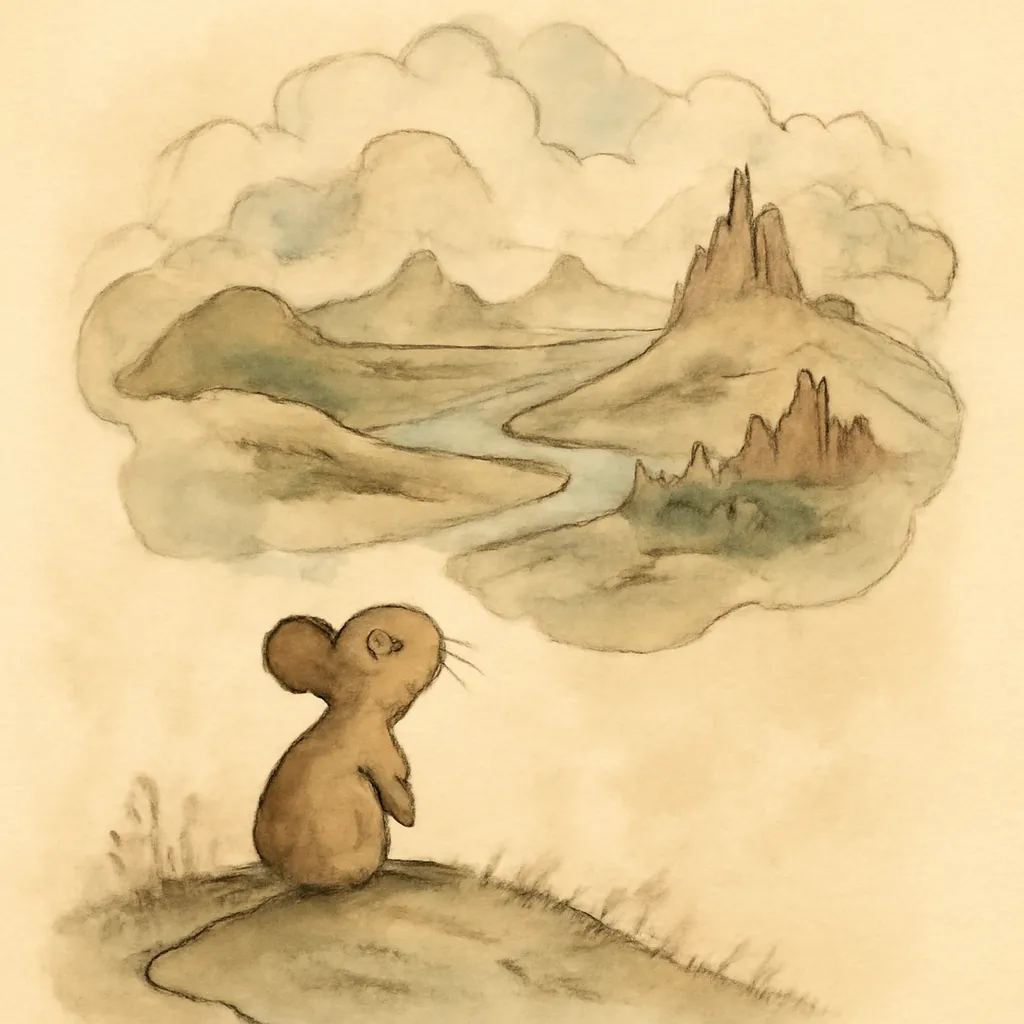
Imagination emerges as a crucial theme in the struggles and successes of the mice. The first mouse’s vivid descriptions of her journey reflect the power of imagination to transform mundane experiences into extraordinary ones. As she encounters new landscapes and creatures, her capacity to envision possibilities expands, allowing her to appreciate the beauty and complexity of the world. The second mouse's pursuit of poetic inspiration emphasizes how imagination can elevate personal experiences into art, showcasing the transformative potential of creative thinking. Andersen posits that imagination is not a mere escape but a vital tool for understanding and interpreting one’s surroundings. Through the whimsical adventures of the mice, readers are encouraged to harness their imaginations as a means of exploration and growth. This theme invites readers to consider how their own imaginative faculties can lead to richer understandings of their lives and the world around them, reinforcing the idea that creativity is key to personal and cultural development.
7.The Complexity of Happiness and Fulfillment
The narrative delves into the complexity of happiness and the myriad forms it can take. At the story's outset, the young couple's idyllic life showcases an external perception of happiness, yet they grapple with existential questions about their legacy and the desire for a child. Their longing for a son symbolizes a deeper quest for purpose and continuity in life. The mice's adventures reflect this complexity, illustrating that happiness is often intertwined with challenges and struggles. Andersen suggests that true fulfillment is not a singular destination but rather a multifaceted journey filled with various experiences that shape one’s character and perspective on life. This nuanced view invites readers to reflect on their own definitions of happiness and the experiences that contribute to their sense of fulfillment. The story ultimately portrays the idea that happiness is found not merely in the absence of adversity but in the richness of experiences that life brings, advocating for a balanced approach to joy and sorrow.
8.The Journey of Self-Discovery
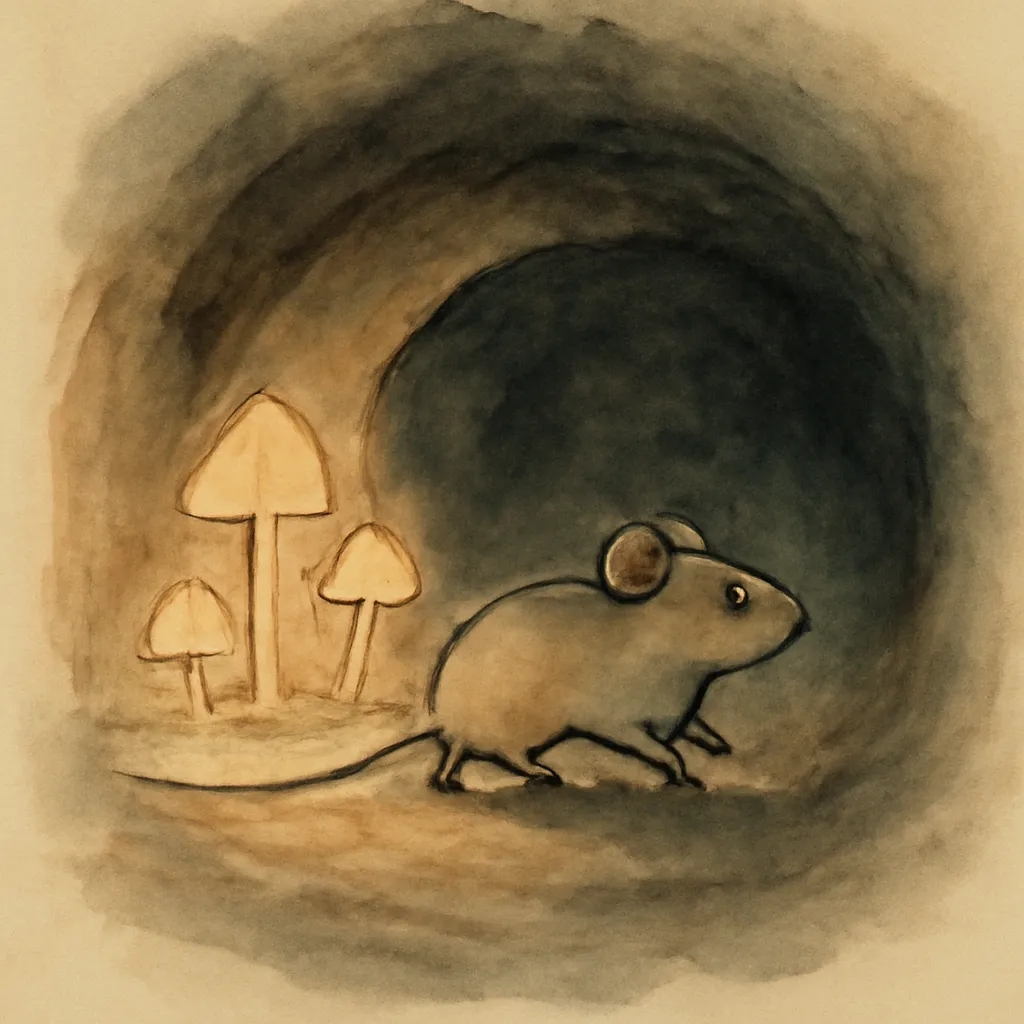
Self-discovery is a prominent theme woven throughout the narrative as each mouse embarks on a quest not solely for knowledge but to understand their own identities. The second mouse’s pursuit of poetic knowledge leads her to confront her beliefs, aspirations, and ultimately her own voice as an artist. The fourth mouse's experience with a prisoner reveals themes of companionship, loyalty, and sacrifice, culminating in profound personal connections. Andersen emphasizes that the journey of self-discovery can be fraught with challenges yet is essential for personal growth. This theme resonates with readers, encouraging them to embark on their own paths of introspection and self-understanding. The experiences of the mice highlight that self-discovery is often a gradual process, shaped by interactions with others and the world, and serves as a reminder that understanding oneself is a lifelong journey.
9.Light and Dark: The Duality of Experience
The narrative artfully weaves an interplay of light and dark, symbolizing the duality of experiences that shape the mice’s journeys. Each adventure is marked by moments of joy, wonder, and discovery, contrasted with fear and uncertainty. The first mouse's passage through a stormy sea exemplifies this duality, as she faces the beauty of nature alongside tumultuous challenges. This interplay suggests that life is a balance of contrasting experiences, and both joy and adversity are necessary for growth and understanding. Andersen's portrayal of this duality encourages readers to embrace all aspects of life, recognizing that challenges often lead to greater appreciation and insight into their journeys. By facing both light and dark moments, the characters learn, grow, and emerge stronger, reinforcing the notion that the richness of life comes from the full spectrum of human emotion and experience.
10.The Legacy and Power of Storytelling
The legacy of storytelling is a recurring motif that emphasizes the significance of narratives in shaping culture and identity. The mice's tales of their adventures serve as a means of preserving their experiences and wisdom, illustrating how stories can inspire and educate future generations. Each narrative adds to the collective memory of their community, reinforcing Andersen's message that stories are essential tools for understanding the world and oneself. The emphasis on storytelling invites readers to reflect on their own narratives, the lessons they convey, and the impact they have on their lives and those around them. It serves as a reminder that every story, no matter how small, contributes to the larger tapestry of human experience, and that the act of sharing stories fosters connection and understanding among individuals and communities.