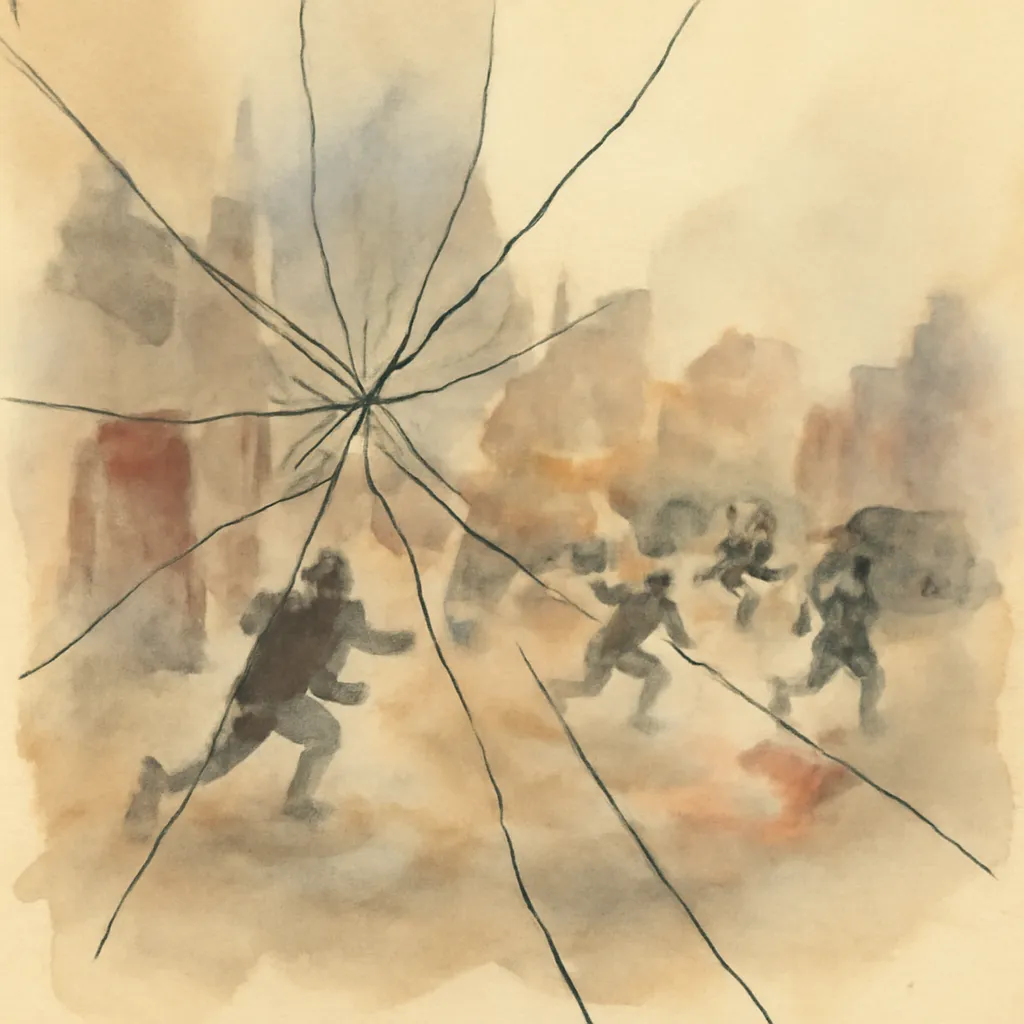
1.The Fluidity of Borders
Ghosh’s narrative dismantles the idea of rigid national, cultural, and even familial boundaries. The 'shadow lines' of the title refer to the arbitrary nature of borders, both literal and metaphorical. Through the interconnected stories of families in India, Bangladesh, and England, the novel shows how these lines are often constructs of the mind, easily crossed by memory, imagination, and emotion. The book suggests that such divisions are less real than the ties that bind people across them.
2.Memory and Storytelling
Memory is both unreliable and essential in The Shadow Lines. The unnamed narrator reconstructs the past through stories told by family members, especially his beloved cousin, Tridib. The novel blurs the distinction between what is remembered, imagined, or actually experienced, highlighting how personal and collective histories are shaped by the act of narration. Ghosh suggests that storytelling itself is a form of survival, a way to make sense of chaos and loss.
3.Violence and the Everyday
The novel explores how political violence—riots, partition, communal strife—erupts into ordinary lives, often unpredictably. By focusing on the 1964 riots in Dhaka and Calcutta, Ghosh reveals the randomness and senselessness of such violence, and how it reverberates across generations. The characters’ attempts to comprehend these events underscore the limits of understanding and the pain of inherited trauma.
4.The Unknowability of Experience
A recurring theme is the impossibility of fully knowing another’s experience, or even one’s own past. The narrative is filled with gaps, silences, and contradictions. Ghosh uses these absences to question whether any historical or personal truth can ever be complete. The novel ultimately suggests that some moments are 'not knowable,' inviting humility in the face of history’s complexity.
5.Identity Across Generations
The Shadow Lines examines how identities are formed and re-formed across generations and continents. The narrator’s family, spread between India and England, embodies the diasporic experience and the search for belonging. The novel resists simple definitions of home or self, instead portraying identity as something fluid, shaped by memory, loss, and the stories we inherit.
6.The Power of Imagination
Imagination plays a central role in bridging distances—between people, places, and times. For the narrator, imagining places he has never seen becomes a way to connect with others and understand the world. The novel celebrates this imaginative empathy, while also acknowledging its limits and dangers.