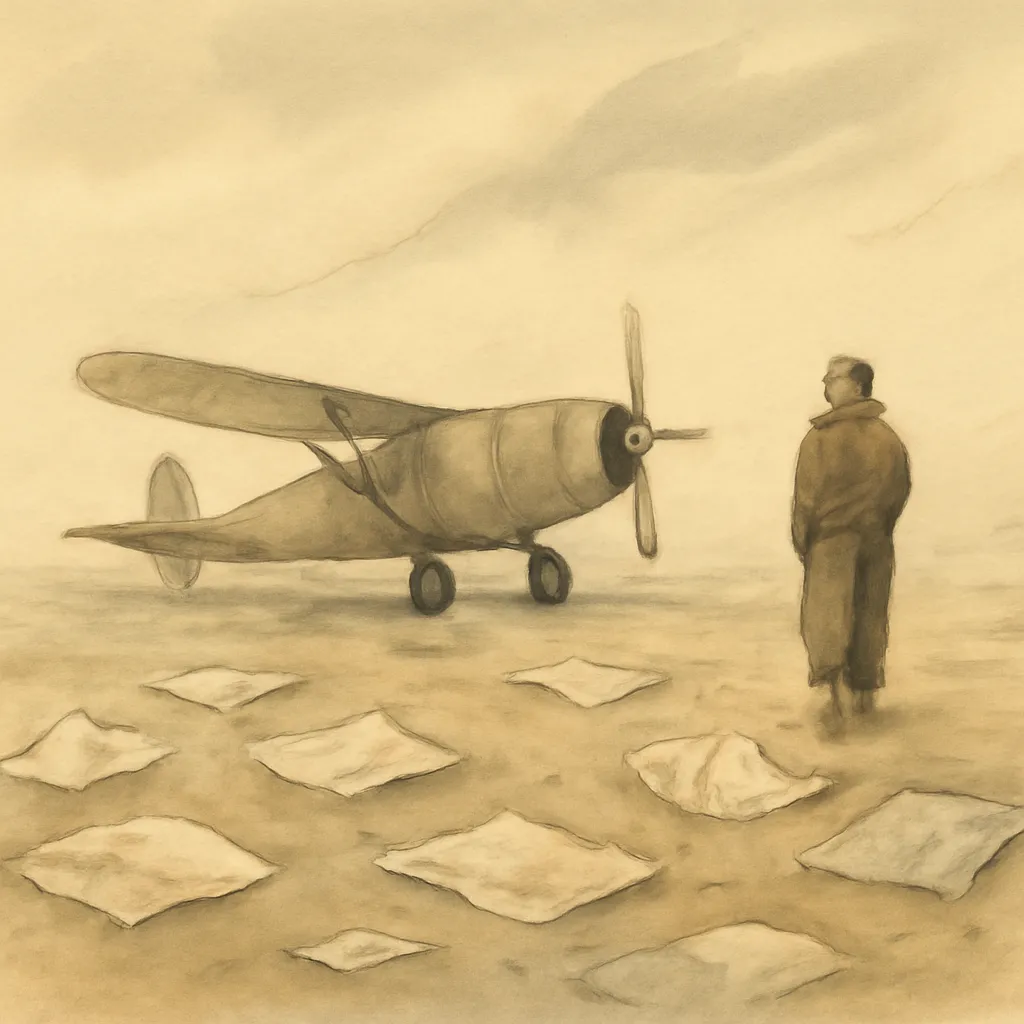
1.The Spiritual Dimension of Flight
Saint-Exupéry transforms the experience of piloting primitive aircraft into a meditation on the human spirit. Flying is not just a technical feat; it becomes a metaphor for striving, risk, and transcendence. The book describes the beauty and terror of flight, emphasizing how confronting danger strips away the trivial and reveals what truly matters. The cockpit becomes a place of solitude and clarity, where the pilot is both isolated and deeply connected to the world.
2.Nature’s Indifference and Human Resilience
Throughout the book, Saint-Exupéry faces the unforgiving realities of deserts, mountains, and storms. Nature is depicted as vast and indifferent, highlighting human vulnerability. Yet, it is precisely in facing these challenges that the author discovers the depth of human courage, ingenuity, and solidarity. The story of his crash in the Sahara, and the struggle for survival, exemplifies how adversity can bring out the essential qualities of endurance and hope.
3.The Importance of Human Connection
Despite the solitary nature of flight, Saint-Exupéry continually returns to the theme of fraternity. The relationships between pilots, mechanics, and even strangers encountered in remote places are portrayed as vital threads in the fabric of existence. The book argues that true meaning is found not in individual achievement, but in the bonds forged through shared hardship and compassion.
4.The Value of Work and Duty
Wind, Sand and Stars elevates the daily work of flying mail as an act of responsibility and service. Saint-Exupéry sees dignity in fulfilling one’s duty, no matter how dangerous or humble. The pilots’ commitment to their missions, often at great personal risk, is presented as a model of integrity and purpose. This ethic of work is contrasted with modern society’s tendency toward comfort and complacency.
5.Memory, Storytelling, and the Search for Meaning
The book blends vivid recollections with philosophical musings, showing how memory and storytelling help us make sense of suffering and joy. Saint-Exupéry’s lyrical style invites readers to reflect on their own lives, suggesting that meaning emerges from how we interpret and share our experiences. The narrative is as much about inner journeys as external adventures.
6.The Universality of Human Experience
Saint-Exupéry’s encounters with people from different backgrounds—be they Bedouins, Spanish villagers, or fellow aviators—underscore the shared hopes, fears, and dreams that bind humanity. The book dissolves boundaries of nationality and culture, suggesting that in the face of nature’s immensity, all humans are fundamentally alike.