A Modest Proposal: For preventing the children of poor people in Ireland, from being a burden on their parents or country, and for making them beneficial to the publick by Jonathan Swift — Summary, Key Ideas & Full Text
12 pages3 chapters14 min read10 min speed read✦ 9-min Big ideas★ 3.8 (12)Free · no account
What is A Modest Proposal: For preventing the children of poor people in Ireland, from being a burden on their parents or country, and for making them beneficial to the publick about?
A satirical solution to poverty that shocks and provokes thought on societal neglect
Read full overviewShow less›
Jonathan Swift's 'A Modest Proposal' offers a biting critique of the socio-economic conditions in 18th-century Ireland, where the plight of the impoverished is laid bare through a grotesque suggestion: to alleviate poverty by consuming the children of the poor. This audacious proposal serves not only as a satire of contemporary attitudes toward the suffering of the underclass but also as a call to action for a society that has turned a blind eye to its moral responsibilities. Readers will explore how Swift employs irony and hyperbole to highlight the desperation of the Irish people and the indifference of the British government. This exploration will reveal the complexities of social policy, the ethics of survival, and the harsh realities faced by the marginalized. Through Swift's lens, we are prompted to reflect on the value of human life and the societal structures that dictate worth.
Jonathan Swift's 'A Modest Proposal' remains a powerful critique of societal neglect and the moral dilemmas surrounding poverty. Through outrageous satire, Swift forces readers to confront the uncomfortable truths about their society and the dehumanization of the poor. His proposal, while grotesque, serves as a reminder of the urgent need for compassion and genuine change in addressing social injustices. The work challenges us to reflect on our own roles in perpetuating or alleviating suffering and to consider the ethical implications of our societal structures. Swift's incisive commentary continues to resonate, urging us to engage with the complexities of poverty and the moral obligations we hold toward one another.
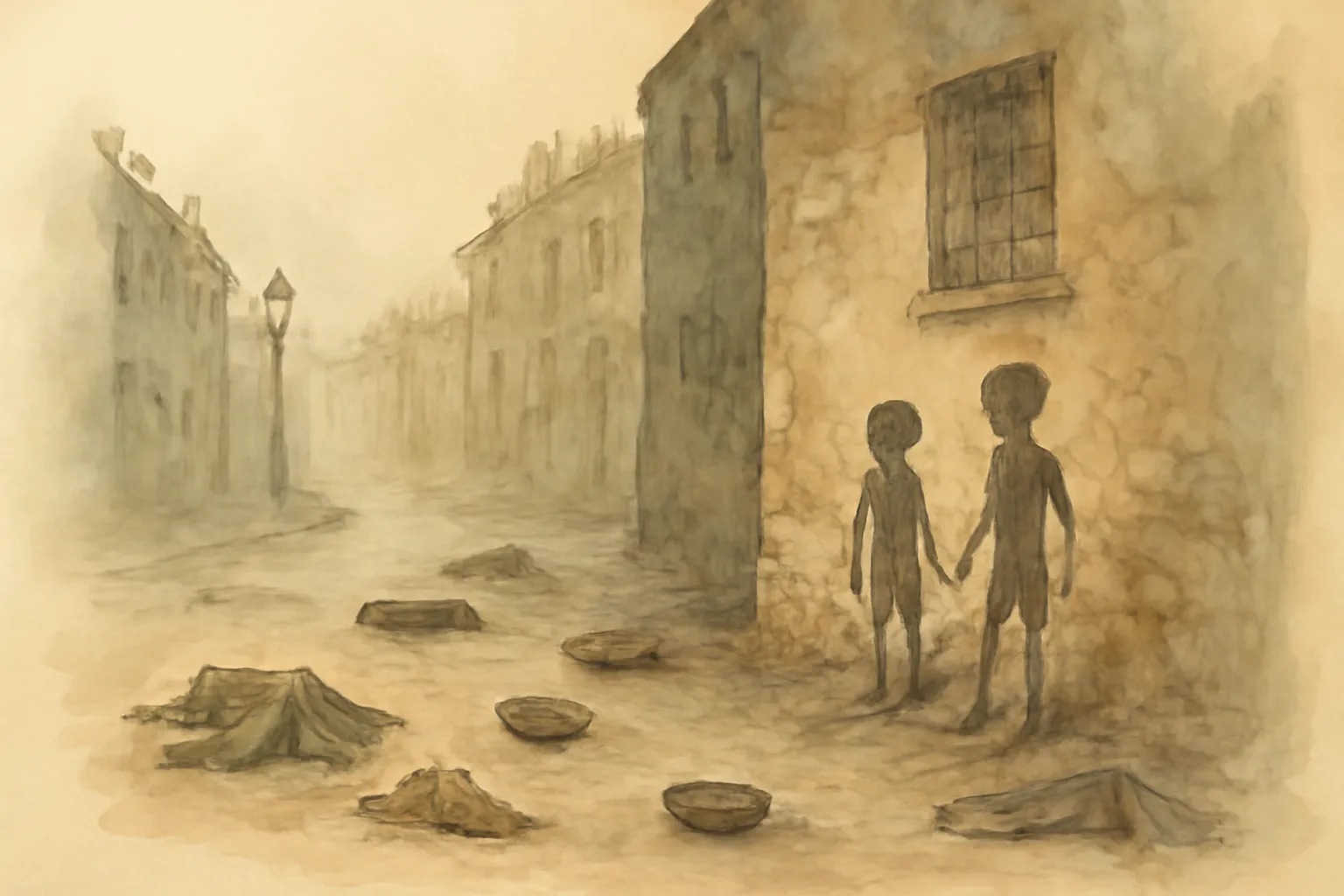
“It is a melancholy object to those, who walk through this great town, or travel in the country, when they see the streets, the roads, and cabbin-doors crowded with beggars of the female sex, followed by three, four, or six children, all in rags, and importuning every passenger for an alms.”
“I think it is agreed by all parties, that this prodigious number of children in the arms, or on the backs, or at the heels of their mothers, and frequently of their fathers, is in the present deplorable state of the kingdom, a very great additional grievance.”
“Thus the squire will learn to be a good landlord, and grow popular among his tenants, the mother will have eight shillings neat profit, and be fit for work till she produces another child.”
A glimpse inside
The Grievous State of the Poor
Swift opens with a poignant description of Dublin's streets, teeming with beggars and their ragged children. His words evoke a deep sense of melancholy, illustrating the… Read moreSwift opens with a poignant description of Dublin's streets, teeming with beggars and their ragged children. His words evoke a deep sense of melancholy, illustrating the dire predicament of these families who are unable to secure a livelihood. The mothers are depicted as being so burdened that they cannot work, trapped in a cycle of poverty that forces them to beg for alms. Swift emphasizes that the sight of these impoverished families is a national grievance, one that warrants serious reflection and action. He argues that the sheer number of children in distress reflects a failure of society to care for its most vulnerable members. By establishing this context, Swift prepares the reader for the outrageous proposal to follow, highlighting the urgent need for a solution to an all-too-common plight. Show less
A Shocking Proposal
At the heart of Swift's essay is his proposal to sell impoverished children as a food source for the wealthy. This suggestion is deliberately shocking, designed to provok… Read moreAt the heart of Swift's essay is his proposal to sell impoverished children as a food source for the wealthy. This suggestion is deliberately shocking, designed to provoke outrage and reflection. Swift meticulously calculates the economic advantages of his proposal, arguing that it would relieve the burden on parents while providing a new source of nourishment for the affluent. By framing this grotesque idea in practical terms, he forces readers to confront the absurdity of their indifference to the suffering of the poor. The sheer horror of his suggestion is meant to jolt the audience into awareness of social injustices, challenging them to reconsider their own attitudes and actions towards poverty. Swift's calculated use of tonal dissonance amplifies his critique, making it impossible for the reader to ignore the stark contrast between his proposal and the reality of suffering. Show less
Yes — the complete text of A Modest Proposal: For preventing the children of poor people in Ireland, from being a burden on their parents or country, and for making them beneficial to the publick is free to read online, with no account and no ads. The 8-minute Big-ideas summary and audio narration are unlocked too