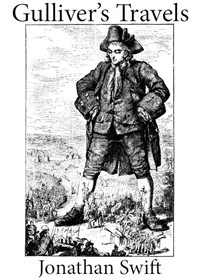

A surgeon’s voyages to strange nations — biting satire of politics, science, and human nature.
Read full overviewShow less›
Jonathan Swift's 'Gulliver's Travels' is a rich tapestry of adventure, satire, and political commentary that invites readers to explore the absurdities of human nature and the follies of society through the eyes of Lemuel Gulliver. As Gulliver journeys to fantastical lands inhabited by tiny people, giants, and even rational horses, he encounters various cultures and their peculiar customs that mirror and critique the complexities of his own world. This narrative serves not only as a thrilling tale of exploration but also as a profound examination of human vice and virtue, illuminating the moral and philosophical dilemmas faced by society. Readers will find themselves challenged to reflect on their own beliefs and the nature of humanity itself, making this work as relevant today as it was in the 18th century.
In 'Gulliver's Travels', Jonathan Swift crafts a timeless narrative that transcends the boundaries of its historical context, offering profound insights into the nature of humanity and society. Through Gulliver's fantastical journeys, readers are invited to confront the absurdities of power, the moral complexities of existence, and the often contradictory nature of human behavior. Swift's masterful use of satire not only entertains but also challenges readers to reflect critically on their own beliefs and the societal norms that shape their lives. As relevant today as it was in the 18th century, 'Gulliver's Travels' remains a compelling exploration of the human condition, urging us to aspire toward a more virtuous and understanding world.
- 1The Lilliputians and Power Dynamics
- 2The Absurdity of War
- 3The Brobdingnagians: A Reflection on Human Nature
- 4The Houyhnhnms: Rationality and Virtue
- 5Satire as a Tool for Social Critique
A glimpse inside

Upon arriving in Lilliput, Gulliver encounters a society of tiny people, no taller than six inches. This peculiar setting serves as a microcosm of human society, where po… Read moreUpon arriving in Lilliput, Gulliver encounters a society of tiny people, no taller than six inches. This peculiar setting serves as a microcosm of human society, where power struggles and political intrigue abound despite the inhabitants' diminutive stature. The Lilliputians' obsession with trivial matters, such as the proper way to break an egg, highlights the absurdity of political conflicts based on petty disagreements. Gulliver’s interactions with the emperor and the court reveal how power can distort reason and lead to absurdity, as the Lilliputians engage in elaborate ceremonies and competitions that prioritize loyalty over merit. This satirical portrayal encourages readers to question the motivations behind political power and the often ridiculous nature of authority figures, reflecting Swift’s critique of the political landscape of his time. Show less
The conflicts between Lilliput and its rival nation, Blefuscu, serve as a satire of the senselessness of war. The war is sparked by a dispute over the correct method of o… Read moreThe conflicts between Lilliput and its rival nation, Blefuscu, serve as a satire of the senselessness of war. The war is sparked by a dispute over the correct method of opening eggs, which symbolizes the trivial reasons that often underpin real-world conflicts. Gulliver’s role in the war, where he uses his giant size to defeat the Blefuscudians, illustrates the absurdity of using overwhelming force to resolve disputes that could be settled through dialogue. Swift critiques the glorification of military power and the blind nationalism that fuels such conflicts, inviting readers to reconsider the true cost of war and the often ludicrous justifications that accompany it. The portrayal of war as a farce rather than a noble endeavor serves as a powerful commentary on human folly. Show less
Read the full text — free
About the author
Jonathan Swift has 2 works free to read on Lumina, including A Modest Proposal: For preventing the children of poor people in Ireland, from being a burden on their parents or country, and for making them beneficial to the publick.
All 2 books by Jonathan Swift →Frequently asked
Worlds to get lost in
Take Lumina everywhere
Read offline, listen to AI summaries, speed-read, and sync your progress across devices — free on iPhone.
Download for iPhone