
Vampires · Artifical Hibernation · Fiction
Blindsight by Peter Watts — Summary, Key Ideas & Quotes
2006384 pages✦ 3-min Big ideas★ 4.1 (67)
Rate it
*Two months since the stars fell...* Two months since sixty-five thousand alien objects clenched around the Earth like a luminous fist, screaming to the heavens as the atmosphere burned them to ash. Two months since that moment of brief, bright surveillance by agents unknown. Two months of silence while a world holds its breath. Now some half-derelict space probe, sparking fitfully past Neptune's orbit, hears a whisper from the edge of the solar system: a faint signal sweeping the cosmos like a lighthouse beam. Whatever's out there isn't talking to us. It's talking to some distant star, perhaps. Or perhaps to something closer, something *en route.* So who do you send to force introductions on an intelligence with motives unknown, maybe unknowable? Who do you send to meet the alien when the alien doesn't want to meet? You send a linguist with multiple personalities, her brain surgically partitioned into separate, sentient processing cores. You send a biologist so radically interfaced with machinery that he sees X-rays and tastes ultrasound, so compromised by grafts and splices that he no longer feels his own flesh. You send a pacifist warrior in the faint hope she won't be needed, and a fainter hope that she'll do any good if she is needed. You send a monster to command them all, an extinct hominid predator once called "vampire," recalled from the grave with the voodoo of recombinant genetics and the blood of sociopaths. And you send a synthesist—an informational topologist with half his mind gone—as an interface between *here* and *there,* a conduit through which the Dead Center might hope to understand the Bleeding Edge. You send them all to the edge of interstellar space, praying you can trust such freaks and retrofits with the fate of a world. You fear they may be more alien than the thing they've been sent to find. But you'd give anything for that to be true, if you only knew what was waiting for them....
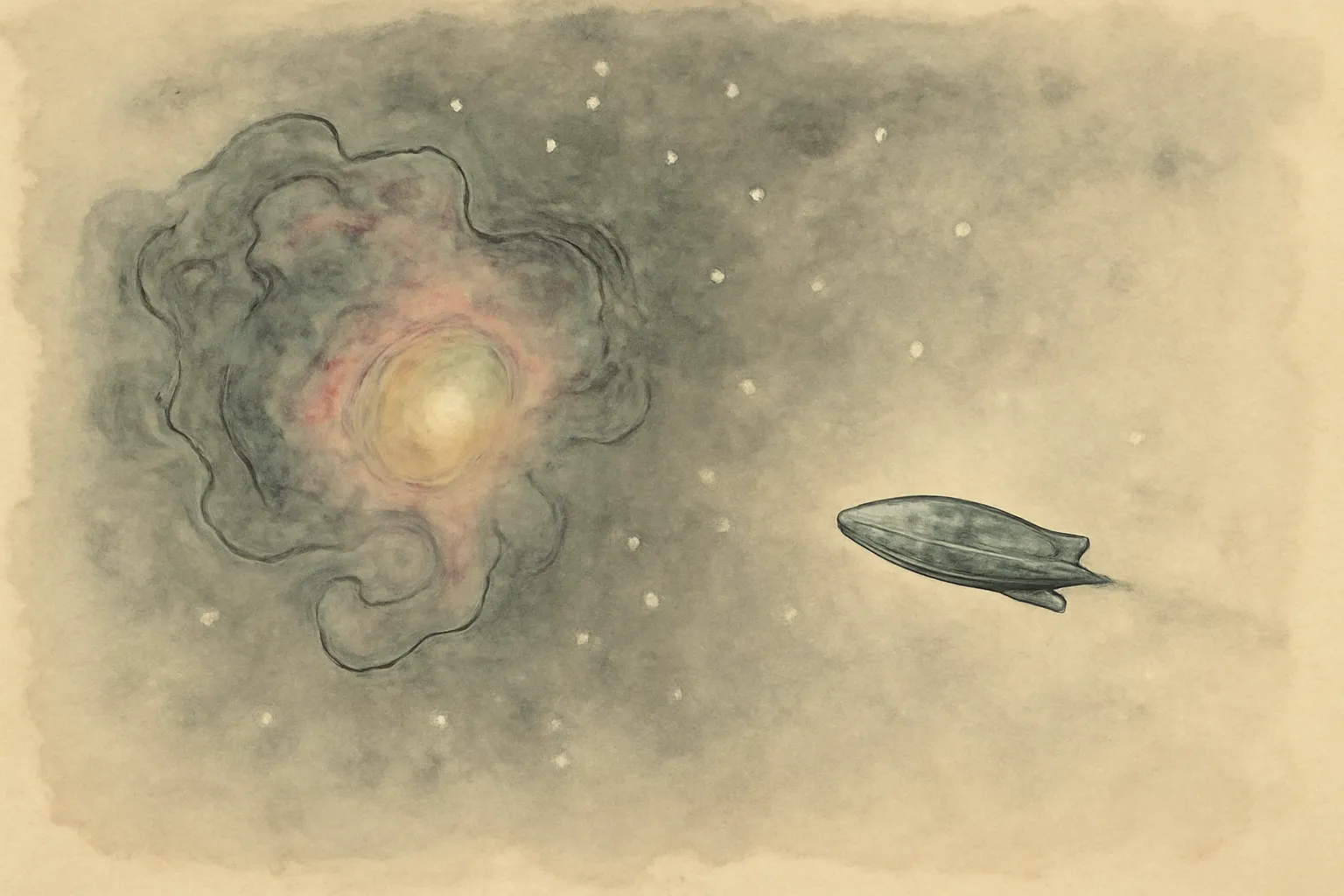
Blindsight’s core philosophical question is whether consciousness is necessary for intelligence. Through the alien 'Scramblers' and the peculiar crew of the Theseus, Watts explores the possibility that self-awareness is not an evolutionary advantage, but perhaps a costly detour. The novel suggests that entities can be highly intelligent—capable of problem-solving, adaptation, and even deception—without any subjective experience. This challenges the anthropocentric assumption that consciousness is the pinnacle of evolution, inviting readers to reconsider what truly defines a mind.
The crew of the Theseus is composed of posthuman specialists, each with altered or augmented sensory abilities. Their struggles to interpret the alien signal and encounter highlight how our biology shapes, and limits, our understanding of reality. Watts uses these characters to demonstrate that even with technological enhancements, perception is always filtered and incomplete. The novel thus becomes a meditation on epistemology: how much can we ever truly know about the universe, or about each other?
“If we're not conscious, we're not alive.”
“If you think this has a happy ending, you haven't been paying attention.”
“We are not thinking machines. We are feeling machines that think.”