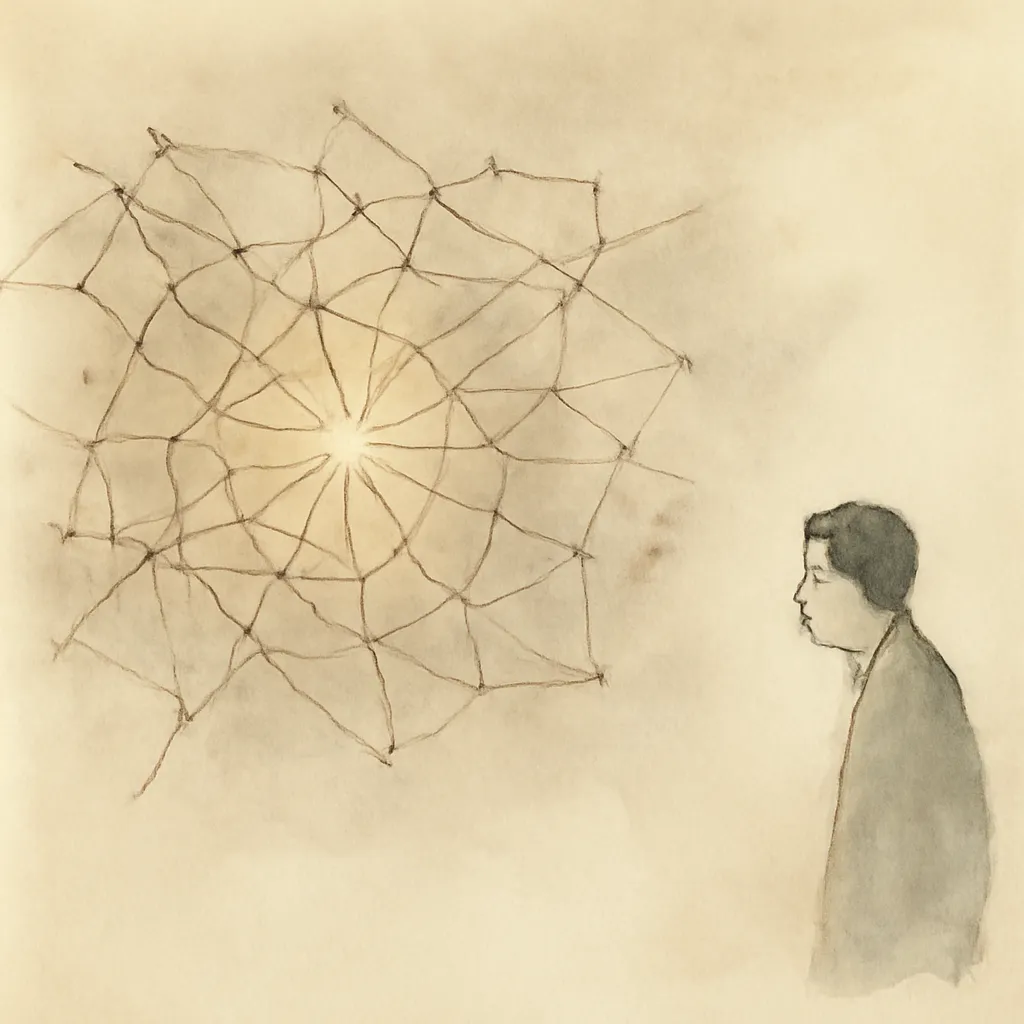
1.Consciousness vs. Intelligence
Blindsight’s core philosophical question is whether consciousness is necessary for intelligence. Through the alien 'Scramblers' and the peculiar crew of the Theseus, Watts explores the possibility that self-awareness is not an evolutionary advantage, but perhaps a costly detour. The novel suggests that entities can be highly intelligent—capable of problem-solving, adaptation, and even deception—without any subjective experience. This challenges the anthropocentric assumption that consciousness is the pinnacle of evolution, inviting readers to reconsider what truly defines a mind.
2.The Limits of Human Perception
The crew of the Theseus is composed of posthuman specialists, each with altered or augmented sensory abilities. Their struggles to interpret the alien signal and encounter highlight how our biology shapes, and limits, our understanding of reality. Watts uses these characters to demonstrate that even with technological enhancements, perception is always filtered and incomplete. The novel thus becomes a meditation on epistemology: how much can we ever truly know about the universe, or about each other?
3.Alienness and Communication
Blindsight’s aliens are not just physically different; their minds are fundamentally other. Watts deliberately constructs the Scramblers to be incomprehensible, not out of malice but because their cognition operates on principles foreign to us. The novel interrogates the assumption that communication is always possible or desirable, forcing the reader to confront the possibility that some forms of intelligence may be forever beyond our reach.
4.Posthuman Identity and Fragmentation
The crew’s psychological and physical modifications reflect the novel’s fascination with fractured identity. Siri Keeton, the narrator, has had half his brain removed for medical reasons, making him a detached observer of both himself and others. The linguist, Susan James, has multiple personalities engineered for linguistic analysis. These characters embody the idea that the self is not unified or stable, but a construct that can be edited, divided, or lost. Blindsight asks what remains of humanity when the boundaries of selfhood are blurred.
5.Survival and Evolutionary Purpose
Watts frames evolution as a ruthless process, unconcerned with meaning or morality. The novel’s events suggest that traits like empathy, consciousness, or even a sense of self may be evolutionary dead ends. The Scramblers’ efficiency and lack of self-awareness are presented as potentially superior adaptations. This raises unsettling questions about humanity’s place in the universe: are our most cherished qualities liabilities in the cosmic struggle for survival?
6.The Role of the Observer
Siri Keeton’s function as a 'synthesist'—someone who observes and reports without truly participating—mirrors the reader’s own position. His emotional detachment and analytical perspective serve as both a narrative device and a thematic statement about the limits of observation. Watts uses Siri to explore the paradox that understanding may require a degree of separation from experience, but that very separation can render true understanding impossible.