

Fire · Food · Food habits
Catching Fire: How Cooking Made Us Human by Richard Wrangham — Summary, Key Ideas & Quotes
2009309 pages✦ 3-min Big ideas★ 4.0 (3)
Rate it
Ever since Darwin and The Descent of Man, the existence of humans has been attributed to our intelligence and adaptability. But in Catching Fire, renowned primatologist Richard Wrangham presents a startling alternative: our evolutionary success is the result of cooking. In a groundbreaking theory of our origins, Wrangham shows that the shift from raw to cooked foods was the key factor in human evolution. When our ancestors adapted to using fire, humanity began. Once our hominid ancestors began cooking their food, the human digestive tract shrank and the brain grew. Time once spent chewing tough raw food could be sued instead to hunt and to tend camp. Cooking became the basis for pair bonding and marriage, created the household, and even led to a sexual division of labor. Tracing the contemporary implications of our ancestors’ diets, Catching Fire sheds new light on how we came to be the social, intelligent, and sexual species we are today. A pathbreaking new theory of human evolution, Catching Fire will provoke controversy and fascinate anyone interested in our ancient origins—or in our modern eating habits.
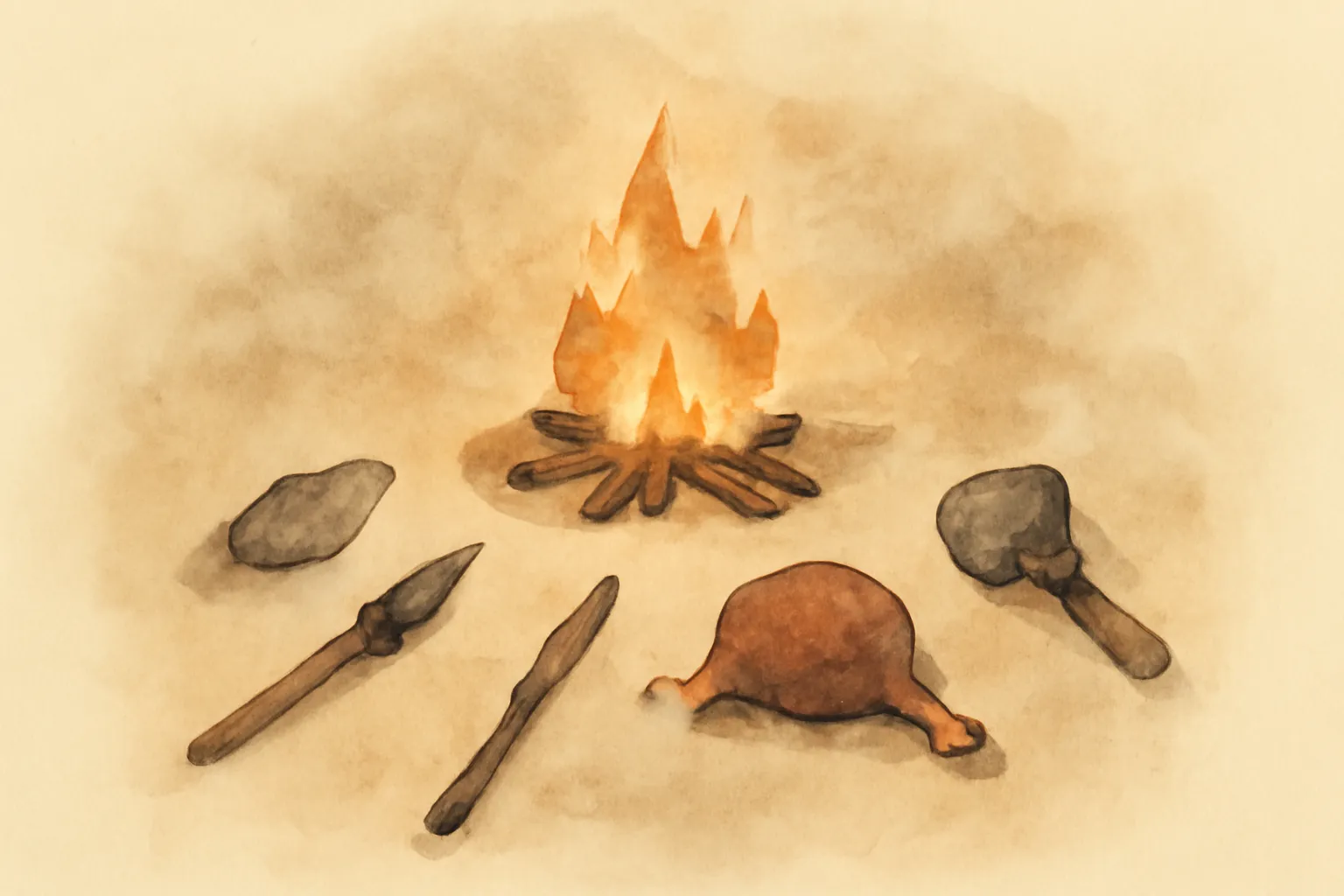
Wrangham’s central thesis is that the advent of cooking, rather than tool use or hunting, was the pivotal development in human evolution. By harnessing fire to process food, early hominins gained access to more calories and nutrients with less effort. This dietary revolution, Wrangham argues, allowed for smaller guts and larger brains, setting Homo erectus and later Homo sapiens on a unique evolutionary path. Cooking, not just eating meat, fundamentally altered our biology and capabilities.
Catching Fire details how cooked food is easier to digest and provides more usable energy than raw food. This shift reduced the size of our teeth, jaws, and digestive tracts, freeing up metabolic resources for brain growth. Wrangham draws on comparative anatomy, primate studies, and nutritional science to show that only cooked food could explain the rapid changes seen in early human fossils—especially the leap in brain size relative to body mass.
“Cooking made us human.”
“We are the cooking apes, the creatures of the flame.”