Human-alien encounters · Fiction · Science fiction
Childhood's End by Arthur C. Clarke — Summary, Key Ideas & Quotes
1952222 pages✦ 3-min Big ideas★ 3.9 (27)
Rate it
Childhood's End is a 1953 science fiction novel by British author Arthur C. Clarke. The story follows the peaceful alien invasion of Earth by the mysterious Overlords, whose arrival ends all war, helps form a world government, and turns the planet into a near-utopia. Many questions are asked about the origins and mission of the aliens, but they avoid answering, preferring to remain in their ships, governing through indirect rule. Decades later, the Overlords eventually show themselves, and their impact on human culture leads to a Golden Age. However, the last generation of children on Earth begin to display powerful psychic abilities, heralding their evolution into a group mind, a transcendent form of life.
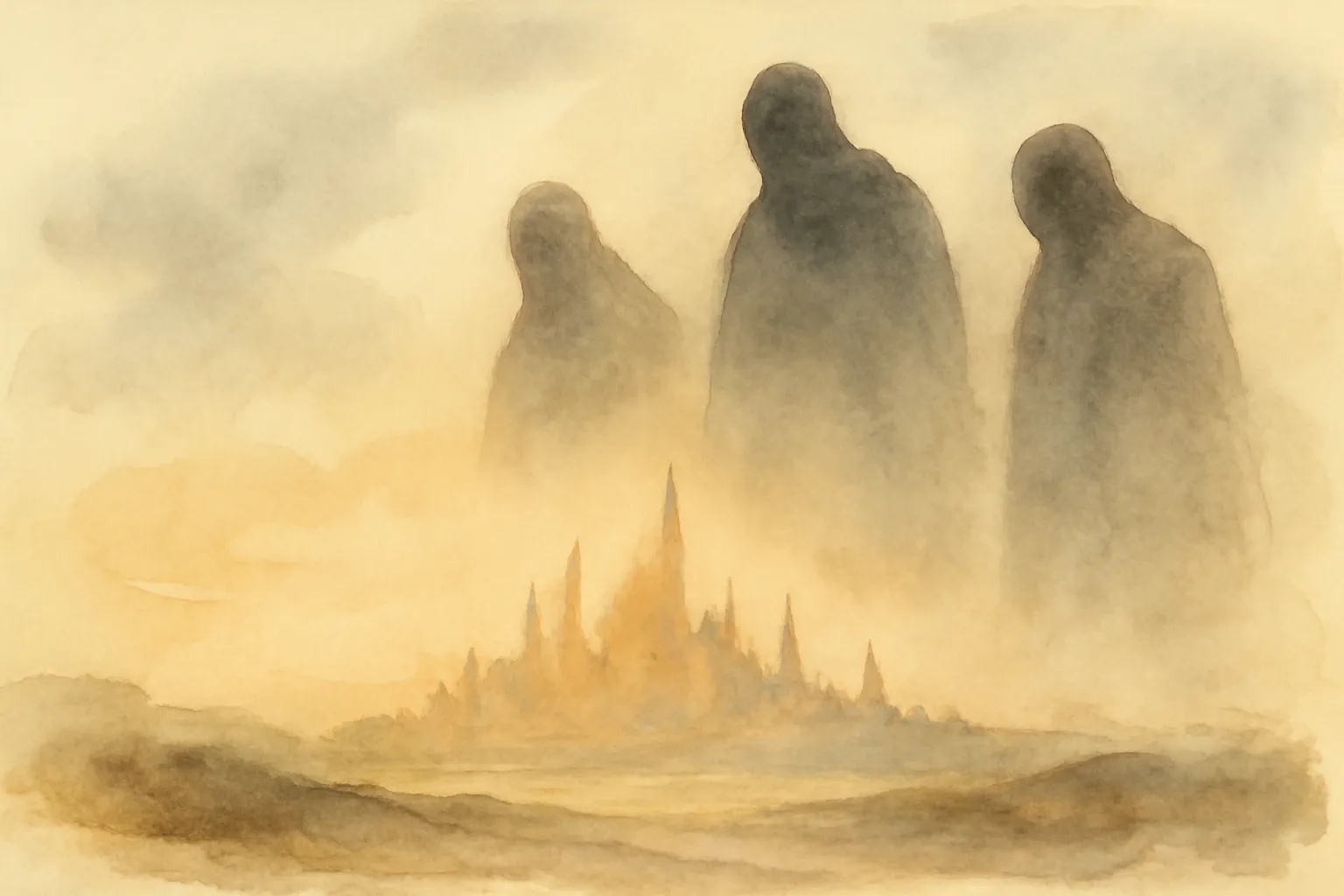
Clarke explores the idea that a perfect society, free from war and want, may come at an unexpected cost: the stagnation of human ambition and creativity. The Overlords' benevolent rule brings peace, but also a sense of purposelessness. Clarke suggests that struggle and adversity are integral to growth, and that a world without them may lose its vitality. The novel raises the question of whether comfort and security are worth sacrificing humanity's drive to explore and imagine.
A central theme is the evolution of humanity beyond its current form. The emergence of psychic abilities in children signals a leap to a collective consciousness, orchestrated by forces beyond human understanding. Clarke presents this as both an awe-inspiring and tragic event: humanity's 'childhood' ends as it merges into something greater, but at the cost of individuality and the familiar human experience. The novel asks whether transcendence is a loss or a fulfillment of potential.
“The stars are not for man.”
“There was nothing left of Earth: they had come too late.”