Exploration · Fiction · Human-alien encounters
Contact by Carl Sagan — Summary, Key Ideas & Quotes
1985432 pages✦ 3-min Big ideas★ 4.2 (102)
Rate it
In December, 1999, a multinational team journeys out to the stars, to the most awesome encounter in human history. Who -- or what -- is out there? In Cosmos, Carl Sagan explained the universe. In Contact, he predicts its future -- and our own.
Contact places science and faith in active conversation, not as irreconcilable opposites but as parallel quests for meaning. Through the protagonist, Dr. Ellie Arroway—a radio astronomer and skeptic—the novel explores how scientific inquiry and spiritual yearning can coexist. Sagan doesn’t dismiss religion; instead, he probes its role in shaping human responses to the unknown. The tension between empirical evidence and personal belief is a central thread, prompting readers to reflect on their own frameworks for understanding the universe.
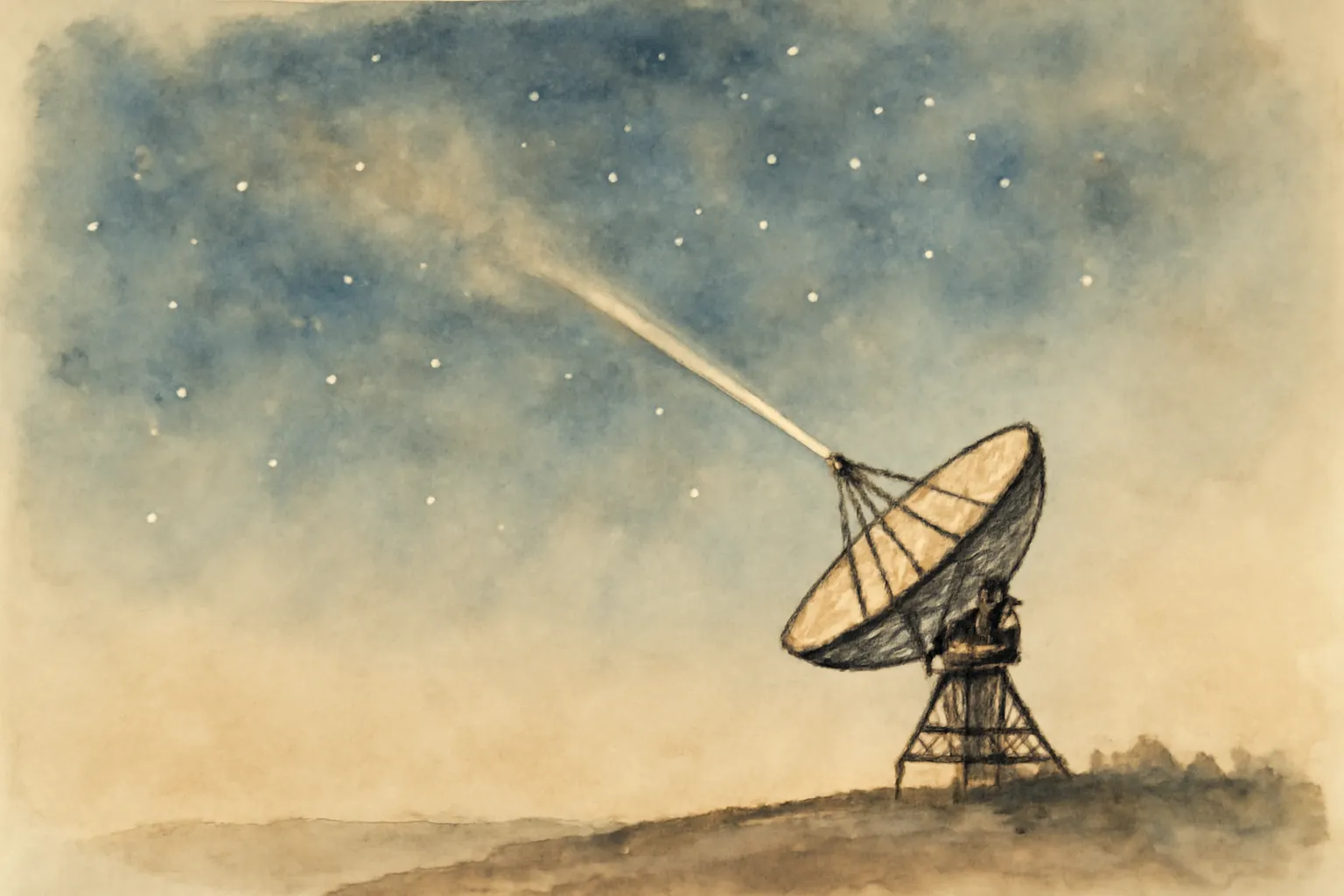
At its core, Contact dramatizes the scientific quest to answer the age-old question: Are we alone? The novel is grounded in real-world SETI (Search for Extraterrestrial Intelligence) efforts, portraying the technical, political, and philosophical challenges of detecting a message from the stars. Sagan’s depiction is both realistic and optimistic, showing how such a discovery could unite—or divide—humanity, and how it would force us to reconsider our significance in the cosmos.
“For small creatures such as we the vastness is bearable only through love.”
“The universe is a pretty big place. If it's just us, seems like an awful waste of space.”