

Prison discipline · Punishment · Prisons
Discipline and Punish: The Birth of the Prison by Michel Foucault — Summary, Key Ideas & Quotes
1975333 pages✦ 3-min Big ideas★ 4.2 (13)
Rate it
English version of "Surveiller et punir : naissance de la prison"
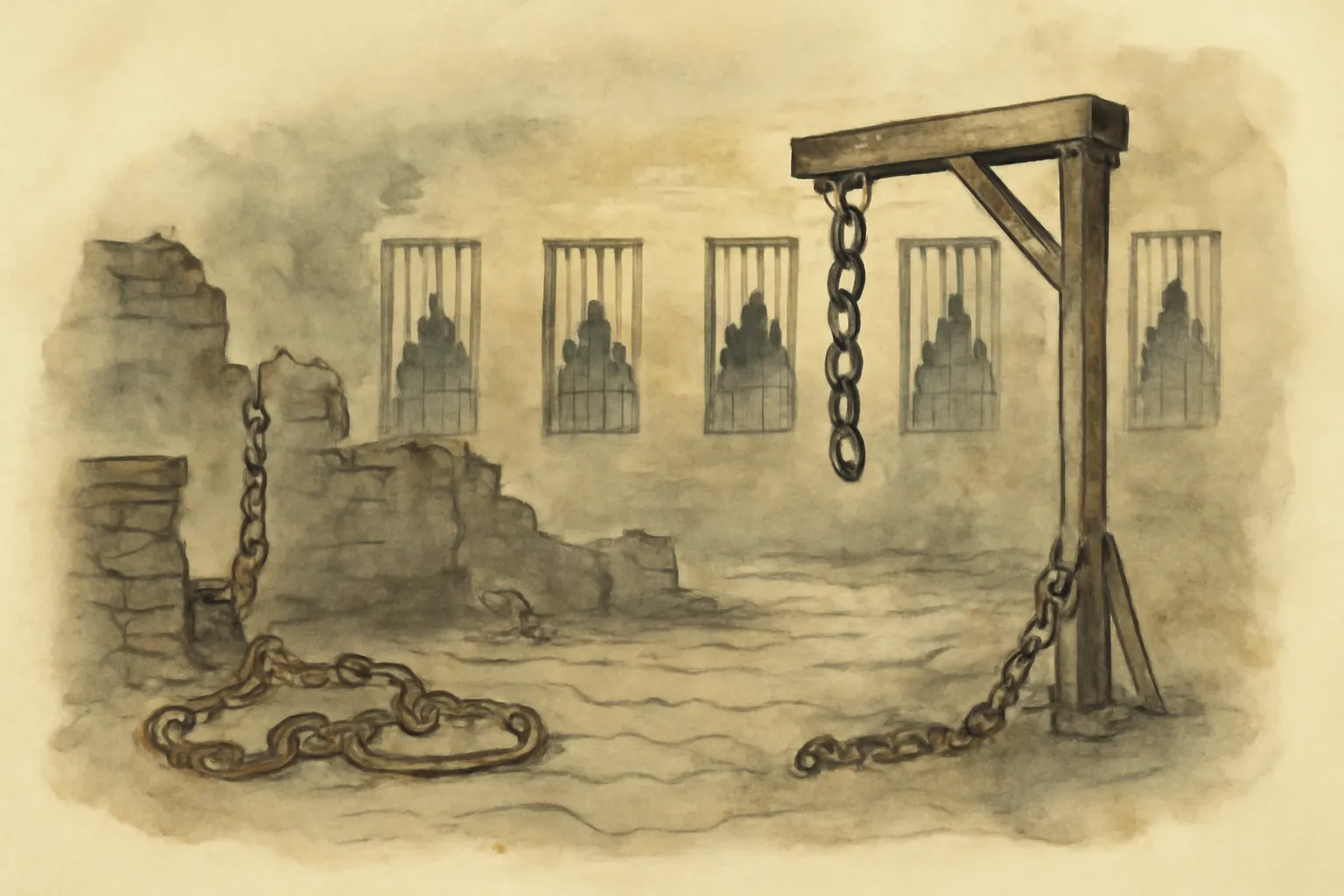
Foucault traces the evolution of punishment from the gruesome public executions of the 18th century to the seemingly humane, regulated prison system. He argues that while punishment became less physically violent, it also became more insidious. The shift from spectacle to surveillance marks a transformation in how power is exercised: instead of being openly brutal, it becomes internalized and constant, shaping behavior through subtle observation and discipline.
The modern prison, Foucault claims, is not just a place to confine criminals but a tool for producing 'docile bodies'—individuals who are trained to conform. Prisons exemplify a broader social trend where institutions (schools, hospitals, armies) use similar disciplinary techniques to mold and control people. The prison is thus both a symbol and a laboratory for modern power.
“Where there is power, there is resistance.”
“The soul is the prison of the body.”
“Visibility is a trap.”


