
Fiction · Physicists · Time
Einstein's Dreams by Alan Lightman — Summary, Key Ideas & Quotes
1993179 pages✦ 3-min Big ideas★ 4.1 (18)
Rate it
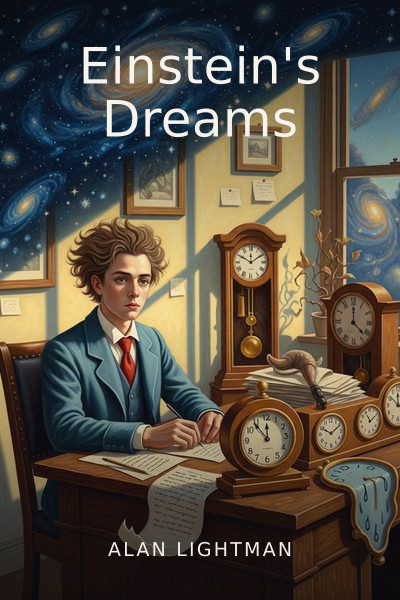
A fictional work in which a twenty-six-year-old Albert Einstein, working in a patent office in Switzerland, imagines possible worlds in which time works differently as he formulates his theory of relativity.
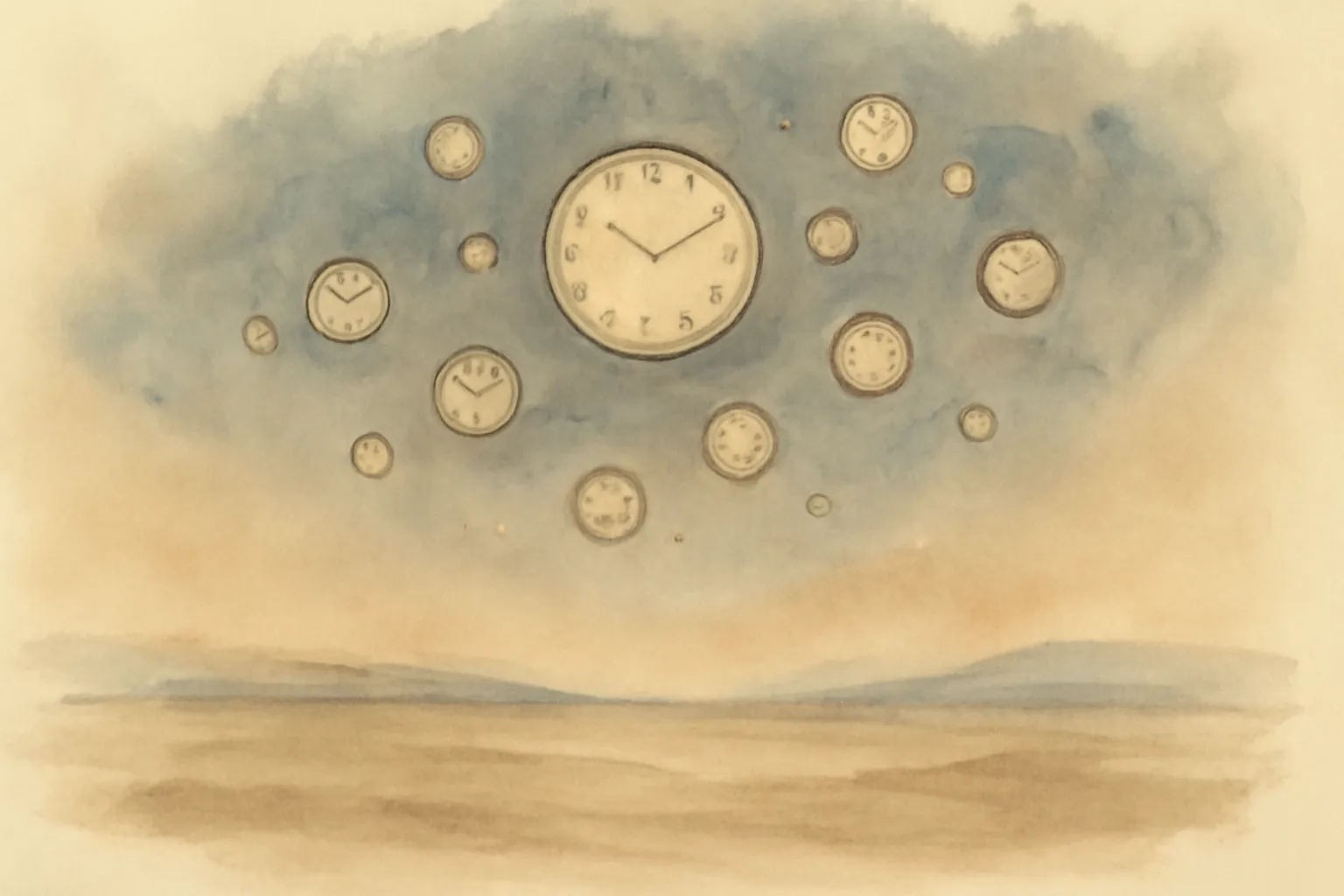
Each chapter presents a different world with its own rules of time—some where time is circular, others where it stands still, or moves in fits and starts. Through these vignettes, Lightman explores how our experience of time shapes our values, relationships, and sense of self. The book suggests that time is not merely a physical phenomenon but a lens through which we interpret existence.
The inhabitants of each imagined world adapt their lives to the peculiarities of time, revealing how deeply our behaviors and emotions are tied to temporal assumptions. Whether people live for the moment, cling to the past, or fear the future, Lightman shows that our understanding of time governs our joys, regrets, and anxieties.
“Suppose time is a circle, bending back on itself. The world repeats itself, precisely, endlessly.”
“In a world where time is absolute, every action, every thought, every word has its consequence.”