

Frankenstein (Fictitious character) · Fiction · Scientists
Frankenstein by Mary Shelley — Summary, Key Ideas & Quotes
1818240 pages✦ 3-min Big ideas★ 4.0 (221)
Rate it
*Frankenstein; or, The Modern Prometheus* is an 1818 novel written by English author Mary Shelley. Frankenstein tells the story of Victor Frankenstein, a young scientist who creates a sapient creature in an unorthodox scientific experiment. Shelley started writing the story when she was 18, and the first edition was published anonymously in London on 1 January 1818, when she was 20. Her name first appeared in the second edition, which was published in Paris in 1821.
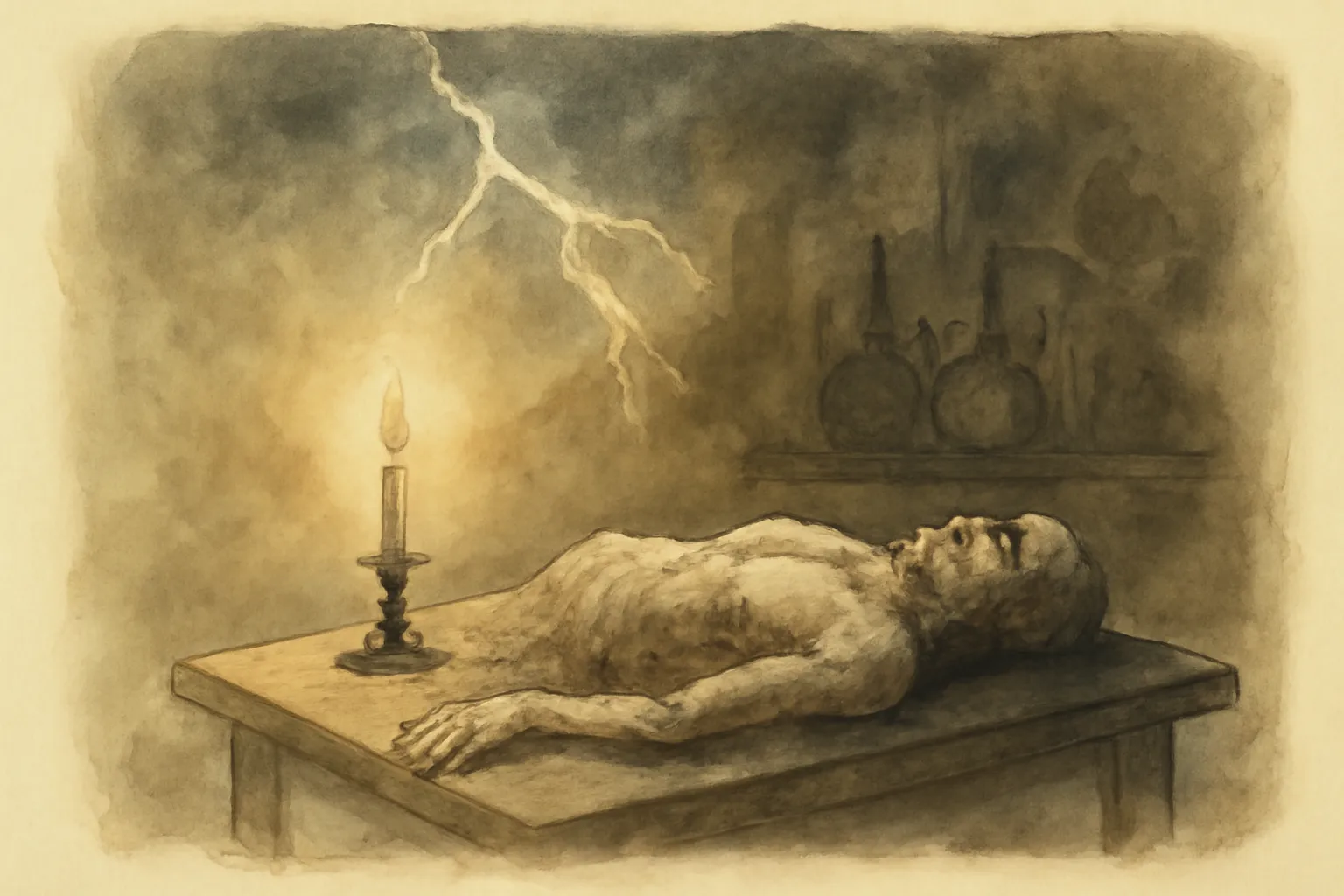
Victor Frankenstein’s relentless pursuit of scientific discovery leads him to create life, but his obsession blinds him to the consequences of his actions. Shelley's novel warns that the pursuit of knowledge, when divorced from ethical considerations and humility, can result in unintended suffering. Victor's downfall is not just due to his scientific prowess, but his failure to foresee or take responsibility for the outcome of his experiment.
A central tragedy of the novel is Victor’s abandonment of his creation. The creature, intelligent and sensitive, is left to navigate a hostile world alone. Shelley uses this to critique the failure to take responsibility for one's creations—be they scientific, social, or personal. The monster’s misery and violence are direct results of Victor’s neglect, raising questions about the obligations creators owe to their creations.
“Beware; for I am fearless, and therefore powerful.”
“I ought to be thy Adam, but I am rather the fallen angel.”
“Nothing is so painful to the human mind as a great and sudden change.”
“You are my creator, but I am your master;—obey!”
“I am alone and miserable: man will not associate with me.”