
black women · lgbt · English literature
Girl, Woman, Other by Bernardine Evaristo — Summary, Key Ideas & Quotes
2019458 pages✦ 3-min Big ideas★ 4.2 (11)
Rate it
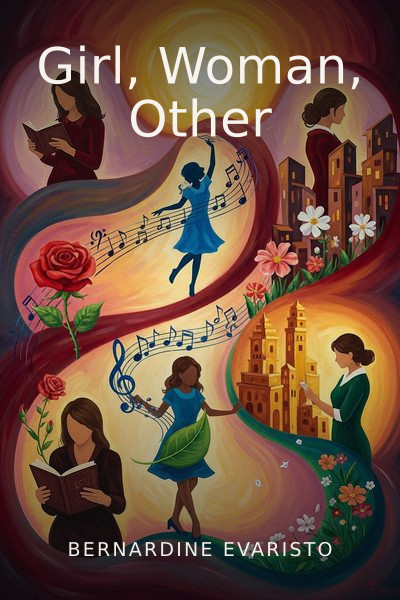
*Girl, Woman, Other* follows the lives and struggles of twelve very different characters. Mostly women, black and British, they tell the stories of their families, friends and lovers, across the country and through the years. Joyfully polyphonic and vibrantly contemporary, this is a gloriously new kind of history, a novel of our times: celebratory, ever-dynamic and utterly irresistible.
Evaristo structures the novel as a chorus of twelve distinct voices, each with their own narrative thread and perspective. This approach breaks away from linear, single-protagonist storytelling, instead weaving a tapestry of interconnected lives. The result is a sense of community and multiplicity, reflecting the diversity within Black British experiences while resisting the urge to flatten them into a single narrative.
The book delves deeply into how race, gender, sexuality, class, and age intersect to shape each character's life. Evaristo refuses to present her characters as monolithic; instead, she explores their contradictions, ambitions, and struggles, highlighting how identity is both self-fashioned and socially imposed. The novel foregrounds intersectionality as a lived reality, not just a theoretical concept.
“you’re doing it for all of us”
“this is not about feeling sorry for yourself”
“she wants to be part of the movement, not just a footnote in someone else’s history”