Philosophy · Emperors · Biography
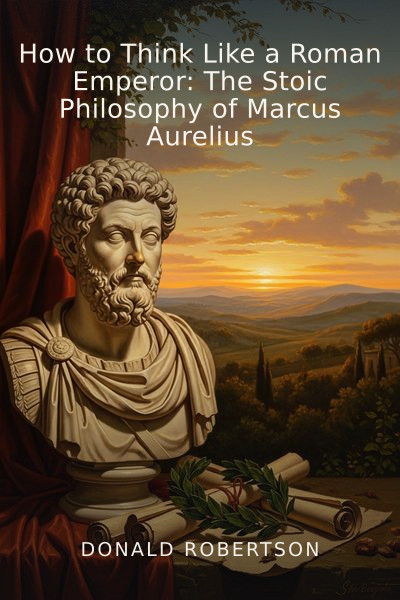
How to Think Like a Roman Emperor: The Stoic Philosophy of Marcus Aurelius by Donald Robertson — Summary, Key Ideas & Quotes
2019304 pages✦ 3-min Big ideas★ 5.0 (5)
Rate it

Robertson presents Stoicism not as abstract theory, but as a toolkit for everyday living. By examining Marcus Aurelius’s struggles and triumphs, the book demonstrates how Stoic practices—like journaling, reflection, and mindful self-talk—can help us respond to challenges with equanimity. The focus is on applying philosophy to real problems, from anxiety to anger, making Stoicism accessible and actionable for modern readers.
A central theme is the Stoic idea that our judgments, not external events, shape our emotions. Robertson connects this with cognitive-behavioral therapy (CBT), showing how Marcus Aurelius reframed setbacks to maintain perspective and composure. Readers learn techniques to question their automatic thoughts, reinterpret difficulties, and choose more constructive responses—skills that are as relevant now as they were in ancient Rome.
“The obstacle on the path becomes the path. Never forget, within every obstacle is an opportunity to improve our condition.”