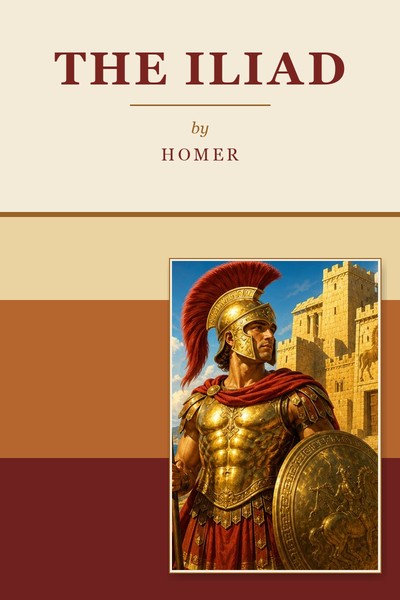

Wrath and war at Troy — Achilles, Hector, and the tragedy of mortal glory.
Read full overviewShow less›
Homer's 'The Iliad' is not just a tale of war; it is a deep exploration of human emotions, relationships, and the consequences of pride and anger. Set during the Trojan War, the epic unfolds the story of Achilles, the greatest warrior of the Greeks, whose wrath against Agamemnon leads to tragedy and loss. Readers will discover themes of fate, the role of the gods, and the nature of heroism, while being immersed in a world where personal grievances and the larger conflict intertwine. Through vivid characters and dramatic events, 'The Iliad' invites readers to reflect on the cost of conflict and the fleeting nature of glory and life itself.
In 'The Iliad', Homer crafts a timeless exploration of the human experience through the lens of war, honor, and emotion. The epic's characters grapple with profound dilemmas that resonate with audiences across cultures and eras. By examining themes such as the consequences of pride, the nature of heroism, and the impact of loss, the poem invites readers to reflect on their own lives and the complexities of human relationships. Ultimately, 'The Iliad' serves as a powerful reminder of the enduring struggles faced by individuals and societies, making it a cornerstone of literary and philosophical discourse that continues to inspire and provoke thought.

- 1The Wrath of Achilles
- 2The Role of the Gods
- 3The Tragic Hero
- 4Honor and Glory
- 5The Nature of War
A glimpse inside

The central theme of 'The Iliad' is the wrath of Achilles, which serves as the catalyst for much of the epic's action. This wrath stems from a personal slight when Agamem… Read moreThe central theme of 'The Iliad' is the wrath of Achilles, which serves as the catalyst for much of the epic's action. This wrath stems from a personal slight when Agamemnon seizes Briseïs, Achilles' war prize, as a way to assert his authority. Achilles' anger leads him to withdraw from battle, which has dire consequences for the Greek forces. His refusal to fight highlights the theme of personal honor versus collective responsibility, as his pride ultimately endangers not only his comrades but also the fate of the entire Greek campaign against Troy. The poem opens with a call to the Muse to sing of this wrath, establishing it as a divine force that shapes human destiny and foreshadowing the tragic events that will unfold as a result of Achilles' choices. Show less
The gods in 'The Iliad' play a crucial role in influencing the course of events and the fates of the characters. They are depicted as capricious beings who favor differen… Read moreThe gods in 'The Iliad' play a crucial role in influencing the course of events and the fates of the characters. They are depicted as capricious beings who favor different sides in the conflict, often intervening directly in human affairs. For instance, when Achilles withdraws from battle, Thetis, his mother, appeals to Zeus to punish the Greeks, leading to a shift in the war's tide in favor of the Trojans. This divine manipulation raises questions about fate and free will, as the mortals seem to be at the mercy of the whims of the gods. Each god represents different values and attributes, such as Athena's wisdom and Hera's jealousy, reflecting the complexities of human nature and the moral ambiguities of the war. The interplay between divine influence and human agency emphasizes the theme of destiny and the limitations of human power. Show less
Read the full text — free
About the author
Frequently asked
Worlds to get lost in
Take Lumina everywhere
Read offline, listen to AI summaries, speed-read, and sync your progress across devices — free on iPhone.
Download for iPhone