Fiction · Short Reads
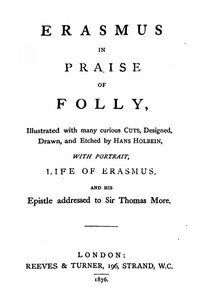
In Praise of Folly: Illustrated with Many Curious Cuts by Desiderius Erasmus — Summary, Key Ideas & Full Text
148 pages12 chapters2h 58m read2h 6m speed read✦ 9-min Big ideasFree · no account
Rate it
Embrace folly to uncover the absurdities of wisdom and society
In 'In Praise of Folly', Desiderius Erasmus presents a witty and provocative exploration of the concept of folly, turning the traditional notion of wisdom on its head. Through the personification of Folly herself, Erasmus critiques the pretensions of scholars, theologians, and society at large, revealing the absurdities that often accompany the pursuit of wisdom and virtue. The book invites readers to reflect on the nature of happiness, the role of ignorance, and the value of folly in human existence. By blending humor with sharp social commentary, Erasmus encourages a reconsideration of what it means to live a good life, suggesting that folly may hold more merit than we often acknowledge. Prepare to be entertained and enlightened as you navigate the intricate dance between wisdom and folly, and discover the liberating power of laughter and humility in a world rife with self-importance.
Erasmus's 'In Praise of Folly' challenges readers to reconsider the values they hold dear and the societal norms that dictate their lives. By presenting folly as a vital and enriching aspect of existence, he encourages a more balanced approach to wisdom and happiness. The book serves as a reminder that life is not solely about the pursuit of knowledge and seriousness, but also about embracing joy, connection, and the simple pleasures that folly can bring. In a world often consumed by self-importance and pretension, Erasmus's insights invite a refreshing perspective that celebrates the beauty of human imperfection and the liberating power of laughter. Ultimately, 'In Praise of Folly' remains a timeless exploration of the complexities of the human experience, urging us to find wisdom in folly and joy in simplicity.
“Though Folly speaker be, and argument, Wit guides the tongue, wisdom's the lecture meant.”
“I am that high and mighty goddess, whose liberality is of as large an extent as her omnipotence: I give to all that ask.”
“Happy are those commonwealths where either philosophers are elected kings, or kings turn philosophers.”

Read Desiderius Erasmus's work free on Lumina — the complete text plus an 8-minute summary and key ideas, no account needed