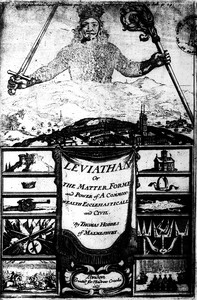

The foundations of the modern state — the social contract, sovereignty, and life without government.
Read full overviewShow less›
In 'Leviathan', Thomas Hobbes presents a foundational work in political philosophy that explores the nature of humanity, the origins of government, and the necessity of a social contract. Hobbes argues that in a state of nature, humans act out of self-interest, leading to a chaotic existence characterized by violence and fear. To escape this 'war of all against all', people must collectively agree to submit to a sovereign authority that can enforce peace and security. This summary distills Hobbes' complex ideas into key insights about human nature, governance, and morality, providing a comprehensive understanding of his arguments and their implications for modern society.
Thomas Hobbes' 'Leviathan' presents a compelling case for the necessity of a strong sovereign authority to curb the chaotic tendencies of human nature. By exploring the origins of thoughts, the role of passions, and the importance of social contracts, Hobbes lays the groundwork for understanding modern governance. His ideas challenge us to consider the balance between individual freedoms and the need for security in society. As we navigate the complexities of contemporary political landscapes, Hobbes’ insights remind us of the enduring struggle between liberty and order, and the role of authority in maintaining a peaceful coexistence.
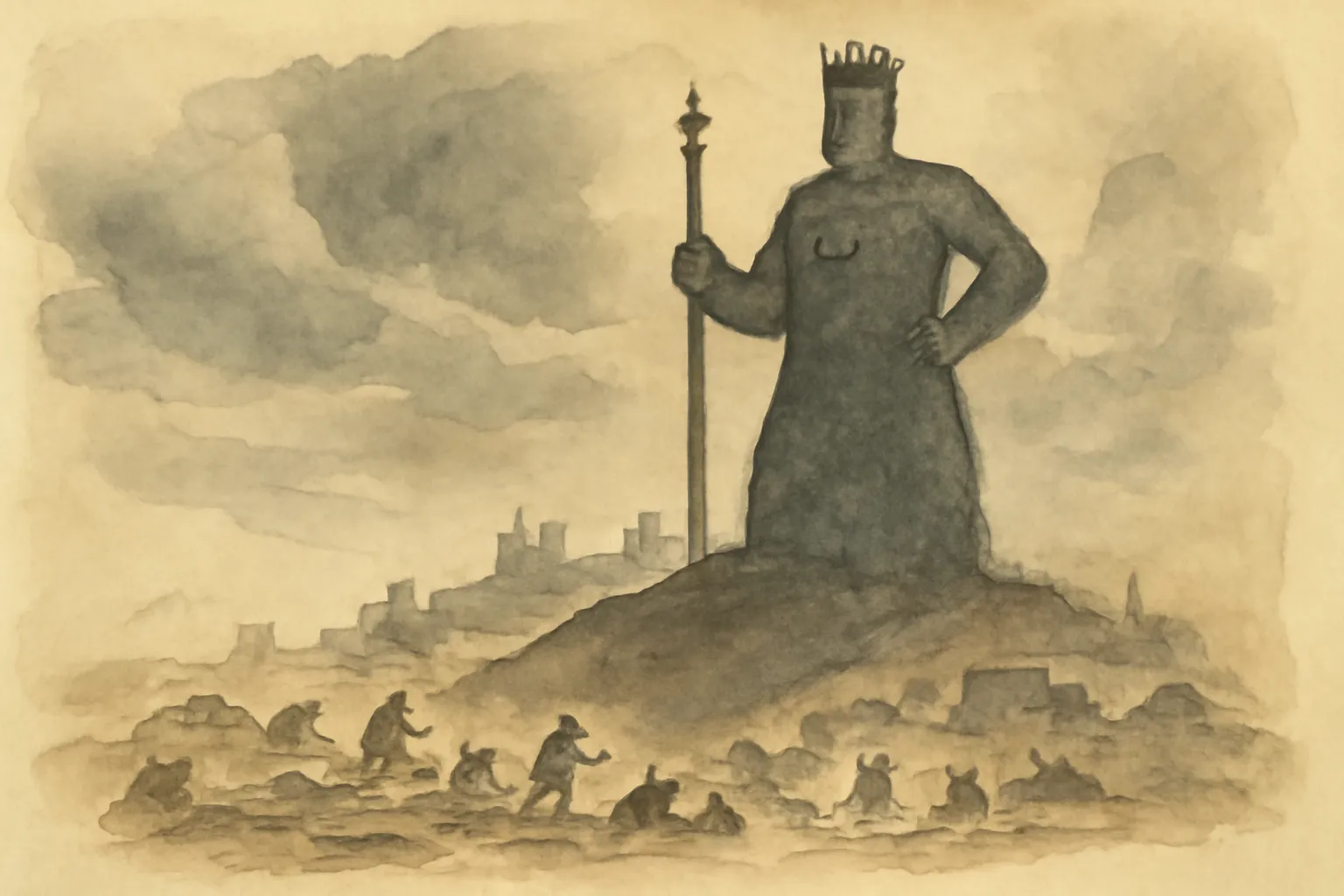
- 1The Nature of Human Thoughts and Sensation
- 2The Chain of Imagination and Thought
- 3The Invention of Speech and Its Impact
- 4Reasoning as Calculation
- 5The Passions and Their Role in Human Behavior
A glimpse inside

Hobbes begins by examining the nature of human thoughts, asserting that they originate from sensory experiences. He posits that all thoughts are representations of extern… Read moreHobbes begins by examining the nature of human thoughts, asserting that they originate from sensory experiences. He posits that all thoughts are representations of external objects, which stimulate our senses and produce various sensations. This sensory input is crucial as it forms the basis of our understanding and the subsequent development of ideas. For Hobbes, imagination is merely a 'decaying sense'; when a sensory experience fades, it lingers in our minds as memory or imagination. This understanding of cognition highlights the limitations of human perception and reasoning, suggesting that our knowledge of the world is inherently influenced by our sensory experiences. Show less
Hobbes describes how thoughts are interconnected in what he terms the 'train of imagination.' This succession is not random; rather, it follows a logical pattern based on… Read moreHobbes describes how thoughts are interconnected in what he terms the 'train of imagination.' This succession is not random; rather, it follows a logical pattern based on past sensory experiences. For instance, when one thought leads to another, it is often because the two have been associated in our minds through prior experiences. This continuity of thought reflects how humans navigate their internal mental landscapes, shaping their beliefs and desires. Hobbes emphasizes that this chain of thought can lead to either guided reasoning or chaotic wandering, depending on the individual’s focus and intent. Show less
Read the full text — free
About the author
Read Thomas Hobbes's work free on Lumina — the complete text plus an 8-minute summary and key ideas, no account needed.
Frequently asked
Worlds to get lost in
Take Lumina everywhere
Read offline, listen to AI summaries, speed-read, and sync your progress across devices — free on iPhone.
Download for iPhone