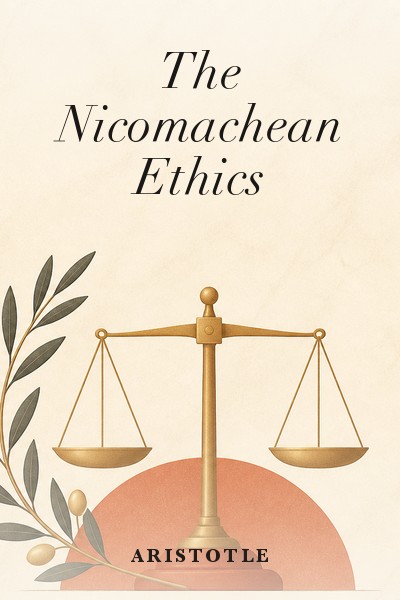

The classic inquiry into happiness and virtue — how to live well through reason, habit, and the golden mean.
Read full overviewShow less›
In 'The Nicomachean Ethics,' Aristotle delves into the essence of human life, exploring the complex relationship between virtue, happiness, and moral choice. He presents a framework for understanding how individuals can achieve their highest good through ethical behavior and rational action. By examining the nature of happiness, the role of moral virtues, and the importance of reasoned choice, Aristotle provides invaluable insights that remain relevant today. This exploration is not merely theoretical; it offers practical guidance for living a fulfilling and meaningful life. Readers will find themselves equipped with a profound understanding of how to navigate their own moral landscapes and pursue genuine happiness.
Aristotle's 'The Nicomachean Ethics' offers profound insights into the nature of happiness, virtue, and moral responsibility, presenting a timeless framework for ethical living. By emphasizing the importance of character development, practical wisdom, and the social dimensions of ethics, Aristotle guides readers toward a deeper understanding of what it means to live a fulfilling life. His teachings encourage individuals to strive for balance, cultivate their virtues, and actively participate in their communities, ultimately leading to a more meaningful existence. In an age where the pursuit of happiness often focuses on external achievements, Aristotle’s philosophy serves as a powerful reminder that true contentment arises from within, through the practice of virtue and the pursuit of the Chief Good.

- 1The Chief Good: Happiness as the Ultimate Goal
- 2The Role of Virtue in Achieving Happiness
- 3The Doctrine of the Mean: Finding Balance in Virtue
- 4The Importance of Practical Wisdom
- 5The Nature of Moral Responsibility
A glimpse inside

Aristotle posits that every action and pursuit aims at some good, with happiness (eudaimonia) identified as the ultimate goal of human life. Read moreAristotle posits that every action and pursuit aims at some good, with happiness (eudaimonia) identified as the ultimate goal of human life. He argues that while people may chase various ends—pleasure, wealth, or honor—true happiness transcends these superficial pursuits. Happiness is not merely a fleeting emotion or a transient state; it is a lasting condition achieved through living in accordance with virtue. Aristotle emphasizes that happiness is the highest good because it is pursued for its own sake, unlike other goods that are sought for the sake of something else. This understanding of happiness as an end in itself sets the foundation for his ethical framework, compelling individuals to align their actions with their pursuit of a fulfilling life. Show less
Virtue is central to Aristotle's conception of happiness, serving as the means through which individuals can reach their highest potential. Read moreVirtue is central to Aristotle's conception of happiness, serving as the means through which individuals can reach their highest potential. He differentiates between moral virtues, which are developed through habituation and practice, and intellectual virtues, which are cultivated through teaching and experience. Moral virtues, such as courage, temperance, and justice, arise from the habitual performance of virtuous actions, leading individuals to develop a character that aligns with ethical principles. Aristotle asserts that virtues are not innate; rather, they must be cultivated over time through deliberate actions. This process of habituation means that the more one practices virtuous behaviors, the more ingrained they become, ultimately shaping one’s character and leading to a more fulfilling life. Show less
Read the full text — free
About the author
Read Aristotle's work free on Lumina — the complete text plus an 8-minute summary and key ideas, no account needed.
Frequently asked
Worlds to get lost in
Take Lumina everywhere
Read offline, listen to AI summaries, speed-read, and sync your progress across devices — free on iPhone.
Download for iPhone