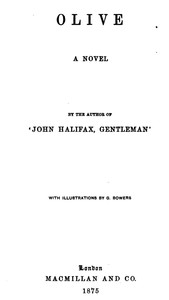

In a world where beauty and deformity collide, Olive Rothesay's journey reveals profound truths about love, acceptance, and the human spirit
Read full overviewShow less›
Olive: A Novel by Dinah Maria Mulock Craik unfolds the life of Olive Rothesay, a child born into a world that equates beauty with worth. Through Olive’s eyes, readers experience the complexities of familial love, societal expectations, and personal identity. The novel delves deeply into the struggles of a mother grappling with her child's deformity, the impact of war on family dynamics, and the quest for artistic expression. As Olive navigates her upbringing and the shadows of her family's past, she learns that true beauty transcends physical appearance. This poignant story invites readers to reflect on the nature of love and the resilience of the human spirit in the face of adversity.
Olive: A Novel invites readers to reflect on the profound complexities of beauty, love, and acceptance. Through the lens of Olive Rothesay's life, the story challenges societal norms and celebrates the resilience of the human spirit in the face of adversity. The narrative underscores the importance of self-acceptance and the transformative power of love, urging readers to look beyond physical appearances to find true worth. As Olive navigates her journey, she embodies the struggle for identity and belonging, ultimately discovering that beauty lies not in perfection but in the authenticity of the human experience. This timeless tale resonates deeply, reminding us of the enduring power of love and the importance of embracing our true selves.
- 1The Burden of Beauty
- 2The Complexity of Maternal Love
- 3The Impact of War on Family Dynamics
- 4The Quest for Identity
- 5Friendship and Betrayal
Notable quotes
“Puir wee lassie, ye hae a waesome welcome to a waesome warld!”
“You would never have thought her a mother.”
“A beauty to be lingered over among all other beauties.”
A glimpse inside

Olive Rothesay's mother, Sybilla, embodies the societal ideal of beauty and grapples with the implications of giving birth to a deformed child. Read moreOlive Rothesay's mother, Sybilla, embodies the societal ideal of beauty and grapples with the implications of giving birth to a deformed child. For Sybilla, beauty is not only a source of pride but a measure of worth, leading her to initially reject Olive. This conflict highlights the societal pressures placed on women to conform to beauty standards, which can lead to devastating consequences. Sybilla's emotional turmoil reflects the struggles many face when confronted with imperfections that challenge their ideals. The narrative suggests that beauty, while celebrated, can also become a burden, leading to feelings of inadequacy and shame. Sybilla’s struggle to accept her daughter mirrors the broader societal phenomenon where external appearances dictate personal values and self-worth. The story calls into question the legitimacy of equating beauty with merit, urging readers to look beyond superficial traits to find deeper significance in human relationships. Show less
Sybilla's relationship with Olive serves as a lens through which the complexities of maternal love are explored. Initially, Sybilla's rejection of her daughter stems from… Read moreSybilla's relationship with Olive serves as a lens through which the complexities of maternal love are explored. Initially, Sybilla's rejection of her daughter stems from her fear of societal judgment and her own insecurities about beauty. However, as the story progresses, Sybilla's love transforms into a deeper, more unconditional form, especially as she confronts her own prejudices and learns to appreciate Olive for who she is. This evolution illustrates the struggles mothers face when their children do not meet societal ideals, as well as the inherent bond that can ultimately transcend those ideals. The narrative emphasizes that love can evolve through understanding and acceptance, even in the face of initial rejection. Sybilla’s journey invites readers to understand that true maternal love often involves a willingness to embrace imperfections and that acceptance can lead to profound personal growth both for the mother and the child. Show less
Read the full text — free
About the author
Dinah Maria Mulock Craik has 2 works free to read on Lumina, including Agatha's Husband: A Novel
All 2 books by Dinah Maria Mulock Craik →