Fiction
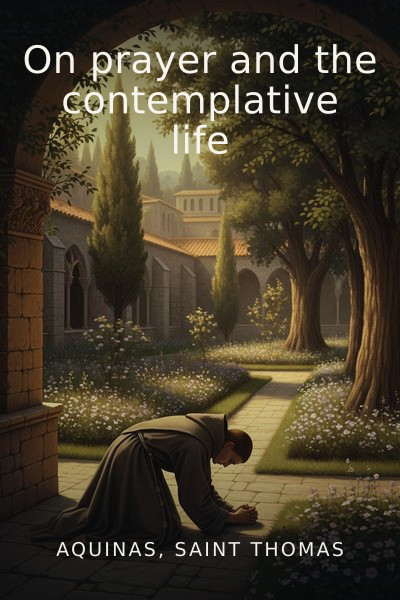
On prayer and the contemplative life by Aquinas, Saint Thomas — Summary, Key Ideas & Full Text
235 pages107 chapters4h 43m read3h 21m speed read✦ 9-min Big ideasFree · no account
Rate it
Discover the transformative power of prayer and contemplation in achieving a deeper relationship with God and oneself
In 'On Prayer and the Contemplative Life,' Saint Thomas Aquinas explores the profound connection between prayer, contemplation, and the human experience of divine love. This work delves into the essence of religion, the nature of prayer, and how these elements intertwine to foster a life of virtue and spiritual fulfillment. Readers will gain insight into the dual relationship between humanity and God, where prayer serves not merely as a means of requesting divine assistance but as a pathway to spiritual enlightenment and communion. By examining the philosophical underpinnings of prayer and its role in the contemplative life, Aquinas offers a robust framework for understanding how faith, reason, and mysticism can coexist harmoniously. This exploration invites individuals to engage deeply with their spiritual practice, fostering a richer experience of faith in today's world.
Saint Thomas Aquinas's 'On Prayer and the Contemplative Life' offers a profound exploration of the interplay between prayer, contemplation, and the practice of religion. By framing religion as a holistic endeavor that includes our relationships with both God and others, Aquinas invites us to engage deeply with our faith. His insights on the nature of prayer, the importance of humility, and the role of community enrich our understanding of spiritual practice, reminding us that prayer is not just a means to an end but a transformative experience in itself. Ultimately, this work serves as a guide for those seeking to deepen their spiritual lives, encouraging a harmonious integration of faith, reason, and devotion.
“If God be for us who is against us?”
“The Lord, he says, is the portion of my inheritance.”
“We ought always to pray and not to faint.”
Read Aquinas, Saint Thomas's work free on Lumina — the complete text plus an 8-minute summary and key ideas, no account needed