New York Times bestseller · Popular works · Space biology
Packing for Mars by Mary Roach — Summary, Key Ideas & Quotes
2010334 pages✦ 3-min Big ideas★ 4.0 (19)
Rate it
Space is devoid of the stuff humans need to live: air, gravity, hot showers, fresh veg, privacy, beer. How much can a person give up? What happens when you can't walk for a year? Is sex any fun in zero gravity? As Mary Roach discovers, it's possible to explore space without ever leaving Earth. From the space shuttle training toilet to a 17,000-mile-per-hour crash test of NASA's space capsule, she takes us on a surreally entertaining trip into the science of living in space.
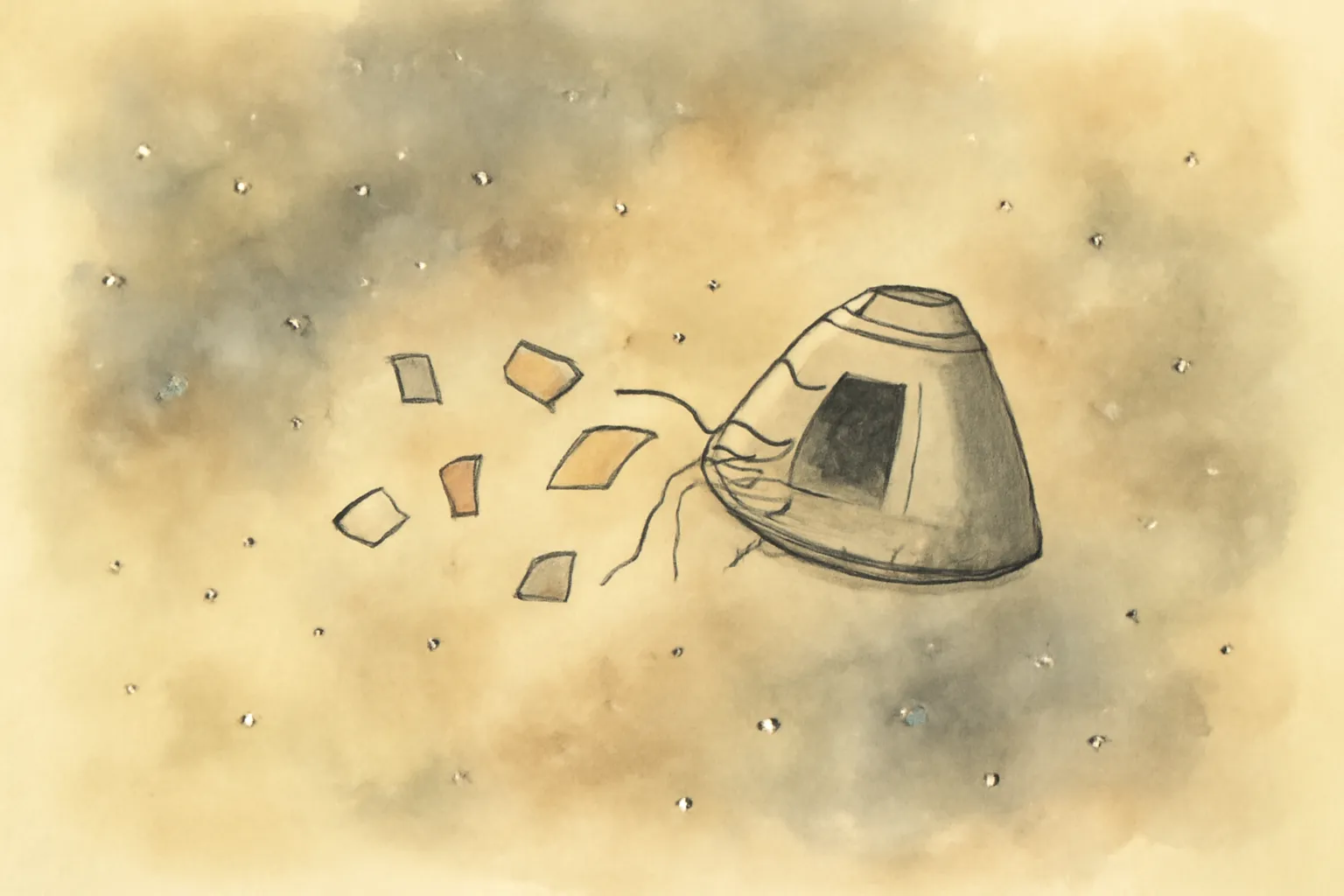
Roach investigates how the human body copes—or fails to cope—with the harsh environment of space. She details the physiological challenges astronauts face: bone loss, muscle atrophy, and the havoc microgravity wreaks on digestion and circulation. The book makes clear that space is fundamentally inhospitable, and every bodily function we take for granted on Earth becomes a complex engineering problem in orbit.
Space missions are as much a psychological challenge as a physical one. Roach delves into the effects of confinement, monotony, and lack of privacy on astronauts, drawing from both real missions and ground-based simulations. She highlights how agencies select and prepare candidates for the mental strains of isolation, and how even the smallest comforts—like a familiar smell or a private moment—can become crucial to sanity.
“To be an astronaut is to have a sense of humor about urine.”